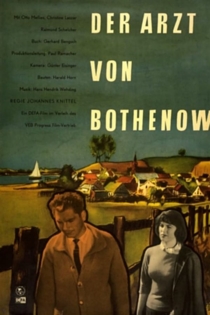
Willi Narloch
1910 - 1973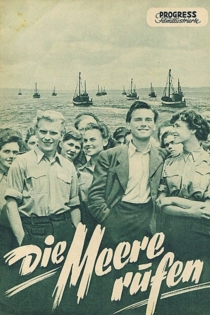
The Rabbit Is Me
Kurt Maetzig
Angelika Waller, Alfred Müller
The Rabbit Is Me was made in 1965 to encourage discussion of the democratization of East German society. In it, a young student has an affair with a judge who once sentenced her brother for political reasons; she eventually confronts him with his opportunism and hypocrisy. It is a sardonic portrayal of the German Democratic Republic's judicial system and its social implications. The film was banned by officials as an anti-socialist, pessimistic and revisionist attack on the state. It henceforth lent its name to all the banned films of 1965, which became known as the "Rabbit Films." After its release in 1990, The Rabbit Is Me earned critical praise as one of the most important and courageous works ever made in East Germany. It was screened at The Museum of Modern Art in 2005 as part of the film series Rebels with a Cause: The Cinema of East Germany.
The Rabbit Is Me
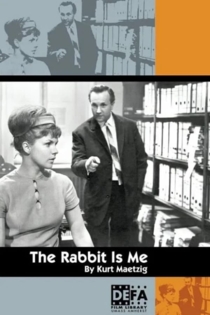
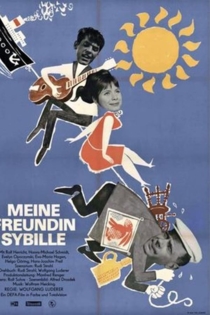
Guten Tag, lieber Tag
Gerhard Klingenberg
Rudolf Wessely, Margret Homeyer
Engineer Strebel′s apprentices think of nothing else but music and dancing, although they should really concentrate on their marks. Consequently, Strebel is anything but delighted with his pupil. To top it all, a TV show becomes interested in a performance by Strebel′s apprentices. To calm down their teacher, Jutta Fröhlich, who has already cast an eye on Strebel, makes him an offer: When they better their marks, Strebel would permit them to make a performance on television.
Guten Tag, lieber Tag
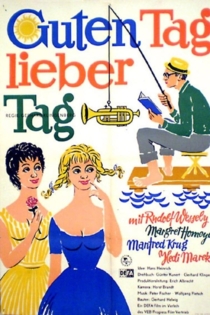
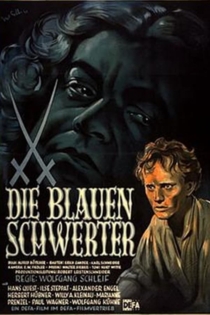
Die blauen Schwerter
Wolfgang Schleif
Hans Quest, Ilse Steppat
The story of Johann Friedrich Böttger, an apothecary’s apprentice and alchemist’s assistant. Fleeing from the Prussian King, he goes to Saxony, where King Frederick August the Strong takes him to a fortress and demands that he create gold. Böttger is equipped with everything he would need for the task, but he has known for a while that actual gold production is a myth and instead experiments with porcelain—white porcelain, as the Chinese are said to possess. In 1709, he finally succeeds in surprising the King with the "white gold," the first white porcelain made in Europe, he hopes for freedom.
The Blue Swords
Brennende Ruhr
Hans-Erich Korbschmitt
Klaus Bamberg, Hans-Peter Reinecke
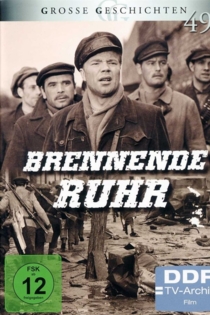
The two-piece black and white movie "Brennende Ruhr" portrays the events during the Kapp-Putsch 1920 in a small german town in the Ruhr district. The main protagonist is Ernst Sukrow, a student who sympathises first with the bourgeois forces but finally decided to join the communists in their fight.
Brennende Ruhr
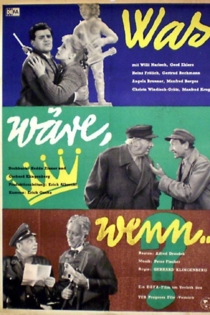
Was wäre, wenn...?
Gerhard Klingenberg
Willi Narloch, Gerd Ehlers
In the late 1950s, the collectivization of agriculture is in full swing in the East German village of Willshagen on the German-German border. Those in charge have to face many obstacles, especially from a large-scale farmer who is unwilling to join the co-op. All of a sudden, mysterious men in a fancy car appear in the village and show an interest in the rundown manor house. Gossip spreads quickly, and some villagers think there will be a re-parceling of properties and a land swap with West Germany. They assume everything will go back to how it used to be and even expect the count to return to his manor. In preparation, the situation in the village escalates at a fevered pitch.
What Would Happen If...?
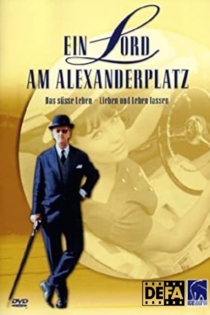
Ein Lord am Alexanderplatz
Günter Reisch
Armin Mueller-Stahl, Angelica Domröse
Ewald Honig can't break his bad habit. Hardly has he crossed over into the GDR when the strapping, well-built man in his late fifties once again starts courting ladies with fraudulent intentions. His daughter Ina, burdened with the same genes, specializes in married men in their prime. Two criminologists are on the Honigs' trail, but they soon have enough to handle just dealing with each other. Meanwhile, Honig and his daughter have left their wayward path of their own accord.
A Lord of Alexander Square
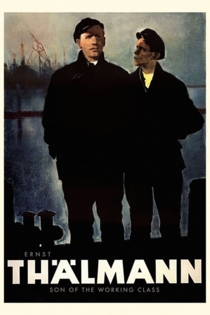
Ernst Thälmann - Sohn seiner Klasse
Kurt Maetzig
Günther Simon, Hans-Peter Minetti
This film is the first of a two-part historical and biographical portrait of the communist politician and anti-fascist Ernst Thälmann. In early November 1918, Ernst Thälmann is an unwilling soldier serving on the western front. As the revolutionary movement at home is threatened by the betrayal of the Social Democrats and fissures in the working class, Thälmann calls on his fellow soldiers to put down their weapons and unite with the workers in the communist struggle at home. Thälmann’s qualms about which side he is fighting on continue, but when the local police attempt to prevent a shipment of provisions and supplies from reaching the people in Petrograd, he intervenes and the ship is unloaded. With this moment of clarity, Thälmann continues to follow his political convictions and joins the workers at the Hamburg uprising in October 1923.
Ernst Thälmann – Son of the Working Class
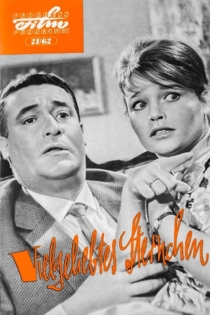
Der Arzt von Bothenow
Johannes Knittel
Otto Mellies, Marga Legal
О молодом враче Гарри Бреннере, преданном своей профессии, в которой он видит радость и смысл жизни. Но его жена, избалованная, капризная женщина, мешает его работе. Гарри решает порвать с женой и уехать в деревню, где он больше всего нужен, где он принесет больше пользы людям.
Der Arzt von Bothenow