Walter E. Fuß
1921 - 1996
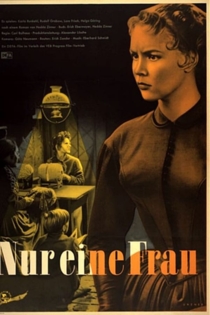
Nur eine Frau
Carl Ballhaus
Karla Runkehl, Rudolf Grabow
В фильме рассказывается история жизни Луизы Отто Петерс, которая в середине XIX века в Германии впервые подняла голос протеста против несправедливого отношения к женщине, к её труду. Она создала первую в Германии «Женскую газету». Дочь знаменитого адвоката, Луиза легко могла устроить свою жизнь, выйдя замуж за богатого барона Родерна. Но она избрала другую цель жизни — борьбу за равноправие женщин. Своими статьями и публичными выступлениями она завоевала авторитет и уважение простых людей.
Nur eine Frau



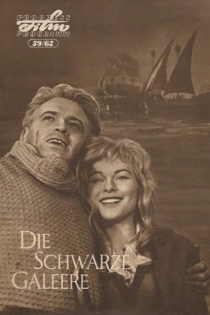
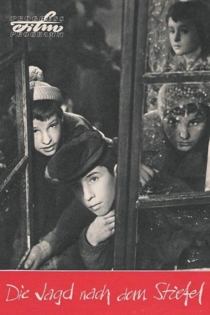
Die Jagd nach dem Stiefel
Konrad Petzold
Günter Naumann, Gerry Wolff
Germany 1932, constant fights between Communists and Nazis tear the country apart. When a Communist is found dead, the police accuses another Communist being his murderer. But the Communist youth group follows another trail - the murderer left a characteristic boot print at the scene of the crime.
Die Jagd nach dem Stiefel
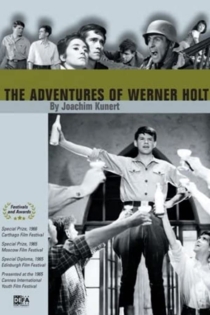
The Adventures of Werner Holt
Joachim Kunert
Klaus-Peter Thiele, Manfred Karge
Two 17-year-olds, Werner Holt and Gilbert Wolzow, are pulled out of school and into Hitler's army. Gilbert becomes a fanatical soldier; but at the front, Werner begins to understand the senselessness of war.
The Adventures of Werner Holt
Das zweite Gleis
Joachim Kunert
Albert Hetterle, Annekathrin Bürger
In this German drama, Brock, a railroad inspector, witnesses a robbery at a train depot. He recognizes the thief, but turning the man in would mean acknowledging he knows him, thus revealing his own complicity with the Nazi war machine. When Brock’s daughter and her boyfriend begin to question him about the incident, will the secret he’s kept for nearly 20 years finally be exposed?
The Second Track

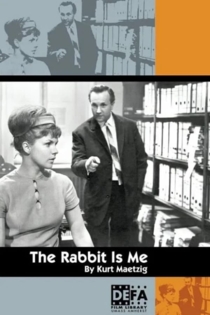
The Rabbit Is Me
Kurt Maetzig
Angelika Waller, Alfred Müller
The Rabbit Is Me was made in 1965 to encourage discussion of the democratization of East German society. In it, a young student has an affair with a judge who once sentenced her brother for political reasons; she eventually confronts him with his opportunism and hypocrisy. It is a sardonic portrayal of the German Democratic Republic's judicial system and its social implications. The film was banned by officials as an anti-socialist, pessimistic and revisionist attack on the state. It henceforth lent its name to all the banned films of 1965, which became known as the "Rabbit Films." After its release in 1990, The Rabbit Is Me earned critical praise as one of the most important and courageous works ever made in East Germany. It was screened at The Museum of Modern Art in 2005 as part of the film series Rebels with a Cause: The Cinema of East Germany.
The Rabbit Is Me
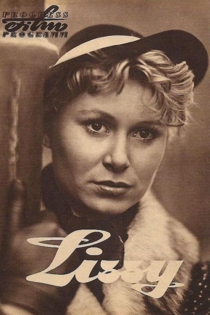
Lissy
Konrad Wolf
Sonja Sutter, Horst Drinda
Berlin, early 1930s. Lissy, a young woman raised in a socialist working-class family, marries a clerk who promises her a better life. During the depression, however, he gets fired and can’t find a new job. Desperate for companionship and money, he falls for Nazi propaganda and joins the Storm Troopers. Lissy's brother, who for a time sympathized with the communists, now also wears the SA uniform. When he is killed by the Nazis—because of hisoppositional ideas—Lissy starts questioning things and makes a difficult and potentially dangerous decision.
Lissy
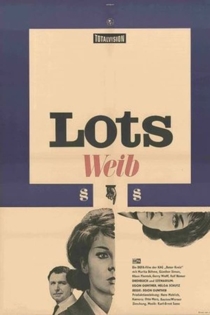
Lots Weib
Egon Günther
Marita Böhme, Günther Simon
The marriage of Katrin and Richard Lot has become a routine. She has a career and he, as a Marine officer, comes home only once every fourteen days. The children greet him with joy, but she greets him only with anxiety because their marriage is missing its key ingredient: love. She wants a divorce, but he refuses mainly out of comfort as well as due to pressure from the party. Katrin finds a strange solution: she shoplifts and is put on probation for three months. This is enough to force Richard into a divorce because he is concerned about the "moral liability" of his wife.
Lot's Wife
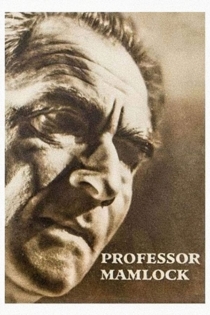
Professor Mamlock
Konrad Wolf
Wolfgang Heinz, Ursula Burg
Professor Hans Mamlock is the distinguished chief of surgery in a university hospital. The year is 1933, and although the Professor is Jewish, he remains unconcerned with politics and the growing Nazi threat. Mamlock identifies strongly as a German, and he believes his culture to be simply incapable of the common barbarism associated with the Nazi party. Accordingly, he shows little understanding for people with strong or unpopular political views, such as Walter, a patient, and Rolf, his own son. Indeed, when Rolf joins the communists in resisting the Nazis, Mamlock throws him out of his house. As the persecution of Jews intensifies during the 1930s, Mamlock's own daughter is targeted for anti-Semitic attacks at her school...
Professor Mamlock