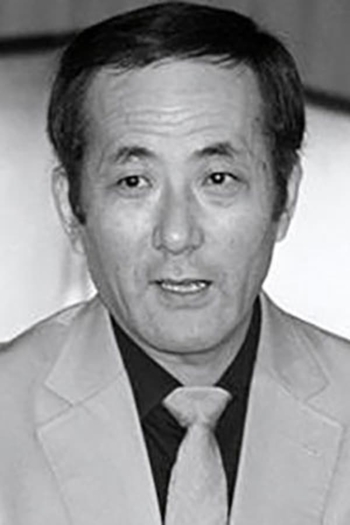
Kōjirō Kusanagi
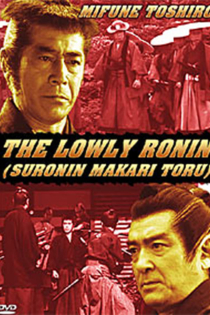
1929 - 2007素浪人罷り通る
Kazuo Ikehiro
Toshirō Mifune, Kahori Takeda
Reprising his role from the popular TV series "Koya no Suronin" (The Lowly Ronin), Mifune Toshiro stars in this full-length, stand-alone made for TV movie. The wandering ronin is reminiscent of his most famous role as the samurai without a name in Kurosawa's "Yojimbo" and "Sanjuro". He travels about Japan, and while he may seek happiness, violence and tragedy always cross his path. This time, he reluctantly agrees when a girl hires him to kill a local offical who has unfairly taxed her villagers. But he soon discoves that not all is at it appears when he finds a direct link to his past.
Lowly Ronin
The Man Who Stole the Sun
Kazuhiko Hasegawa
Kenji Sawada, Bunta Sugawara
A high school science teacher is the butt of all his students' jokes, until their bus is hijacked on a school trip. But something more sinister lurks beneath the surface: he's building an atomic bomb in his apartment.
The Man Who Stole the Sun

Zatoichi Challenged
Kenji Misumi
Shintarō Katsu, Jūshirō Konoe
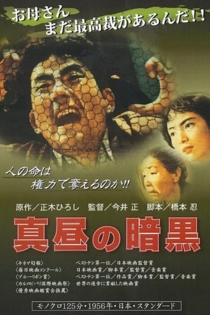
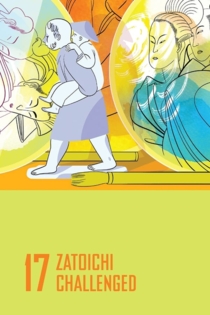
Ichi is staying at an inn when a woman dies. Her dying wish is that Ichi take her son to his father, an artist living in a nearby town. After arriving in the town, Ichi finds out that the father has been forced by a local boss to create illegal pornography to pay off his gambling debts. Ichi makes it his mission to save tha man and reunite the family, even though it brings him into conflict with a samurai he sort of befriended on his way to the town.
Zatoichi Challenged
The Sun
Aleksandr Sokurov
Issei Ogata, Robert Dawson
Biographical film depicting Japanese Emperor Shōwa (Hirohito) during the final days of World War II. The film is the third drama in director Aleksandr Sokurov's trilogy, which included Taurus about the Soviet Union's Vladimir Lenin and Moloch about Nazi Germany's Adolf Hitler.
The Sun

遊びの時間は終らない
Sadaaki Haginiwa
Masahiro Motoki, Renji Ishibashi
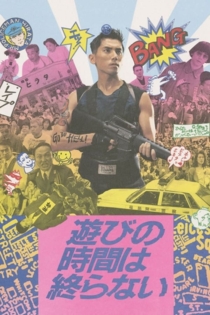
A serious-minded policeman plays the role of robber in a police training operation against bank robberies. He's so good his fellow policemen can't catch him. TV networks begin to broadcast the operation nationwide. TV audiences are amused and root for the runaway robber and police grows desperate to arrest him to save their face. However the robber remains at large.
Playtime Never Ends
Madadayo
Akira Kurosawa
Tatsuo Matsumura, Kyōko Kagawa
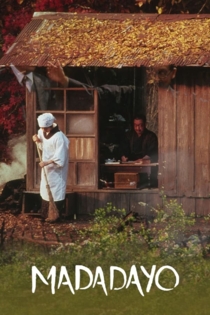
Based on the life of Hyakken Uchida, a Japanese author and academic. The film opens with Uchida resigning his job as a German professor at the onset of WWII. The story is told mostly in vignettes as he is cared for by former students in his old age.
Madadayo
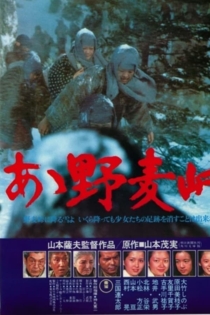
あゝ野麦峠
Satsuo Yamamoto
Shinobu Ōtake, Mieko Harada
The story of the silk industry and the young girls who worked as silk spinners in the early 1900s in Japan. The silk mills were located in Okaya which lies just beyond the Nomugi Pass. The women and girls worked in a hot, humid atmosphere without rest, and endured those conditions and sexual harassment to earn money for their poor families. Across the ocean, it was the great depression in America.
Nomugi Pass
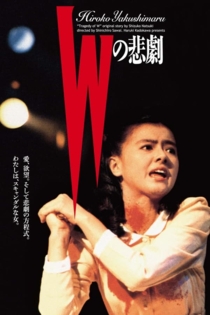
Wの悲劇
Shinichirô Sawai
Hiroko Yakushimaru, Masanori Sera
A young girl is striving for stardom. In order to get a lead role in a new production, she agrees to stand-in for a famous star whose rich patron died in her arms one night. The real-life drama gradually comes to mirror the story of the play being performed by her.
The Tragedy of “W”
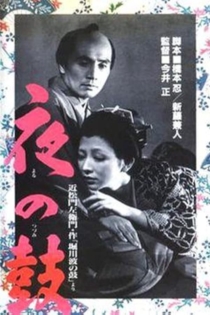
夜の鼓
Tadashi Imai
Rentaro Mikuni, Ineko Arima
Following a yearlong attendance upon his shogun in Edo, samurai Hikokuro makes a long-awaited return to his home and doting wife, Dane. Initially greeted by the effusive welcome of his family, spiteful whispers also reach his ear about an adulterous affair carried on, in his long absence, between his wife and a famous drummer. With Hikokuro’s honor imperiled by rumor, his family insists on a formal investigation into the veracity of the gossip. Through the combined testimony of many witnesses, a tale unwinds around the visits of a traveling musician hired to tutor the family heir, the spurned attentions of the man who started the rumor, and the ultimate truth behind the accusations. The conclusion of events prove as much an indictment of bushidō as it is of the reluctant parties involved. Adapted from a 1706 play by Chikamatsu Monzaemon and based on a true case.
Night Drum
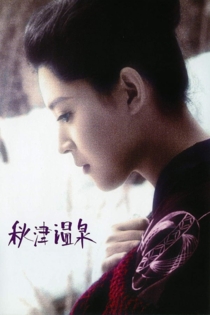
Akitsu Springs
Yoshishige Yoshida
Mariko Okada, Hiroyuki Nagato
Yoshida’s first big-budget production and colour film is a haunting tale of unrequited love and postwar disillusion. The story of the fatal attraction between a spineless intellectual and a strong woman is conventional, but its enactment is radically new.
Akitsu Springs
ある脅迫
Koreyoshi Kurahara
Jun Hamamura, Nobuo Kaneko
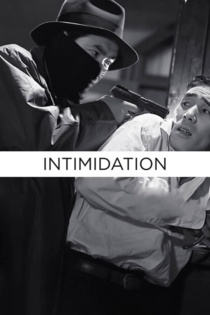
Koreyoshi Kurahara’s ingeniously plotted, pocket-size noir concerns the intertwined fates of a desperate bank manager, blackmailed for book-cooking, and his resentful but timid underling, passed over for a promotion. The marvelously moody Intimidation (Aru kyouhaku) is an elegantly stripped-down and carefully paced crime drama.
Intimidation

日本の熱い日々 謀殺・下山事件
Kei Kumai
Tatsuya Nakadai, Ichirô Nakatani
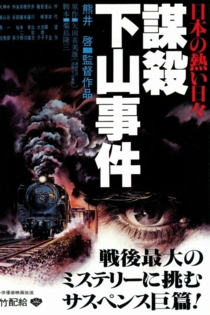
The president of the Japanese National Railways is found dead during a period in which train service is plagued by numerous layoffs, strikes and shutdowns. The government says that the president was murdered; the police claim it was a suicide. A quizzical reporter follows the case for years, but the basic question remains unanswered: was the victim killed by members of the burgeoning Communist movement in Japan, or was the death stage-managed by the authorities in hopes of discrediting the Communists?
Willful Murder
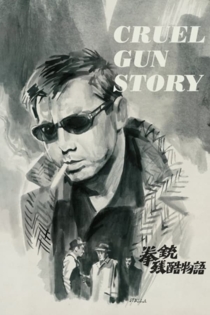
Cruel Gun Story
Takumi Furukawa
Jō Shishido, Chieko Matsubara
Businessmen arrange the early release from prison of Togawa, serving time for taking revenge on the truck driver whose carelessness confined Togawa's sister, Rie, to a wheelchair. They want Togawa to hijack an armored truck loaded with 120 million yen; their leverage is to promise him money for surgery for Rie. Togawa consents and plans the heist with three others. The plan is solid, but it doesn't go smoothly. Togawa must improvise, there are traitors somewhere, and double-crosses mount. Can Togawa escape with enough money to help his sister and ensure a passage out of Japan?
Cruel Gun Story