Canto e Castro
1930 - 2005Crime na Pensão Estrelinha
Fernando Ávila
Herman José, Ana Bola
Neves and his wife Celia are the owners and managers of the 'Little Star Pension', a familiar hotel that caters to bourgeois family and would-be actors, instead of the ill-reputed 'Good-Night Pension' (just across the narrow street), where gigolos, whores, and criminals of all sorts may go for a quick encounter. However, not all is well among the ten residents of 'Little Star Pension': each dialogue line from every hotel guest is evidence that he, or her, has a reason (actually, more than one) to hate Neves - to the point of wishing him dead. Carelessness (or devious intention) by one party will provide the means; another, will create the propitious moment; yet another, and then the rest of them will create the festive New Year's Eve occasion - to do with Neves forever! Obviously, only the famous world private-eye Hércules Pirôt can solve the crime... for which he is called by phone, even before the deed is done.
Crime at the Little Star Pension


O Sangue
Pedro Costa
Pedro Hestnes, Nuno Ferreira
Nino, tough but sickly, and his older brother Vicente live in the country with their father. After their father disappears ― we’re never sure why ― murder is suggested. Vicente brings his girlfriend to the house, and a different kind of family is established as the three youngsters grow fiercely protective of each other. But their uncle grows suspicious about the fate of the missing father and forcibly kidnaps Nino, taking him away to the city and leaving Vicente to locate him there.
Blood

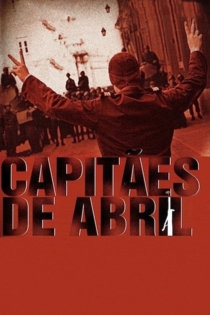
Capitães de Abril
Maria de Medeiros
Stefano Accorsi, Maria de Medeiros
Story of the 1974 coup that overthrew the right-wing Portuguese dictatorship--which continued the fascist policies of long-time dictator Antonio Salazar--and of two young army captains who were involved in it.
April Captains
Jaime
António-Pedro Vasconcelos
Saúl Fonseca, Fernanda Serrano
A woman takes her young son, leaves her husband and moves in with her lover. The boy, desperate to get his parents back together, becomes convinced that if only he can get his father's stolen motorcycle back everything will be fine again, so he sets out to get enough money to buy his father a new one.
Jaime

Manhã Submersa
Lauro António
Joaquim Manuel Dias, Eunice Muñoz
Estefânia is an old, rich, strict catholic woman, and when she sets her eyes on a couple of servants who have no means to bring up properly their youngest son, António, she decides to move her influences in order to make a priest out of him. The parents accept it, the local priest and even the Seminar's rector accept it, and António accepts it - if not for piety, for obeyance to his parents. Once time goes by, and António is out of rural misery and into the prison-like system of a seminar, doubts and anguishes mount within him.
Manhã Submersa


O Anjo da Guarda
Margarida Gil
Canto e Castro, Dalila Carmo
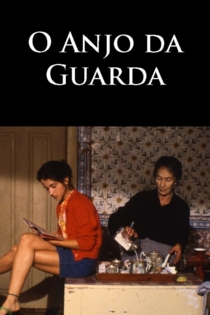
Lúcia is an independent woman who lives alone in Lisbon. Her father commits suicide leaving her a message on phone recorder, revealing a letter he wrote. However Lúcia can't find it in her father's house. On that visit she ends up meeting with her mother, a known political activist with whom she has a distant and tense relationship. In hope of finding the letter, Lúcia leaves to the farm where she grew up, on an isolated location. There she reencounters Álvaro, an old childhood companion, who shares a little life time he has left between roses and the piano, and the guardian angel that follows and protects her through nocturnal wanderings.
O Anjo da Guarda
Requiem
Alain Tanner
Francis Frappat, André Marcon
What is the nature of life? What is the nature of art? How can art influence our lives? These are the questions of this movie. The main character, a man who lives both in the world of dreams and reality, searches his past, in order to understand its meaning. He has meetings with the ghosts of his dead friend, his dead lover, his dead father and Pessoa, the great portuguese writer. These four encounters give him clues about what he is looking for. Beside that, he finds himself in front of art, discovering how it modifies our comprehension of life. It's based in one of Tabucci's (the italian writer)books: "Requiem". This few lines cannot resume the greatness of this movie. The last thing I can say is: If you like art, I recommend you to see it. If you ever wonder about the nature of dreams, or you live in dreams half of the time, I think you'll feel like this movie was made for you.
Requiem


O Último Mergulho
João César Monteiro
Fabienne Babe, Canto e Castro
Eloi, a paunchy middle-aged man, finds Samuel, a young sad sack, about to kill himself by plunging into the sea. Eloi takes Samuel under his wing, giving him a hot meal and bringing him to a seedy night club to introduce him to Esperança, who is said to be the most beautiful sex worker in Lisbon—and is also Eloi’s daughter.
The Last Dive

451 Forte
João Mário Grilo
Sofia Alves, Adriano Luz
Zé Alberto and Laura are lovers, and have a clandestine and permanently threatened relationship. Zé Alberto is married to Fernanda, Laura's sister, whose husband is in prison for murder. Fernanda is aware of Laura's relationship with her husband and constantly threatens them to tell Armando everything. Laura and Armando have a daughter - Sónia - whose greatest defect is greediness and the highest quality to cover up her mother's romance with her uncle. The fear of the two lovers increases and events precipitate when they receive the news that Armando is about to go on parole ...
451 Forte

Longe da Vista
João Mário Grilo
Canto e Castro, Francisco Nascimento
In order to make some much-needed cash for himself, 65-year-old Portuguese prison inmate Eugenio impersonates a young woman and begins a romantic correspondence with a lonely Portuguese truck-driver living in Boston, convincing him that her tragic life has culminated in financial dire straits so he will send money. At first Eugenio's sister Idalina assists him in creating the character of Maria da Luz. Touched by her sweetness and apparent loving nature, the trucker willingly sends her money. When Idalina starts fearing they will be caught, she backs out of her arrangement with Eugenio who then convinces his young cellmate Vasco to help write the letters and even sends a picture of himself at age seven to "prove" that Maria has a young son. As prison life exacts an increasingly heavy toll upon Eugenio's health, his feminine alter-ego helps sustain him.
Longe da Vista