Paulo Matos
2021'Non', ou a Vã Glória de Mandar
Manoel de Oliveira
Diogo Dória, Miguel Guilherme
Episodes from entire military history of Portugal are told through flashbacks as a professorish soldier recounts them while marching through a Portuguese African colony in 1973.
No, or the Vain Glory of Command

Chasing Life
Fernando Fragata
Adriano Carvalho, Olavo Bilac
Chasing Life (Pulsação Zero) is an action/comedy about 25 year old lovable loser Alex who, when his life hits rock bottom and decides to end it all, shares his dogs euthanasia poison just moments before a dramatic turn of events sends him hilariously and desperately seeking the antidote which he must find within 4 hours or die.
Chasing Life

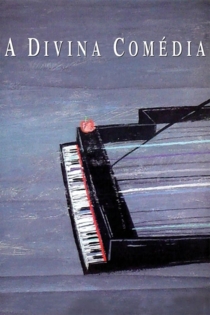
The Divine Comedy
Manoel de Oliveira
Maria de Medeiros, Miguel Guilherme
In a mental institution the patients see themselves as people like Jesus, Lázaro, Marta, Maria, Adão, Eve, Sonia, Raskolnikov, Aliosha e Ivan Karamasov, a Philosopher, a Profet, Santa Teresa d'Avila, reciting the Divine Comedy.
The Divine Comedy
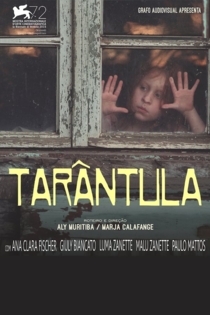
Tarântula
Aly Muritiba, Marja Calafange
Malu Zanetti Domingues, Luma Domingues Zanetti
In a distant mansion lives a religious and apparently incomplete family: a mother and her two daughters. Until the day which a new disturbing member comes to put things in their place.
Tarântula

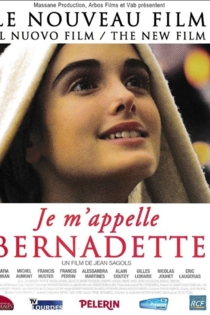
Je m'appelle Bernadette
Jean Sagols
Katia Cuq, Michel Aumont
Between February and July 1858, in the Massabielle cave, the Virgin appeared eighteen times to Bernadette Soubirous, a miserable little girl from Lourdes. A true revolution in the heart of the Second Empire that shakes the established order by his universal message of love and prayer.
My Name Is Bernadette
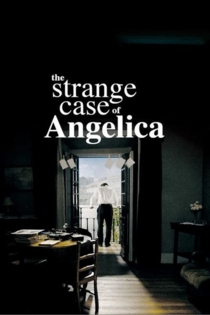
The Strange Case of Angelica
Manoel de Oliveira
Pilar López de Ayala, Leonor Silveira
A photographer, Isaac is asked by hotel owners to take portraits of their recently deceased daughter Angélica. When he looks at her through the lens of his camera, she appears to come back to life just for him. He instantly falls in love with her. From that moment, he will be haunted by Angélica day and night.
The Strange Case of Angelica
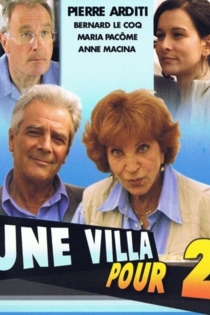
Une villa pour deux
Charlotte Brändström
Pierre Arditi, Bernard Le Coq
After the death of his father Daniel Tessard has convinced his mother Marion to come to live with him in his apartment in Paris.One year has passed and Marion is still living in the apartment.Daniel is now convincing his mother to go to live in a nice villa (that exists only in the pictures) and has contracted François Ferardini, a real estate entrepreneur for the last construction works.When he goes to see the villa,nothing has be done, it's a real disaster.Besides François tells him a lot of stories about the delay of the construction.What will Daniel do ?
Une villa pour deux
Eccentricities of a Blonde-Haired Girl
Manoel de Oliveira
Ricardo Trêpa, Catarina Wallenstein
Macário spends an entire train journey to the Algarve talking to a woman he does not know about the trials and tribulations of his love life: straight after starting his first job as a book keeper at his Uncle Francisco's shop in Lisbon he falls madly in love with a young blonde, who lives across the road. No sooner does he meet her than he straightaway wants to marry her. His uncle, totally opposed to the match, fires him and kicks him out of the house. Macário departs for Cape Verde where he makes his fortune. When he finally wins his uncle’s approval to marry his beloved, he discovers the “singularity” of his fiancée’s character.
Eccentricities of a Blonde-Haired Girl




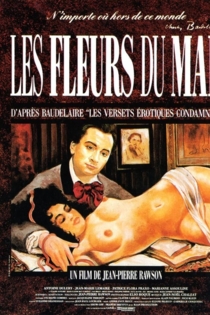
Les fleurs du mal
Jean-Pierre Rawson
Antoine Duléry, Jean-Marie Lemaire
Charles Baudelaire was one of the giants of 19th-century French poetry, and he earned his position among that nation's luminaries through the poems in one slim volume, entitled Les Fleurs du Mal (Flowers of Evil). A perfectionist to the extreme, he struggled with every word of those few poems for many years before he consented to see them published. When he did, six of them were condemned by the state censors as obscene. It was surely a powerful blow to him to have such a significant part of his life's work so rudely suppressed. This courtroom drama follows him at the 1857 trial at which he defended his works. The filmmaker has chosen to symbolically re-enact certain poems about the love of a woman as they are being read for the court. It is easy to imagine that, as was certainly the case for the trial of Oscar Wilde in England, this courtroom trial was a form of punishment for his publicly dissolute lifestyle.
Les fleurs du mal