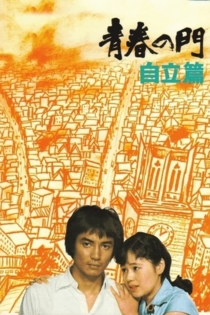
Ayumi Ishida
1948 (77 лет)Ayumi Ishida (born March 26, 1948 in Sasebo, Nagasaki, Japan and raised in Ikeda, Osaka) is a singer and actress. Her real name is Yoshiko Ishida. She is the second among four daughters. She won the award for Best Actress at the 4th Yokohama Film Festival for Yajūdeka. She also won the awards for best actress at the 29th Blue Ribbon Awards and the 11th Hochi Film Award for House on Fire and Tokei - Adieu l'hiver.
As for her musical career, she is best known for the singles "BLUE LIGHT Yokohama" (which topped the charts in 1968/1969 at #1), "Anata Nara Dousuru (#2), and "Sabaku No You Na Tokyo De" (#3).
Description above from the Wikipedia article Ayumi Ishida, licensed under CC-BY-SA, full list of contributors on Wikipedia.
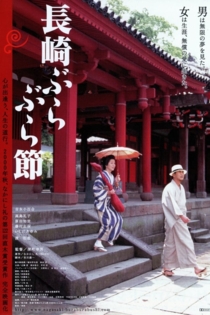
長崎ぶらぶら節
Yukio Fukamachi
Sayuri Yoshinaga, Tetsuya Watari
Screen icon Sayuri Yoshinaga stars in this historical melodrama about geishas in the southern city of Nagasaki set during the 1920s. Though she was sold to a geisha house at a young age, Aihara (Yoshinaga) has since become a master samisen player and woman of great elegance. Though not especially rich, she doles out money to street kids, in particular, a pretty young flower vendor named Oyuki, who becomes Aihara's godchild of sorts. Yet when a geisha (Reiko Takashima) from a rival red-light district insults Aihara and her brethren, she fights back. Soon an all-out geisha war looms. Dapper businessman and amateur scholar Tojiro Koga (Tetsuya Watari) appears on the scene and defuses tempers -- suggesting that difference be settled through a competition of artistic abilities. Smitten with her talent and mature beauty, Koga invites Aihara to record Nagasaki folk songs before they disappear forever
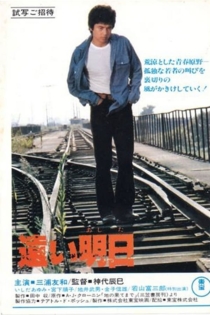
It Is a Long Walk

Aruku Aruku Aruku ~Shikoku Henro-michi~ SP
Rena Tanaka, Jun Inoue
Aruku, Aruku, Aruku ~Shikoku Henro-michi~ (NHK Drama Special, Winter 2013) is about Hayama Misa (Tanaka Rena), a down-on-her-luck free-lance writer. Leaving her unhappy life in Tokyo, she takes part in the Shikoku Pilgrimage as a lone walking pilgrim. It has been said that if a pilgrim completes the pilgrimage by visiting all 88 sacred places, his/her wish will be fulfilled.
Walk, Walk, Walk ~ Shikoku Pilgrimage Journey

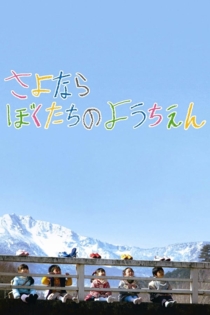
さよならぼくたちのようちえん
Nobuo Mizuta
Mana Ashida, Hikari Mitsushima
One day, five kindergarten children suddenly disappear from a kindergarten in Tokyo, sending their teachers and parents into a panic. The five of them are connecting on trains and headed to an unfamiliar place for some purpose. Before their journey, they had made a promise to each other “not to cry no matter what happens”
Goodbye to Our Kindergarten
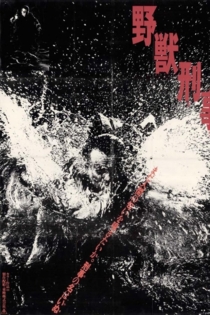
野獣刑事
Eiichi Kudo
Ken Ogata, Ayumi Ishida
Detective Seiji Otaki is determined to find the psychopathic killer of a young woman who was ostensibly a student but in reality a high-priced prostitute. Even though he has been taken off the case for beating up a suspect, he refuses to let it go and recruits his mistress to act as a decoy for the killer. Her involvement turns out to be a fatal mistake, and when her husband gets out of prison, Detective Otaki is in worse trouble than ever.
The Dropout
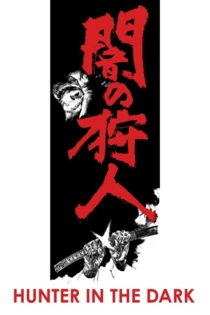
闇の狩人
Hideo Gosha
Tatsuya Nakadai, Yoshio Harada
Yataro Tanigawa, a one-eyed hired assassin, impresses yakuza boss Gomyo Kiyoemon with his skill. Gomyo hires Tanigawa as his bodyguard, or yojimbo, to protect him during an inter-clan conflict. Tanigawa quickly rises in stature in the clan, but finds his boss's enemies almost overwhelming.
Hunter in the Dark


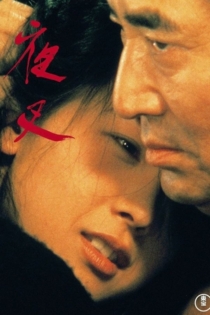
男はつらいよ 寅次郎あじさいの恋
Yoji Yamada
Kiyoshi Atsumi, Chieko Baisho
During his travels, Tora-san gets drunk with an old man in Kyoto. Though Tora-san never fully comprehends his importance, the old man is a Living National Treasure ceramist. At his home, Tora-san makes a good impression on the old man's maid, who apparently falls in love with Tora-san.
Hearts and Flowers for Tora-san
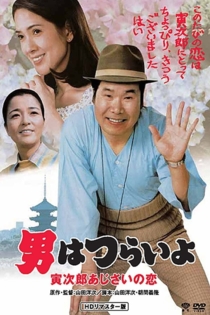
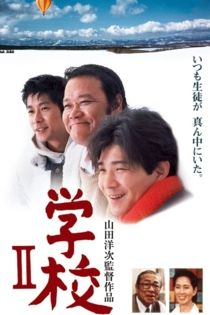
化粧師 KEWAISHI
Mitsutoshi Tanaka
Kippei Shiina, Miho Kanno
Director Mitsutoshi Tanaka's adaptation of a manga by Shotaro Ishinomori was an official selection at the 5th Shanghai International Film Festival and won the award for Best Screenplay at the 14th Tokyo International Film Festival.
Kewaishi
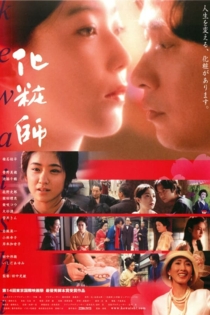
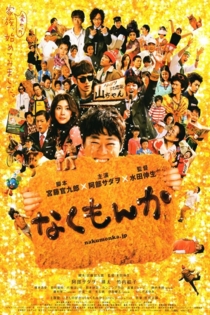
なくもんか
Nobuo Mizuta
Sadao Abe, Eita
Abandoned by his father as a boy, Yuta grows up as the foster son of a restaurant owner and takes over the restaurant at the owner's death. Cheery, always smiling, always helpful, Yuta is known as Yama-chan, the friend everyone turns to. When Yuta discovers he had a hitherto unknown baby brother, he sets out to track him down. But the baby brother, Yusuke, has grown up to be half of a successful comedy team, the Kinjo Brothers, and Yusuke's professional "brother" has just written a best-selling book about their adventures growing up together. Yuta's appearance on the scene threatens to reveal that the book is a complete fiction and to set all three "brothers" into conflict with each other.
No More Cry