Dietrich Siegl
1954 (71 год)Erdsegen
Karin Brandauer
Dietrich Siegl, Alexander Wagner
Vienna 1910. Hans Trautendorffer, an 35 year old journalist bets with his newpaper chief that he'll be able to work as a farm worker in the country for a whole year. But his dreams of a healthy, quiet country life don't come true- at least not the way he expected it.
Erdsegen



Wohin und Zurück - An uns glaubt Gott nicht mehr
Axel Corti
Johannes Silberschneider, Barbara Petritsch
After his father is murdered by the Nazis in 1938, a young Viennese Jew named Ferry Tobler flees to Prague, where he joins forces with another expatriate and a sympathetic Czech relief worker. Together with other Jewish refugees, the three make their way to Paris, and, after spending time in a French prison camp, eventually escape to Marseille, from where they hope to sail to a safe port
God Does Not Believe in Us Anymore

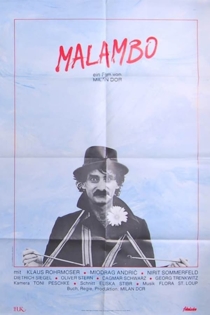
Malambo
Milan Dor
Klaus Rohrmoser, Miodrag Andrić
Chris, a young man from the country, dreams of a big career as an escape-artist. He wants to become famous like his idol, Harry Houdini. He meets Mischa, an expert in the art of living, who feels himself called upon to support Chris in attaining fame and an international career. Chris is very much attracted to Nada. Mischa's sister wants to break away from the Yugoslav workers' milieu. A spectacular performance is planned by Mischa and his friends to draw the medias' attention to Chris. Tied up in his strait-jacket, Chris wants to jump into the Danube and free himself under water. But neither newspaper journalists nor the TV turn up. Nevertheless Chris jumps into the water and frees himself. He wins Nada's love and restores his self-confidence. Malambo is a comedy, which portrays the dream world of an endearing community of friends, who are building 'castles of air' for themselves, in search for a better life.
Malambo
Four Women Are Just Too Much
Hartmut Griesmayr
Benedikt Gmeiner, Gusti Wolf
Tommy can't take it anymore. At home, the 14-year-old Vienna boy is the only man among many women: Sister, mom, grandma and great-grandma tugging at Tommy's nerves, also the schoolboy suffers from lovesickness. Nothing left to do but get out so Tommy travels to his father Hubert. Shortly after Tommy arrives there, grandma Lore-Mu and the rest of the clan join…
Four Women Are Just Too Much


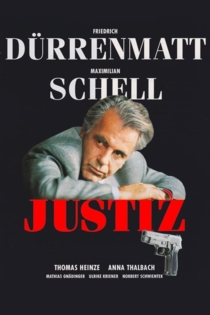
Justiz
Hans W. Geißendörfer
Maximilian Schell, Thomas Heinze
Senator Isaak Kohler shoots and kills Professor Winter in a crowded restaurant, while Winter is dining with the struggling idealistic young lawyer, Felix Spat. Kohler puts up no defense and is sentenced to twenty years. Kohler then gets his daughter Helene to pay the reluctant Spat to reinvestigate the case, on the assumption that Kohler is innocent. The newspapers pick up on this and begin to question whether Kohler was wrongly convicted.
Justice
Bauernprinzessin I
Susanne Zanke
Sissi Wolf, Roman Knizka
Due to the accidental death of Pichler Bauer his wife Ilse, Granny Burgi and especially the youngest daughter Anna are suddenly alone on the mountain farm. Contrary to expectations and traditions, Anna inherits the farm. A well considered decision of the father: For Anna wants to stay mountain farmer, to preserve the inheritance of her father. In contrast to her mother and her uncle. In order to receive her father's farm and to be able to cope with the heavy and exhausting work, Anna hired a Bosnian guest worker, a Muslim, as a servant. They manage to continue the successful business on the farm.
Bauernprinzessin I

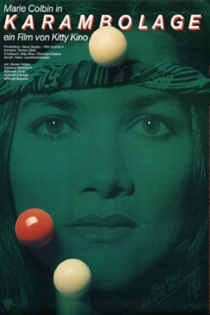
Karambolage
Kitty Kino
Marie Colbin, Gerhard Rühmkorf
Judit is up to her neck in art studies and the elitist art community but chucks it all to pursue a successful career as a billiard professional -- not exactly a likely alternative in real life, but certainly more lucrative. Just as she is finally at the apex of her chosen second field, Judit encounters male jealously and/or aggression in the form of intentional snubs from this different class of snobs, or in the worse instances, rape. Director Kitty Kino portrays many of the male figures in this film as weak, or drunk, or simply offensive, and because of the emphasis on those traits, the film will raise objections from some viewers. On the other hand, many women might see this film and feel that at least it brings up the difficulties women can face in getting ahead in a male-dominated arena, instead of side-stepping or ignoring the role of male prejudice.
Karambolage