Claus-Dieter Reents
1943 - 1996
Bei Thea
Dominik Graf
Marianne Hoppe, Hannes Jaenicke
David flies from Tel Aviv to Munich to study. Through a gay friend he meets Thea, the older quirky landlady of a gay pub. He becomes friends with Thea. She recognizes through a ring David wears that he is her grandson.
Bei Thea

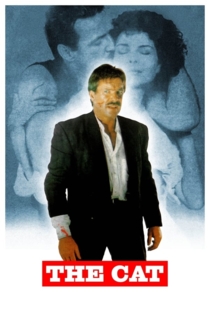
Death Is My Trade
Theodor Kotulla
Götz George, Kai Taschner
“Death is my Trade” centers on the life of Rudolph Höss, the commandant of Auschwitz II-Birkenau for the majority of its existence. The main character's name in the film is Franz Lang. This name change was deliberate to ensure that the character is not automatically viewed as being some sort of villain or demon. Franz is an average German kid growing up during World War I. The film follows Franz as he grows up and becomes a hard, efficient, organized worker who eventually joins the National Socialist party in Germany. Impressionable young Franz takes orders as one of the utmost points of honor and duty, so when he is eventually asked by Heinrich Himmler to become commandant of the largest extermination camp built during WWII he barely hesitates to consider how heavy such a burden will be.
Death Is My Trade
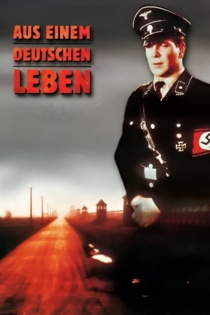
Publikumsbeschimpfung
Claus Peymann
Michael Gruner, Ulrich Haß
Four actors analyze the nature of theatre for an hour and then alternately insult the audience and praise its “performance.” TV recording of the premiere at the "Theater am Turm" in Frankfurt/Main.
Offending the Audience
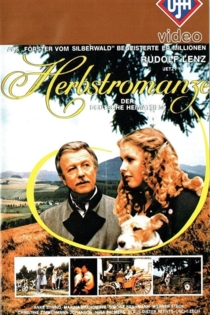
Herbstromanze
Jürgen Enz
Simone Brahmann, Marion Brandmaier
A short vacation should let the 17-year-old, deaf-mute Veronika forget the death of her beloved father, so the plan of her mother Christina. The place of recreation, however, is not chosen happily, due to lack of money: Gut Vorwald in the Sauerland region belongs to the mature nobleman Benno von Caldern, to whom Christina once pledged herself in her youth before meeting her future husband and renouncing Benno. Under the golden roof of autumnal oak crowns, the feelings of the past return, not without dramatic consequences.
Herbstromanze
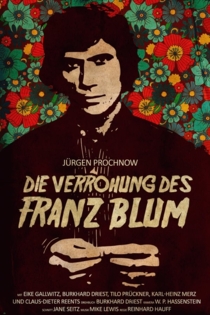
Die Verrohung des Franz Blum
Reinhard Hauff
Jürgen Prochnow, Burkhard Driest
Born into a well-off family, Franz Blum had led a carefree youth until, some time after graduating from high school, he was arrested by the police. For, involved by a gang of bad boys, the young man had taken part in a bank robbery. A "heroic deed" which earned him six years in prison. Once behind bars, he was treated with ruthless inhumanity by the guards. And little by little - but inexorably - Franz turned into an insurgent...
The Brutalization of Franz Blum
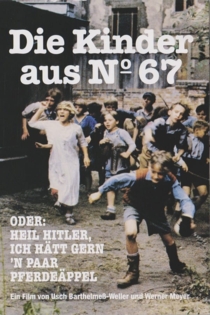
Die Kinder aus Nr. 67
Usch Barthelmeß-Weller, Werner Meyer
Bernd Riedel, René Schaaf
The "Our Gang" type adventures of German working class kids from a Berlin apartment building (number 67) during the early 1930s. With Nazism's rise, however, their tight-knit group unravels. One leader, Paul, becomes a Nazi.
Die Kinder aus Nr. 67
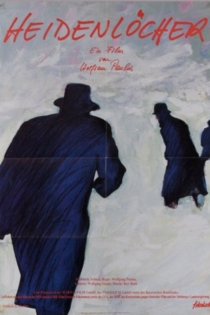
Heidenlöcher
Wolfram Paulus
Florian Pircher, Albert Paulus
In this well-photographed and sometimes confusing wartime drama, an Austrian village experiences the tragedy of war on several different levels. Within one family, the younger son is jealous of the praise his father gives to a Polish POW who is working for them under very difficult conditions. Within the village as a whole, the French, Polish, and Russian POWs are kept under guard by Nazi soldiers, creating a tense situation all around. But more importantly, the village has conspired to hide an Austrian deserter in a cave up in the mountains. This act of rebellion on the part of the deserter and the village hangs in a precarious balance that could be upset by a single traitorous comment to the Gestapo.
Hideouts