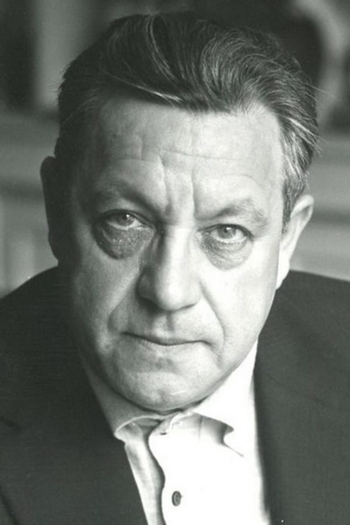
Paul Frankeur
1905 - 1974Description above from the Wikipedia article Paul Frankeur, licensed under CC-BY-SA, full list of contributors on Wikipedia
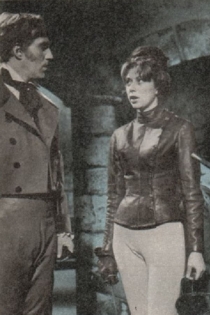
Hauteclaire ou le Bonheur dans le crime
Jean Prat
Mireille Darc, Paul Frankeur
The action takes place under the Restoration, at the Château de Savigny, near Nerville, a devout and prudish little town in the Cotentin region. Doctor Torty is the doctor. He tells a story of which he is the only one to know the secret, that of a criminal couple, without any remorse. The pretty Hauteclaire Stassin, daughter of the master of arms, meets the Count of Savigny, married to the noble and languid Delphine. Madly in love with the count, Hauteclaire joined the castle as a servant. Shortly after, the countess died of poisoning. Will the guilty lovers go unpunished?
Hauteclaire
The Phantom of Liberty
Luis Buñuel
Adriana Asti, Milena Vukotić
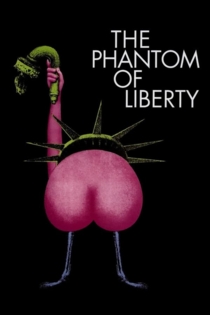
This Surrealist film, with a title referencing the Communist Manifesto, strings together short incidents based on the life of director Luis Buñuel. Presented as chance encounters, these loosely related, intersecting situations, all without a consistent protagonist, reach from the 19th century to the 1970s. Touching briefly on subjects such as execution, pedophilia, incest, and sex, the film features an array of characters, including a sick father and incompetent police officers.
The Phantom of Liberty
Touchez pas au grisbi
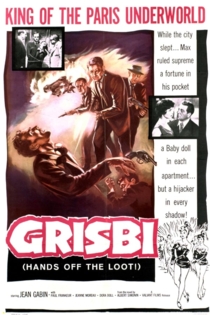
Jacques Becker
Jean Gabin, René Dary
Gentleman gangster Max and his partner, Riton, pull off their last, most successful heist and find themselves comfortable enough to retire in the style they enjoy. However, Max confides the details of the theft to his younger mistress, Josey -- who has secretly taken up with ambitious young rival gangster Angelo. Angelo then has Riton kidnapped and demands the stash of gold as ransom, which threatens Max's dreams of the perfect retirement.
Touchez Pas au Grisbi
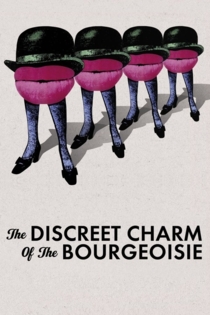
The Discreet Charm of the Bourgeoisie
Luis Buñuel
Fernando Rey, Delphine Seyrig
In Luis Buñuel’s deliciously satiric masterpiece, an upper-class sextet sits down to dinner but never eats, their attempts continually thwarted by a vaudevillian mixture of events both actual and imagined.
The Discreet Charm of the Bourgeoisie

Marie-Octobre
Julien Duvivier
Danielle Darrieux, Paul Meurisse
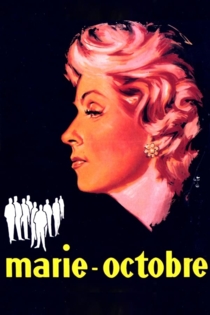
A group of ex-resistance fighters are brought together by Marie-Octobre, the code name of Marie-Helene Dumoulin. The former members of the network have carried on with their lives after the war, but this evening they are going to have to live again a fateful night – the night their leader was killed. He had been betrayed, his name given to the Germans. The search for the traitor puts each personality in the spotlight – and also that of the killed leader, Castille.
Marie-Octobre
Thérèse Raquin
Marcel Carné
Simone Signoret, Raf Vallone
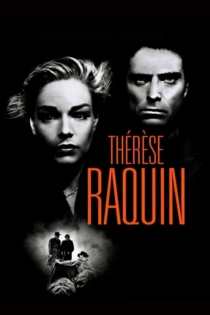
Star-crossed lovers Thérèse (Simone Signoret) and Laurent (Raf Vallone) think they've gotten away with murder after Thérèse's weakling husband "falls" from a speeding train. But when forced to contend with a blackmailer's demands and the mute accusations of Thérèse's mother-in-law (French stage and screen diva Sylvie, in a scene stealing performance), it's only a matter of time before the law, their passion or blind chance trips them up.
Thérèse Raquin
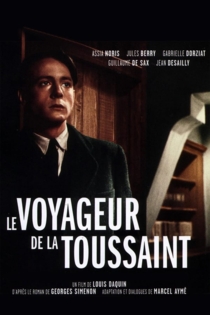
Le voyageur de la Toussaint
Louis Daquin
Assia Noris, Jules Berry
A young man comes back to his hometown to be confronted with a bourgeois obnoxious family who has always despised his -now dead - parents because they were music hall artists, "entertainers". But because he's the sole legatee of an uncle's fortune, his relatives become friendly with him.. at least for a while.
Le Voyageur de la Toussaint
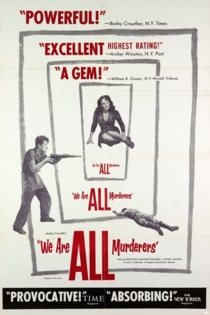
Nous sommes tous des assassins
André Cayatte
Marcel Mouloudji, Raymond Pellegrin
Originally titled Nous Sommes Tout des Assassins, We Are All Murderers was directed by Andre Cayette, a former lawyer who detested France's execution system. Charles Spaak's screenplay makes no attempt to launder the four principal characters (Marcel Mouloudji, Raymond Pellegrin, Antoinine Balpetre, Julien Verdeir): never mind the motivations, these are all hardened murderers. Still, the film condemns the sadistic ritual through which these four men are brought to the guillotine. In France, the policy is to never tell the condemned man when the execution will occur--and then to show up without warning and drag the victim kicking and screaming to his doom, without any opportunity to make peace with himself or his Maker. By the end of this harrowing film, the audience feels as dehumanized as the four "protagonists." We Are All Murderers was roundly roasted by the French law enforcement establishment, but it won a special jury prize at the 1952 Cannes Film Festival.
We Are All Murderers
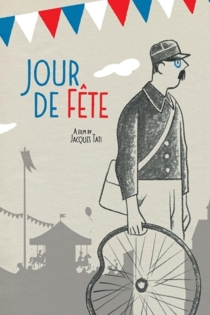
Jour de fête
Jacques Tati
Guy Decomble, Jacques Tati
Jour de Fête tells the story of an inept and easily-distracted French mailman who frequently interrupts his duties to converse with the local inhabitants, as well as inspect the traveling fair that has come to his small community. Influenced by too much wine and a newsreel account of rapid transportation methods used by the United States postal system, he goes to hilarious lengths to speed the delivery of mail while aboard his bicycle.
Jour de fête
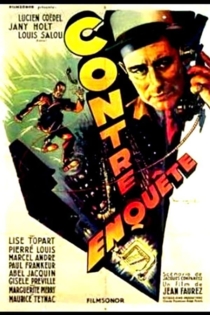
Contre-enquête
Jean Faurez
Lucien Coëdel, Louis Salou
Alain Marchal, wrongly accused of murdering his wife, escapes from prison the day before his execution. Before committing suicide, he contacts Monsieur Charles, a retired gangster, and asks him to investigate, find the real culprit and clear his name. Monsieur Charles accepts his request and along with his wife Ginette and two former accomplices, Paragraphe and Teddy Coffre fort, embarks on his counter-investigation.
Counter Investigation