
Roger Horn
2021The Sisterhood
Roger Horn
Hazendal farmhands Pietie, Hope and Rollie are not your typical Western Cape wine workers. Hope aspires to winning the local drag beauty pageant, Rollie is the raining queen of the pageant and dreams of finding a husband, and Pietie struggles with his religious upbringing while obsessing over his roses, chickens, and pigeons. These three trans-gender wine workers confront prejudice at every turn from their farming community, city trans-genders and the world at large. Roger Horn's film manages to find the fabulous in the fraught and offers a portrait of triumph in togetherness rather than loneliness in victimization
The Sisterhood
Scenes from a Transient Home
Roger Horn
Filmed on Super 8mm, Scenes from a Transient Home presents a fractured portrait of life for Zimbabwean migrants when they travel back home to visit. Christmas dancing, New Years Eve celebrations, house floods, and illegal gold panning are just a few of the events filmed by Roger Horn who bookends the film with a major life event for his family.
Scenes from a Transient Home
A Black Man in Zimbabwe
Roger Horn
In 1994, 62 children in Ruwa, Zimbabwe claimed to have seen a UFO and "black man" on the school playground. No teachers or school employees witnessed the sighting. Filmed in extreme close-ups director Roger Horn lets his imagination run wild as he combines archival interviews with visuals collected in Southern Africa and Europe.
A Black Man in Zimbabwe

African Film School
Roger Horn
Found Super 8mm home movies of wildlife from 1960s apartheid era South Africa and colonial Rhodesia (Zimbabwe) comprise the visual elements of African Film School. In order to disrupt the viewer, American filmmaker Roger Horn juxtaposes these found images with audio he recorded while attending a wildlife film-training program in Cape Town in 2007. Through the disruption of filmmaking conventions Horn looks to make the viewer confront their own stereotypes and ponder the nature of capturing images in Southern Africa.
African Film School
Research / Souvenir (Dialogues)
Roger Horn
Research / Souvenir (Dialogues), utilizes found Super 8mm footage from Rhodesia (Zimbabwe) and audio from ethnographic research gathered among Zimbabwean migrant women in Cape Town, South Africa. Part 1, Research, reveals the personal thoughts and challenges faced by researcher/filmmaker Horn in the field. Part 2, Souvenir (Dialogues), offers the research participants an opportunity to question Horn about his choice of souvenirs from the field, providing the political and economic backdrop to the ongoing exodus of Zimbabweans and leads up to the removal of long standing President Robert Mugabe on November 21, 2017.
Research / Souvenir (Dialogues)
I don't know if I'm coming or going
Roger Horn
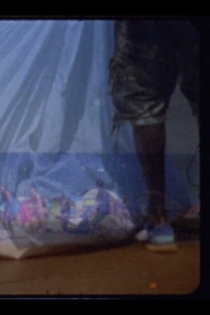
A random assemblage of broken pieces of found 8mm footage combined with filmmaker Roger Horn’s research and personal audio spanning 15 years, "I don’t know if I’m coming or going" seeks to elicit an emotional response from the material that takes viewers from game parks in Southern Africa to unknown European destinations.
I don't know if I'm coming or going
The Sisterhood: Visits With My Friends
Roger Horn
Filmed by Feebee Lee Von Diamond, a transgender wine estate employee in Stellenbosch, South Africa, “The Sisterhood: Visits with my Friends”, functions as a continuation and critique of director Roger Horn’s 2010 film, ‘The Sisterhood” in which Feebee briefly appeared. Feebee observes, provokes, and discusses failed romantic relationships, religion, drunken misadventures, and family loss with her close circle of friends. As Feebee explained to director Horn upon giving him her initial footage, “the first film was the truth, but everyone was on their best behavior most of the time in front of the camera and that is not always how we are.”
The Sisterhood: Visits With My Friends
These Objects, Those Memories
Roger Horn
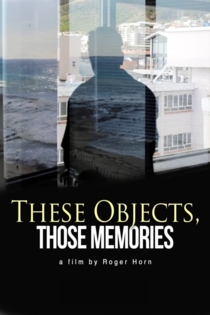
This is a split-screen film focused on material culture, specifically that of three long-term Zimbabwean female migrants currently residing in Cape Town, South Africa. Through an exploration of the objects they brought with them, the objects sent back to their homeland, the objects left behind and their associated memories, stories of joy, loss, and hopes for a return to Zimbabwe are examined.
These Objects, Those Memories
culture leap (non-linear)
Roger Horn
The primacy of culture. Culture over race. “culture leap (non-linear)” is composed of found home movies from South Africa and discarded 16mm film from the anthropology department at the University of Cape Town, salvaged by filmmaker Roger Horn while completing his PhD in Anthropology.
culture leap (non-linear)

Our Great Day 1967
Roger Horn
Comprised of found footage from apartheid era South Africa, Our Great Day 1967, imagines what a day would look like if black and coloured South Africans had the same rights and privileges afforded to white citizens of the time. Audio for the film was recorded in one take from filmmaker Roger Horn’s balcony, located across the street from a formerly segregated beach in Cape Town. Despite the filmmakers efforts to integrate the protagonists into areas they were formerly discriminated or excluded from, the painful reminders of the past in the form of domestic worker uniforms and the short takes or accidentally captured footage of them renders the past inescapable.
Our Great Day 1967