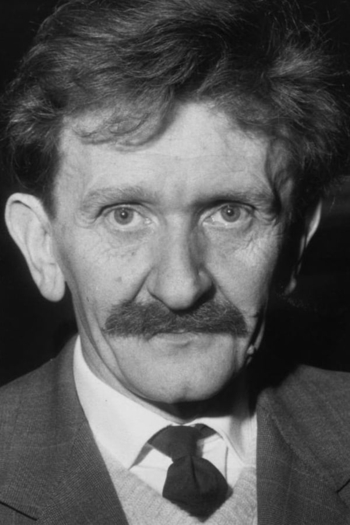
Georges Arnaud
1917 - 1987After obtaining his baccalauréat, he studied language and literature. He then moved to Paris and gained a law degree in 1938.
On the night of 24 to 25 October 1941, Henri's father (a deputy archivist at the Ministry of Foreign Affairs of Vichy France), aunt and a servant were murdered in the family castle. Henri Girard, the only survivor, raised the alarm the following morning to the castle staff. In the mysterious circumstances of the murder, Henri was arrested, charged and imprisoned. He spent nineteen months in prison where, because of the war, he was neglected and left to starve and freeze. His trial began on 27 May 1943; the jury acquitted him on 2 June.
Thereafter, he resided in Paris from 1943 to 1947, where he married a young singer, Suzanne Graux, for whom he wrote songs and with whom he had two sons. Some of his songs were performed by Edith Piaf, (such as Les Hiboux).
Disgusted by the power of man's fascination with money, he quickly spent the family inheritance, donating to a number of good causes. In debt and wanting to be forgotten (especially by his creditors), he left for South America on 2 May 1947.
Back in France in 1950, he published his first novel The Wages of Fear, inspired by his journey. Then came new works from his experiences: The Journey of the Wicked Thief and Schtibilem 41 (on his stay in prison). He also reported for various newspapers. In 1952, the filmmaker Henri-Georges Clouzot made a film adaptation of The Wages of Fear with Yves Montand and Charles Vanel.
In 1953, Henri Girard met his new companion, Rolande. They married in 1966 and had two daughters together. Also in 1953, his play Avowales the Sweetest created a scandal. The play was adapted for television by Édouard Molinaro in 1970. In 1962, Girard moved to Algeria with his family, where he helped establish a journalism school and launched a newspaper, Révolution Africaine. He left Algeria in 1974.
Between 1975 and 1981, he was a reporter on French television. In 1984, he settled with his wife in Barcelona where he died of a heart attack on 4 March 1987.
Two sons: Dominique (1946) et Henri (1947); two daughters: Catherine (1962) and Laurence (1964).
Source: Article "Georges Arnaud" from Wikipedia in English, licensed under CC-BY-SA 3.0.
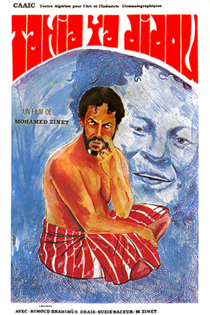
Tahya ya didou!
Mohamed Zinet
Georges Arnaud, Himmoud Brahimi
Originally commissioned by the city of Algiers to promote tourism, Mohamed Zinet’s Tahia ya Didou blends documentary with fiction to create a poetic, acerbic and rapturous portrait of the director’s native city. The camera travels freely, through the port, market, streets and cafés, capturing everyday people, some of whom recur frequently enough to seem like protagonists. The nominal plotline follows a French tourist couple’s leisurely visit to the city, the man having previously served in the army during the Algerian war. As they walk around, his comments betray his mindset’s racist colonial prejudices, while his wife reiterates asinine clichés. Their unhurried wandering is interrupted when he comes across a blind man and realises that he tortured him during his army service. The film is punctuated with punchy sequences that show a poet named Momo delivering verse as an elegy for Algiers.
Viva Didou!