Jack L. Warner
1892 - 1978Jack Leonard "J. L." Warner (August 2, 1892 – September 9, 1978), born Jacob Warner in London, Ontario, was a Canadian-American film executive who was the president and driving force behind the Warner Bros. Studios in Burbank, California. Warner's career spanned some 45 years, its duration surpassing that of any other of the seminal Hollywood studio moguls.
As co-head of production at Warner Bros. Studios, he worked with his brother, Sam Warner, to procure the technology for the film industry's first talking picture. After Sam's death, Jack clashed with his surviving older brothers, Harry and Albert Warner. He assumed exclusive control of the film production company in the 1950s, when he secretly purchased his brothers' shares in the business after convincing them to participate in a joint sale of stocks.
Although Warner was feared by many of his employees and inspired ridicule with his uneven attempts at humor, he earned respect for his shrewd instincts and tough-mindedness. He recruited many of Warner Bros.' top stars and promoted the hard-edged social dramas for which the studio became known. Given to decisiveness, Warner once commented, "If I'm right fifty-one percent of the time, I'm ahead of the game."
Throughout his career, he was viewed as a contradictory and enigmatic figure. Although he was a staunch Republican, Warner encouraged film projects that promoted the agenda of Democratic President Franklin D. Roosevelt's New Deal. He opposed European fascism and criticized Nazi Germany well before America's involvement in World War II. An opponent of Communism, after the war Warner appeared as a friendly witness before the House Un-American Activities Committee, voluntarily naming screenwriters who had been fired as suspected Communists or sympathizers. Despite his controversial public image, Warner remained a force in the motion picture industry until his retirement in the early 1970s.
Cavalcade of the Academy Awards
Carey Wilson, Janet Gaynor
This 1940 presentation features highlights of earlier (1928 onward) Oscar ceremonies including Shirley Temple and Walt Disney, plus acceptance speeches for films released in 1939 with recipients and presenters including Vivien Leigh, Judy Garland, Hattie McDaniel, Fay Bainter, Mickey Rooney, Thomas Mitchell, Sinclair Lewis, and more, with host Bob Hope.
Cavalcade of the Academy Awards
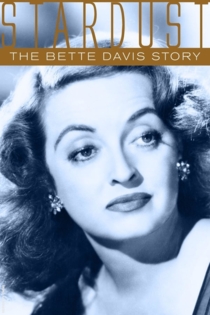
Stardust: The Bette Davis Story
Mark A. Catalena, Peter Jones
Susan Sarandon, Bette Davis
Combining unprecedented access to Davis' vast personal archives with original interviews, this documentary reveals a startling portrait of one of Hollywood's most gifted and enigmatic stars.
Stardust: The Bette Davis Story
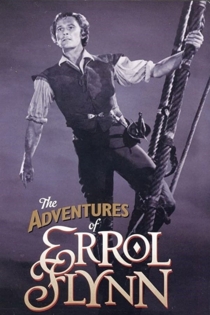
Hollywood Out-takes and Rare Footage
Stanley Sheff, Bruce Goldstein
Gig Young, Bud Abbott
Out-takes (mostly from Warner Bros.), promotional shorts, movie premieres, public service pleas, wardrobe tests, documentary material, and archival footage make up this star-studded voyeuristic look at the Golden age of Hollywood during the 30s, 40, and 50.
Hollywood Out-takes and Rare Footage
And the Oscar Goes To...
Jeffrey Friedman, Rob Epstein
Anjelica Huston, Annette Bening
The story of the gold-plated statuette that became the film industry's most coveted prize, AND THE OSCAR GOES TO... traces the history of the Academy itself, which began in 1927 when Louis B. Mayer, then head of MGM, led other prominent members of the industry in forming this professional honorary organization. Two years later the Academy began bestowing awards, which were nicknamed "Oscar," and quickly came to represent the pinnacle of cinematic achievement.
And the Oscar Goes To...
Jack L. Warner: The Last Mogul
Gregory Orr
Efrem Zimbalist Jr., Jack L. Warner
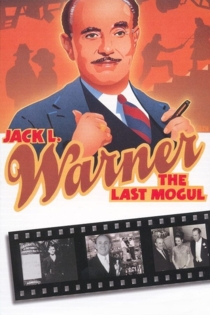
An insider's account of Jack Warner, a founding father of the American film industry. This feature length documentary provides the rags to riches story of the man whose studio - Warner Bros - created many of Hollywood's most classic films. Includes extensive interviews with family members and friends, film clips, rare home movies and unique location footage.
Jack L. Warner: The Last Mogul
The Voice That Thrilled the World
Jean Negulesco
Art Gilmore, Sheldon Jett
This short traces the history of sound in the movies, beginning with French scientist Leon Scott's experiments in 1857. Featured are snippets from early sound pictures.
The Voice That Thrilled the World
Okay for Sound
John Barrymore, James Cagney
This short was released in connection with the 20th anniversary of Warner Brothers' first exhibition of the Vitaphone sound-on-film process on 6 August 1926. The film highlights Thomas A. Edison and Alexander Graham Bell's efforts that contributed to sound movies and acknowledges the work of Lee De Forest. Brief excerpts from the August 1926 exhibition follow. Clips are then shown from a number of Warner Brothers features, four from the 1920s, the remainder from 1946/47.
Okay for Sound
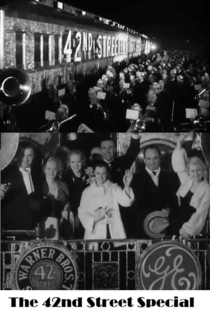
The 42nd Street Special
Darryl F. Zanuck, Leo Carrillo
As part of a publicity campaign for the film 42nd Street (1933), Warner Bros. Pictures, with the assistance of the General Electric Corporation, assembled a 7-car gold- and silver-plated train they called "The 42nd. Street Special". With numerous Warner Bros. contract stars as passengers, the train made a tour across the USA. It was scheduled to make stops in more than 100 cities, ending in Washington, D.C. for the March 1933 inauguration of Franklin D. Roosevelt. This short film records the send-off for this trip from Los Angeles' Santa Fe Station. Using a microphone set up on the rear platform of the last car, several people addressed the crowd attending the event. Those making remarks include performers, studio executives, and the mayor of Los Angeles.
The 42nd Street Special