Solomon Nagler
2021Black Salt Water Elegy
Solomon Nagler
Jacinte Armstrong, Cory Bowles
A short film that weaves together original and archival material to create an ethereal narrative texture, Black Saltwater Elegy intimately links the discordant threads of a popular history of dispossession (Africville) with the solitude of its protagonist's graveyard-shift fantasies. After opening with disquieting archival footage of the demolition of Africville, the film shifts to an austere observational portrait. A palatable sense of the duration of midnight work slowly shifts into subtle gestures that hint towards choreographed events. Eventually, a breech occurs as the protagonist fuses with an emergent dreamscape, where ruined landscapes and a resurrection of an extinct community intertwine. Using the protagonist's disembodied point-of-view, the audience floats above a reconstructed Africville, one forever present, nesting in a bed of saltwater fog.
Black Salt Water Elegy
J.
Solomon Nagler, Alexandre Larose
Found memories decayed by the shock patterns of childhood trauma. This films is made mostly with footage found in the bin of an ophanage. The white progressivelly disolve within a darknest more and more dense. Faces progressivelly disolves within one another.
J.
Fugue Nefesh
Solomon Nagler
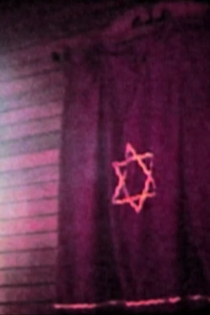
A survivor of the Holocaust and an impoverished aboriginal boy have just died. United in their displacement, they become caught up in the flux of transmigration. A nomadic fugue, they wander timelessly among the naked souls of Winnipeg's desolate North End.
Fugue Nefesh
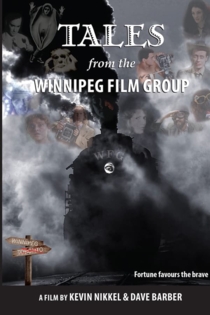
Tales from the Winnipeg Film Group
Kevin Nikkel, Dave Barber
Guy Maddin, Greg Klymkiw
The explosive story of how a stubborn band of independent filmmakers started a film co-operative that became the most highly respected and mythologized film centre in Canada. Tales outlines the tremendous importance and impact of Winnipeg on the national filmmaking scene. Packed with rare archival footage, dynamic film excerpts, and hilarious interviews, this documentary traces the history of the legendary Winnipeg Film Group. We hear candid behind the scenes stories that illuminate the storied rise of acclaimed filmmakers like John Paizs (Crime Wave), Guy Maddin (Tales From The Gimli Hospital, My Winnipeg) Shawna Dempsey and Lorri Millan (We’re Talking Vulva, Good Citizen, Betty Baker) and Caroline Monnet (Ikwe). Often mired in controversy, the Film Group has been acclaimed at film festivals around the world – attested to by several Toronto film luminaries in the film – for subversive, original filmmaking. This documentary continues that tradition of bold, exuberant work.
Tales from the Winnipeg Film Group
The Sex of Self-Hatred
Solomon Nagler
It's 1903, and Otto Weininger, Vienna's most infamous self-hating Jew has decided to kill himself in a room containing Beethoven's deathbed. He has just published his first book Sex and Character, and has yet to witness an acknowledgment of his self-assured genius. Haunted by the damning statements within his own book, he holds a gun to his head, and takes a leap towards the great unknown.
The Sex of Self-Hatred
Gravity and Grace
Solomon Nagler
Becca Babcock, Aaron Andreino
Hannah is about to have her third miscarriage. Working as a social worker at the Mission to Seafarers, she discovers a stowaway drifting aimlessly in the harbour, and decides to give the young man shelter in a decommissioned, cold war era nuclear fallout bunker that is being redesigned by her partner Antonia to serve as an archive dedicated to hagiographic graphology (the study of the saints through their handwriting). Hannah then retreats to a secluded cottage deep in the woods to confront pain and illumination alone.
Gravity and Grace

perhaps/We
Solomon Nagler
"Like a world seen in sleep - a paradox of wakefulness and delirium, part lucid dream, part sunshine through sleep-heavy lids - the treated footage in Solomon Nagler's perhaps/We follows a cycle, with motifs of the ever-present twilight in a steel-blue Warsaw set against what could be (but probably isn't) archive footage, of an old woman asleep on a day-bed and an overgrown, forgotten Jewish Cemetery. Found sounds and field recordings join scratched records to create a soundtrack as plaintive as Nagler's manipulated film stock, a lone voice introducing and concluding the film: I float/ Above the world/ In my sleep/ In my dreams / And every time I dream, I loose half my body. A rumination on loss and memory, or memories half-forgotten, whilst perhaps/We isn't figurative, it offers and account of humanity, peopled by ghosts - undoubtedly the ghosts of the Holocaust: mournful yet never peevish, never mawkish." - Adam Pugh, Programmer Aurora Film Festival, Norwich England.
perhaps/We