Nelson Henricks
2021Nocturne: Contemporary Video at Night
Dana Inkster, Anne Golden
The 10 new and retooled silent video works presented here are each director's response to a silent and nocturnal viewing situation. They are short, eclectic and remarkably diverse, representing a glimpse of contemporary Canadian video art.
Nocturne: Contemporary Video at Night
Emission
Nelson Henricks
Pierre Beaudoin, Bernard Chassé
Human beings define themselves in opposition to both nature and technology. Emission attempts to confound any simplistic analysis of these worn-out dualities. The video comprises eight episodes that are grouped into three acts. The first addresses technology and language. The second implies a breakdown of language and a movement towards being animal. The third envisions a confrontation with our animal nature.
Emission
Shimmer
Nelson Henricks
"Our apartment was one hundred years old, and it was haunted. Friends suggested that we paint a black spot on the ceiling to get rid of the ghost. She wasn't a bad ghost, she was just an old hooker. She kept turning the front hall light on and off, and opening doors for her johns, who came at all hours of the night. She loved sex and she loved parties, so we were forced to have sex and parties all the time to appease her. Other ghosts were also there: immigrants who spoke neither English nor French. They had come from far away, and longed to return to their homelands. Sometimes they sang sad songs. Shimmer started as their story. My grandmother's story, my parents' story and mine got mixed up with theirs along the way." - Nelson Henricks
Shimmer
Time Passes
Nelson Henricks
Using a Super8 camera, Henricks employed time-lapse photography to document the interior and exterior of his apartment. Inspired by the work of Virginia Woolf, this video uses writing as a metaphor to examine temporality and impermanence. Time Passes is part a series of works that explores one of the principle metaphors of video: the window.
Time Passes
Crush
Nelson Henricks
Crush is the story of a man who wants to turn into an animal. He employs a variety of techniques to transform himself. He cuts off parts of his body. He exercises. He wants to return to the water to speed up evolution a little. Has he gone mad, or is he just tired of being human? As the narrator descends into his private obsessions, we begin to perceive the distorted outlines of reason that guide his journey. The trajectory he takes allows us to reflect upon the correlations between the body and identity, our culture’s obsession with the body beautiful and what it means to be human.
Crush

Conspiracy of Lies
Nelson Henricks
Conspiracy of Lies speaks of alienation and minorities, consumer culture, urban isolation, and the fine balance between mental order and chaos. The tape begins with a voice recounting the story of the discovery of a series of diary entries and lists written by an anonymous author. Through the use of twelve different narrators, an attempt is made to destabilize pre-existing assumptions concerning the voice of the author.
Conspiracy of Lies
Fenêtre
Nelson Henricks
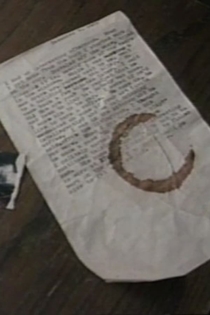
Over the course of one year, Henricks periodically shot footage from front window of his third floor apartment. This material became the basis of Window, a video about knowing. How do we come to know a place or a person? Our knowledge comes from more than one unique experience. It is the sum of repetition and variations. Window shows how a whole can be more than merely the sum of the parts. It is the first in a series of works that explores one of the principle metaphors of video: the window.
Window
Handy Man
Nelson Henricks
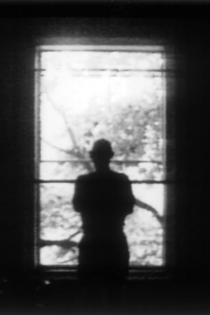
Handy Man examines the window as a site of voyeurism and surveillance. With his Hi-8 camera, Henricks documents two workers in his interior courtyard. The camerawork has a secretive and furtive feel, treating the male body as an erotic object. This footage forms the basis of a video which attempts to implicate the viewer in processes of exhibitionism and image fetishization. Handy Man is part of a trilogy of works exploring one of the principle metaphors of video: the window.
Handy Man
Comédie
Nelson Henricks
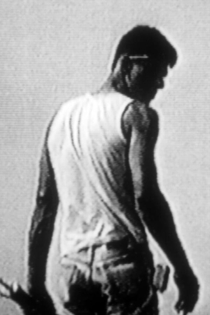
"This two-part video is a newcomer’s portrait of Montréal. I spent my first winter in Québec in a cold, dark, first floor apartment. I sat in the kitchen beside the electric heater, drinking coffee while watching the electric meter, wondering how I would pay my bills. At night, I looked at the illuminated “Q” on the Hydro Québec building and imagined how much it cost to keep it lit. In the second section, a man looks for meaning in the tile patterns of the Champ-de-Mars metro station. I took his search to an end more absurd than anything I could hope to enact. The moral of these two tales is: “Don’t lose you sense of humour”. It’s from this cliché that the video derives its title." - Nelson Henricks
Comedy