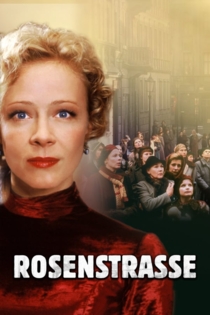
Fritz Lichtenhahn
1932 - 2017

Wer zu spät kommt – Das Politbüro erlebt die deutsche Revolution
Jürgen Flimm
Hans Christian Blech, Christoph Bantzer
The TV documentation reconstructs the incidents between May and November 1989 from the point of view of the Politburo of the GDR (German Democratic Republic). The incidents include the fraud of local elections, the opening of Hungary's borders towards Austria, the ensuing tide of East German refugees to Hungary and Czechoslovakia for transfer to West Germany, the pompous ceremonies at GDR's 40th anniversary, the inept transactions the Politburo took to salvage the situation, the resulting dismissal of their leader Erich Honecker, the international press conference in East Berlin on 9th November 1989, at which Politburo member Günther Schabowski erroneously announced the immediate opening of the 'Iron Curtain', which finally led to the collapse of socialism in the GDR and the other East Bloc countries.
Wer zu spät kommt – Das Politbüro erlebt die deutsche Revolution
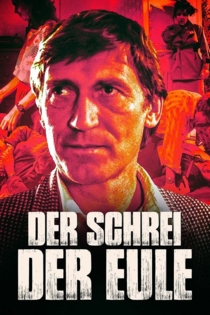
Schwestern oder Die Balance des Glücks
Margarethe von Trotta
Jutta Lampe, Gudrun Gabriel
Sisters Maria and Anna live together. Maria is a most proficient executive secretary, encouraging Anna to finish her studies and start a career. Anna broods, threatens to quit university, takes pills, and keeps a diary. When Maria's relationship with Maurice, the son of her boss, starts to lead to love, Anna takes a selfish and drastic step that plummets Maria into solitude. No longer able to connect with Maurice, Maria does establish a relationship with Miriam, a typist at her office who becomes a surrogate younger sister. But Maria is intrusive as well as helpful. Can this or any relationship work out for this talented woman whose past seems to choke her soul?
Sisters, or The Balance of Happiness
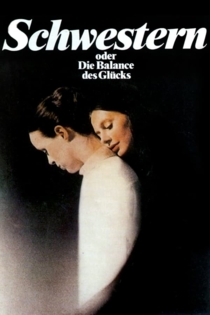
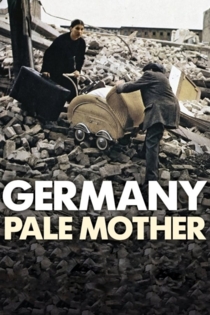
Germany Pale Mother
Helma Sanders-Brahms
Eva Mattes, Ernst Jacobi
Germany 1939. Hans and Lene marry the day before the war breaks out, and Hans is sent to the Eastern front. During a bombing raid their daughter Anna is born. The house is destroyed and Lene and Anna moves in with relatives in Berlin. Hans survives the war but he is not the same person as in 1939, and he and Lene find it difficult to live together again.
Germany Pale Mother

Rosenstrasse
Margarethe von Trotta
Katja Riemann, Maria Schrader
When Ruth's husband dies in New York, in 2000, she imposes strict Jewish mourning, which puzzles her children. A stranger comes to the house - Ruth's cousin - with a picture of Ruth, age 8, in Berlin, with a woman the cousin says helped Ruth escape. Hannah, Ruth's daughter engaged to a gentile, goes to Berlin to find the woman, Lena Fisher, now 90. Posing as a journalist investigating intermarriage, Hannah interviews Lena who tells the story of a week in 1943 when the Jewish husbands of Aryan women were detained in a building on Rosenstrasse. The women gather daily for word of their husbands. The film goes back and forth to tell Ruth and Lena's story. How will it affect Hannah?
Rosenstrasse