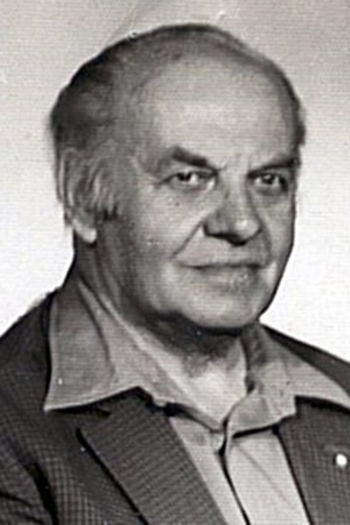
Aleksander Fogiel
1910 - 1996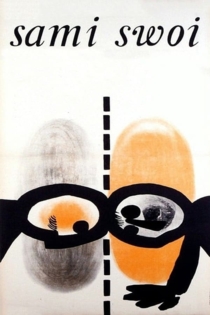
Nie ma mocnych
Sylwester Chęciński
Wacław Kowalski, Władysław Hańcza
The main characters are the same two quarreling peasant families introduced in "Sami swoi" (Our Folks). The action of the film starts 18 years later. The old quarrels have been forgotten, but new problems keep popping up. They have no successors to inherit the farms. They invent a tricky and clever plan. The young granddaughter is to take over both of the farms after her marriage. Both Kargul and Pawlak have no rest until they carry out the plan. In the end, after numerous adventures and obstacles their cunning intrigue is fulfilled - the young marry and the land remains in the family's hands.
Take It Easy

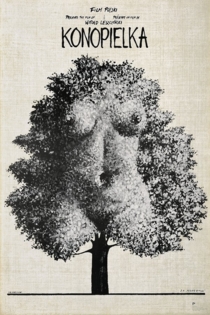
The Linnet
Witold Leszczyński
Krzysztof Majchrzak, Anna Seniuk
Kaziuk, a stubborn peasant and his pregnant wife live in a backwood village, unaffected by the civilization. The village is once visited by a couple of wanderers, and strange things start to happen afterward. A new schoolteacher is sent to the area. She stirs erotic fantasies in Kaziuk. In a stir of frustration Kaziuk cuts down a family tree - a sacrilegious act in the eyes of his family. Going a step further and using a scythe for cutting the rye instead of a sickle brings the whole village against him.
The Linnet
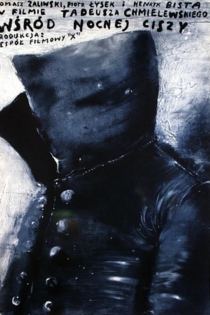
Wśród nocnej ciszy
Tadeusz Chmielewski
Tomasz Zaliwski, Piotr Łysak
A psychological detective story about a police hunt for the murderer of young boys. The police comissioner ends up tracing the clues to his own home, where he has an adolescent son he has not been able to communicate with.
Quiet Is the Night
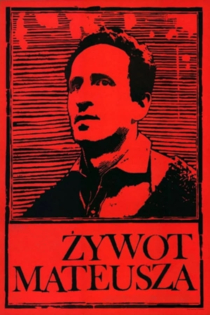
Matthew's Days
Witold Leszczyński
Aleksander Fogiel
A man who is socially inept and out of touch with the world lives with his sister in a small farmhouse. The overly sensitive man lives off his hard-working sibling, taking odd jobs as he gets them to secure his meager earnings. When he brings home a woodcutter from the forest, the sister and the newcomer fall in love. Terrified over a life without his sister, the man can't cope.
Matthew's Days
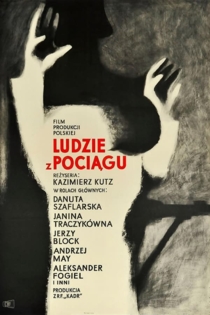
The People from the Train
Kazimierz Kutz
Janina Traczykówna, Andrzej May
A group of people find themselves stuck in remote train station in German-occupied Poland. A drunk German station guard there gets paranoid and sees partisans all around him, phones headquarters, and when the German soldiers arrive and search the station they find a gun. They then threaten to execute every fifth person unless someone claims it.
The People from the Train
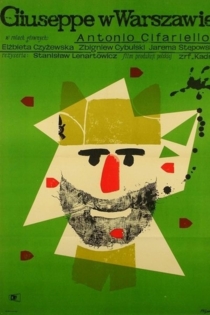
Giuseppe in Warsaw
Stanisław Lenartowicz
Elżbieta Czyżewska, Antonio Cifariello
The Italian soldier Giuseppe Santucci, on his way home from the Russian front, during World War II (in 1943), has his machine gun stolen in Warsaw. Afraid of consequences, he stays in Warsaw and occupies a flat of the Polish girl Maria, whom he suspects of stealing weapon. Maria indeed is an active member of the Polish resistance, contrary to her brother, Staszek, a painter, who only wants a calm living. In a course of funny events, Giuseppe falls in love, and, along with Staszek, becomes a hero of the Polish resistance.
Giuseppe in Warsaw
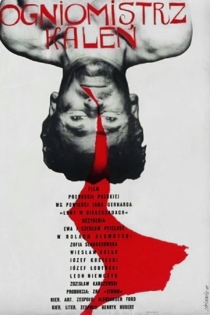
Ogniomistrz Kaleń
Czesław Petelski, Ewa Petelska
Wiesław Gołas, Zofia Słaboszowska
The movie is about the fate of Polish soldier named Kaleń who fought with UPA in 1945. Set in the closing days of World War II, the film recounts the adventures of the Polish soldier caught in the turmoil among the Polish Communist army, anti-communist underground and Ukrainian fascists.
The Artillery Sergeant Kalen
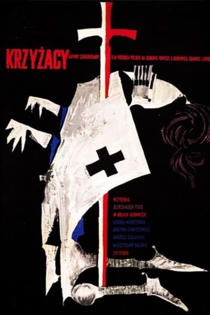
Knights of the Teutonic Order
Aleksander Ford
Urszula Modrzyńska, Andrzej Szalawski
A tale of a young impoverished nobleman, who with his uncle returns from a war against the order of the Teutonic Knights in Lithuania. He falls in love with a beautiful woman and pledges an oath to bring her "three trophies" from the Teutonic Knights.
Knights of the Teutonic Order
Lalka
Wojciech Has
Beata Tyszkiewicz, Mariusz Dmochowski
Set in the 19th century Warsaw. The indolence of aristocrats who, secure with their pensions, are too lazy to undertake new business risks, frustrates Wokulski. His ability to make money is respected but his lack of family and social rank is condescended to. Because of his "help" (in secret) to "the doll's" impecunious but influential father, the girl becomes aware of his affection.
The Doll
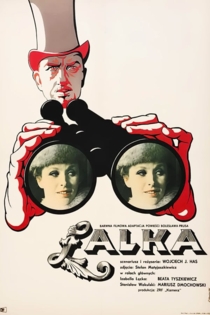
Krzyz Walecznych
Kazimierz Kutz
Jerzy Turek, Aleksander Fogiel
Three episodes showing the repercussions of war. A soldier is awarded with the Cross of Valor and vacation to home. But instead of his village, he finds only the charred ruins. A stray dog turns out to be the former guard at Auschwitz. A young widow is hailed as the wife of the hero but dreams of something else.
Cross of Valor
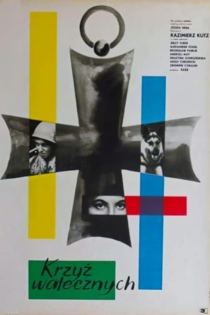
Szatan z 7-ej klasy
Maria Kaniewska
Józef Skwark, Stanisław Milski
Adventures of Adam Cisowski - very smart boy- who is looking a big treasure hidden by Napoleon's Soldier in XIX century. But he is not only person who is looking a treasure. His rivals are very dangerous.
The Devil from Seventh Grade
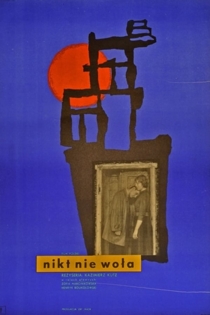
Nikt nie woła
Kazimierz Kutz
Zofia Marcinkowska, Henryk Boukołowski
"In 1960 Kazimierz Kutz' second film NIKT NIE WOLA / NOBODY'S CALLING, based on a Jozef Hen novel that was never published in Poland, described the fate of Poles on the Eastern Front. Kutz used the film to explore new formal solutions, collaborating closely with cinematographer Jerzy Wojcik to reveal the psychological landscape of a pair of lovers who are strongly affected by wartime events. The camera recorded the couple's inner experiences, contrasting their muted intimacy against the surrounding scenery of a ruined town. The film did not win over critics at the time of its release. It was not until later that critics recognized Kutz's effort to experiment with aesthetics in a manner akin to that pursued by filmmakers of the new wave. NOBODY'S CALLING came to be compared with Michelangelo Antonioni's THE ADVENTURE, which was produced around the same time."
Nobody's Calling