
Giuseppe Spina
2021Macchina Infinita
Giuseppe Spina, Giulia Mazzone
Alberto Nerazzini
During a workshop, the LABA students together with Giulia Mazzone and Giuseppe Spina discover the collection of cinema machines kept by the Museo dell’Industria del Lavoro in Brescia. This visit becomes the leitmotif of a series of thoughts on technological development and on the imaginary of the infinite machine.
Macchina Infinita
Luminous Variations in the City Skies
Giuseppe Spina
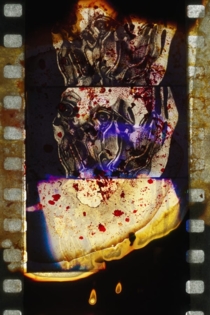
At Bologna’s Specola Tower, 1932–1957, an optical technology was invented which would revolutionize astronomy. The tower’s four floors were perforated and a series of hexagonal mirrors was installed at its base, creating a giant telescope of 2×24 meters. A mobile camera was set at right angles to the mirrors and thousands of glass plates where exposed which offered a systematic overview of the city’s zenithal sky. Thirty years of research were necessary for the astronomer Guido Horn D’Arturo to invent the specchio a tasselli—also called multimirror or segmented mirror—an archetype of today’s most advanced telescopes. Horn D’Arturo’s photographic plates are now also full of spots and traces of deteriorated emulsions. This film is composed of scans and blow-ups of these plates.
Luminous Variations in the City Skies
Impressio in-urbe (#1 Bologna)
Giuseppe Spina
“Impressio in-urbe” goes through the textures of the urban space: the materiality of architectures, corners and prospectives, the drawings of pavings, the squares, the bricks; it’s a detailed decomposition of the city’s “cloak” from which the broken matter emerges, seemingly immovable but in a continuous connection, in the centuries, inhabited by its moltitude.”Impressio” is the print, the mark which all things and every gesture leave of itself, the “identikit” (and vivisection) of the city’s space and time, which gives back to us its view.
Impressio in-urbe (#1 Bologna)