Zdzisław Wardejn
1940 (85 лет)
Vabank
Juliusz Machulski
Jan Machulski, Leonard Pietraszak
October 1934. Poland. Famous bank robber Kwinto decided to quit his dangerous criminal job, but after his friend's death, he changed his mind and organized a burglary of famous and well protected bank which belonged to his former partner in crime, backstabbing and double-crossing Kramer. Kwinto designs a clever plan not to only rob the Kramer's bank but to make it look like Kramer himself did it.
Vabank

Corpus Christi
Jan Komasa
Bartosz Bielenia, Aleksandra Konieczna
A pious 20-year-old juvenile delinquent is sent to work at a sawmill in a small town; on arrival, he dresses up as a priest and accidentally takes over the local parish. The arrival of this young, charismatic preacher is an opportunity for the local community to begin the healing process after a tragedy that happened a year prior.
Corpus Christi


Piłkarski poker
Janusz Zaorski
Janusz Gajos, Małgorzata Pieczyńska
Laguna (Janusz Gajos) was once a great soccer player whose career was interrupted by an injury. He spent years climbing the ranks to become an international referee. He sees the prevailing arrangements, manipulations, and bribery around him. Now desperate, he decides to stage an extraordinary culmination of his career: he wants to create a so-called "miracle Sunday" by "printing" the final round of games - taking substantial bribes from the interested clubs and manipulating the matches so that the results align in the order he set up.
Soccer Poker


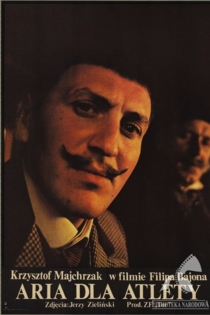
Aria dla atlety
Filip Bajon
Krzysztof Majchrzak, Pola Raksa
Set at the turn of the century it presents a story of a famous Polish athlete, Zbyszko Cyganiewicz. It begins in a small town where a traveling circus attracts a shy boy into a phony wrestling game to please the crowds. The youth, however, takes his strength seriously, eventually defeating a name wrestler in a fair match. Angered circus manager fires him; he leaves happily due to two wrestler brothers who were harassing him. The wrestler goes on to fame, performing in the world's top arenas, and one day is serenaded by a tenor from the crowd. Fame brings him women and admirers but he is uncompromising on his profession. He has his revenge on one of his tormentors defeating him in the ring. One day, attending a game in a tuxedo, he is challenged by another of the brothers and drawn into a brutal game, in course of which he kills his opponent. Thus his career ends.
Aria for an Athlete
Kogel-mogel
Roman Załuski
Grażyna Błęcka-Kolska, Ewa Kasprzyk
Following the emotions associated with entrance examinations to the faculty of pedagogy, Catherine Solska returns to his native village. And here she will surprise - the family without their knowledge to begin preparations for engagement with a rich neighbor Kolasa. Girl falls into despair, tries to oppose the decision of the parents, but is closed in his room. On visits to her fiance and flees out the window calling mail to the university. Receives misleading information and is convinced that was not accepted to college. Resigned returns home and agrees to the wedding. Meanwhile, on the eve of the wedding the postman brings the notice of acceptance to the university.
Kogel-mogel

Bez milosci
Barbara Sass
Dorota Stalińska, Władysław Kowalski
Ewa is a reporter. Using her feminine charms and other means she is trying to become a journalist on a Warsaw weekly popular magazine. She hopes to become political interviewer of personalities and state leaders. On her way up the ladder she trips over one of her own shoestrings and falls short of the goal she has been pursuing so fanatically.
Without Love



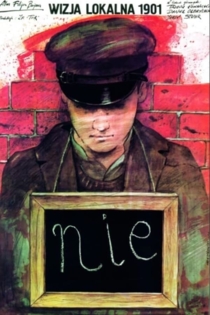
Wizja lokalna 1901
Filip Bajon
Tadeusz Łomnicki, Daniel Olbrychski
More documentary in its approach than dramatized history, this is a compelling story about a 1901 children's strike in Wrzesnia near the Polish border with Prussia. Poland was partitioned at this time, and a rigidly patriotic Prussian teacher in Wrzesnia follows the dictates of the Germans in parliament and insists that the children be taught their religion classes in German. When the children refuse to take part in the classes, they are supported by the local priest, but that does not save them from being beaten. They are also kept after school and tormented in other ways as well. Newspapers, parents, and the nation as a whole get involved, transforming a simple children's strike into a national incident.
Wizja lokalna 1901