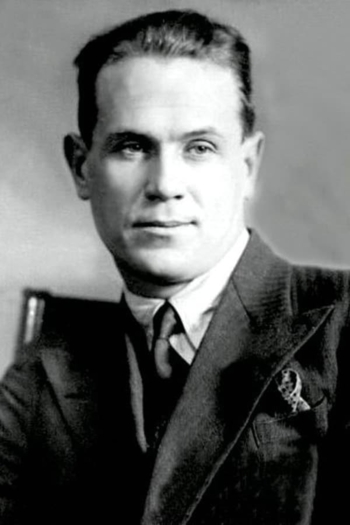
Boris Babochkin
1904 - 1975Участник Гражданской войны. В пятнадцать лет комсомолец Борис Бабочкин служил в политотделе 4-й армии Восточного фронта.
В 1920-1921 годах — сотрудник театральной студии "Молодые мастера" под руководством И.Н. Певцова. Работал в Театрах Иваново-Вознесенска, Могилева, Костромы, Воронежа, Самарканда, в Московском театре имени МГСПС и Московском драматическом театре. С 1927 года — актёр ленинградского Театра сатиры. В 1931-1935 годах — работал как актёр и режиссёр в Государственном академическом театре драмы имени А.С. Пушкина. В 1935-1940 годах — актёр и режиссёр, а затем и художественный руководитель Большого драматического театра имени Горького. С 1940 года — актёр и режиссёр московского Театра имени Вахтангова. В 1948-1951 и с 1955 года — актёр и режиссёр Академического Малого театра, в 1952-1953 годах — главный режиссёр Московского театра имени А.С. Пушкина. С 1944 года преподавал во ВГИКе (с 1966 года — профессор).
Народный артист РСФСР (1935).
Народный артист СССР (28.09.1963).
Герой Социалистического труда (18.01.1974).
Жарким летним днём 1975 года недалеко от Малого театра остановилась легковая машина. Борис Андреевич успел затормозить и никому не принёс вреда, но не успел принять сердечное лекарство... Он только что отвёз в редакцию газеты "Известия" статью о IX Московском международном кинофестивале, только что побывал в Малом театре, где назначил на следующий день встречу с Игорем Владимировичем Ильинским: Борис Андреевич начинал ставить "Чайку" Чехова, и Ильинский должен был в ней играть... Скончался 17 июля 1975. Похоронен актёр в Москве на Новодевичьем кладбище (2 участок).
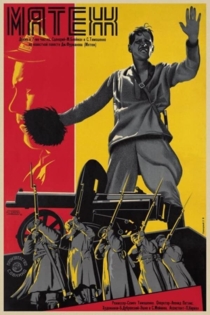
Мятеж
Semyon Timoshenko
Anatoly Alekseev, Tatyana Guretskaya
Central Asia during the Civil War. The Jarkent battalion of the Red Army, located in the Verny (now Alma-Ata), receives an order from Frunze to go to the Fergana region to fight the Basmachi. A group of kulaks, with the support of local merchants and beys, incites the unconscious, wavering mass of the Red Army to revolt. The anti-Soviet agitation of counter-revolutionaries, demagogically exploiting the mood of war weariness, provokes an open mutiny in the battalion.
Mutiny
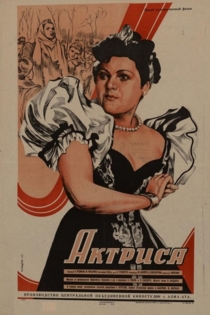
Povest o Nastoyashchem Cheloveke
Aleksandr Stolper
Pavel Kadochnikov, Nikolai Okhlopkov
Alexey Meresyev was a fighter pilot during the war. One day he was shot down by Nazis, and because of his wounds both of his legs had to be cut off up to his knees. Because of his spirit and courage, Alexey was able to overcome his disability. He learned not only to walk on his artificial limps, but even dance and fly the plane again. Based on a real-life story.
Story of a Real Man
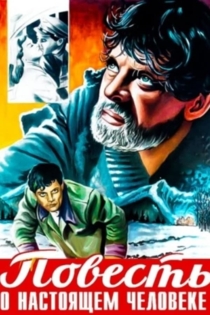
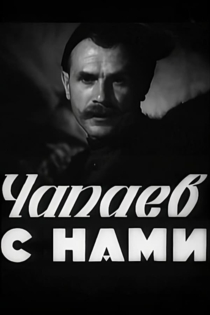
Чапаев
Sergey Vasilev, Georgi Vasilyev
Boris Babochkin, Leonid Kmit
This film is based on the book about Vasili Ivanovich Chapaev (1887 - 1919) who was in real life the Commander of the 25th Division of the Red Army. Chapaev is an uneducated peasant and a decorated hero in the World War I and later in the Russian Civil War, that followed the Russian revolution. This man of action is fighting on the side of the poor people. His troops consist of peasants, just like him. Unable to write, he can brilliantly demonstrate various battle tactics by moving potatoes on the table. He is street smart. He never lost a battle against the experienced Generals of the Tzar's Army.
Chapayev
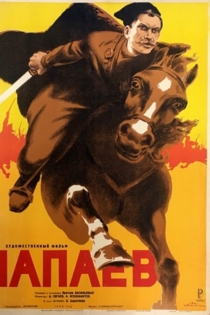
Подруги
Lev Arnshtam
Zoya Fyodorova, Irina Zarubina
Girlfriends Zoya, Natasha and Asya live in Petrograd. Before the Civil War, young heroines are aware of the social injustice of life. When the war begins, the girls are recorded by the orderlies of the working group to protect the Bolshevik Petrograd from the advance of the whites.
The Girlfriends
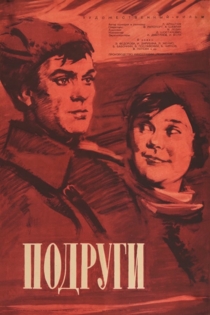
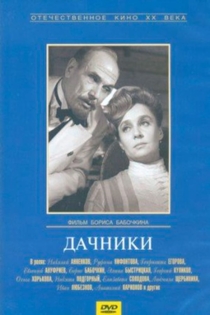
Дачники
Boris Babochkin, Yelena Skachko
Nikolai Annenkov, Rufina Nifontova
In the focus of the film is the fate of Varvara Basova, whose painfully soulless, philistine-gray existence, devoid of ideals and moral content. Relevant today, the picture sounds like a verdict to all who are mired in vulgarity, who have exchanged life for petty pleasures, profit, empty philosophizing.
Dachniki
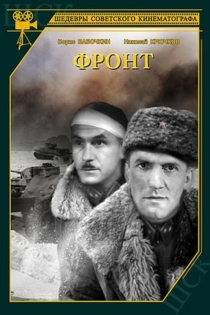
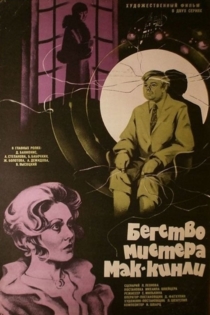
Бегство мистера Мак-Кинли
Konstantin Stenkin, Mikhail Shveitser
Donatas Banionis, Zhanna Bolotova
A man decides to escape into the future by the way of hibernation. When he wakes up, feeling lucky that the experiment worked out well, the staff of the hibernation company politely walks him to the outside were he finds a post atomic war desert… He wakes up! Thank God it was just a dream! Or was it?
Escape of Mr. McKinley
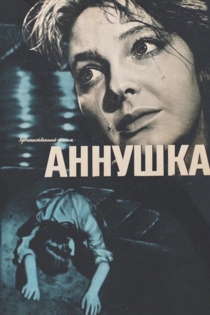
Аннушка
Boris Barnet
Irina Skobtseva, Anastasiya Georgiyevskaya
The main character, Anna Denisova, is a simple Russian woman, on whose shoulders all the hardships of wartime fell. Like all her compatriots, Annushka did everything in her power to bring Victory Day closer. In this war, she lost her husband, Pyotr, but managed to save the lives of her three children — Sasha, Nina and Granata. The trials of Annushka didn't end with the end of the war. In the first years of peace, all survivors had to survive the famine and spend their last strength on rebuilding the country.
Annushka
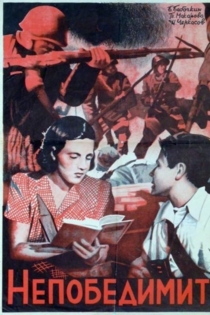
Непобедимые
Mikhail Kalatozov, Sergei Gerasimov
Boris Babochkin, Tamara Makarova
The autumn of 1941. Leningrad is besieged by the Nazis. A new model of tank is being developed at a large defense plant. Built in the shortest possible time combat vehicles are tested directly on battlefields, fighting with fascists in the outskirts of the city. The first feature film about the heroic everyday life of city defenders was shot directly in assembly shops of plants and in the streets of Leningrad when the city was fighting against the enemy
The Invincible
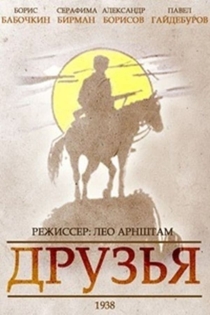
Первый взвод
Vladimir Korsh
Fyodor Nikitin, Mikhail Tsaryov
1914 год. Начало империалистической войны. На фронт отправляется первый взвод, сформированный в одном из белорусских городов. Солдаты еще не понимают социального смысла происходящих событий. Только некоторые из них, в том числе Макар Бобрик и Шапиро, резко осуждают войну. Демократические взгляды проявляет также бывший агроном - прапорщик Великанов. Первый взвод идет в бой. Газовая атака немцев. Сильно поредевшую часть отводят в тыл. Бобрик и Шапиро встречаются со своими товарищами - рабочими, среди которых члены партийной организации большевиков. Бобрик и Шапиро получают задание поддерживать связь между партийной организацией и первым взводом. В длительных окопных боях проходят 1915 и 1916 годы.
Первый взвод
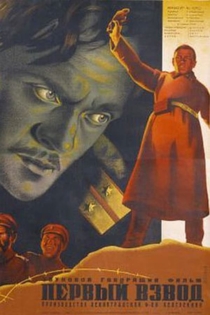
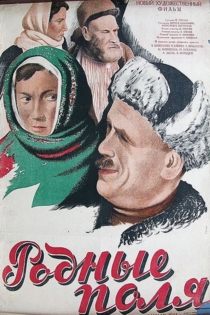
Родные поля
Anatoli Bosulayev, Boris Babochkin
Boris Babochkin, Vasili Vanin
Ноябрь 1941 года. Один за другим уходят мужчины, в деревне Быковка остаются лишь старики, женщины и дети. Председатель колхоза Иван Выборнов тоже рвется на фронт, но, подчиняясь партийной дисциплине, остается в деревне и продолжает умело и энергично руководить колхозом, мобилизуя односельчан на отправку хлеба для фронта и голодающих городов.
Rodnye polya
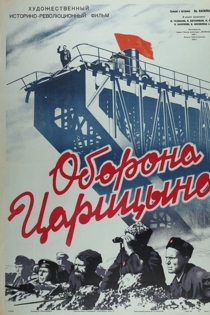
Оборона Царицына
Sergey Vasilev, Georgi Vasilyev
Mikhail Gelovani, Nikolai Bogolyubov
Propaganda film enhancing the role of I.V. Stalin in the defense of the city of Tsaritsyn (subsequently Stalingrad, at present Volgograd) by the red army during the Russian civil war.
Defense of Tsaritsyn