Douglas Shearer
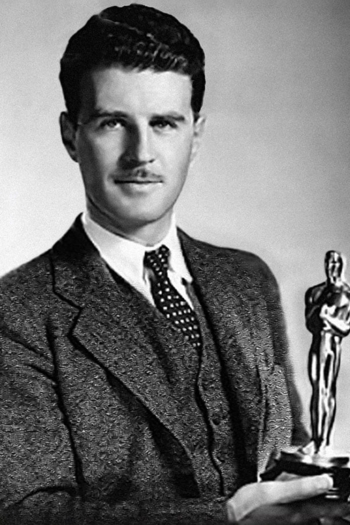
1899 - 1971Douglas began his journey into cinema by studying experimental electricity at Northern Electric Company before joining MGM in 1925. Initially exploring lighting and cameras, he pivoted to sound when the era of sound pictures emerged in 1928. He pioneered synchronizing musical soundtracks with film scenes, notably in the groundbreaking "The Broadway Melody," which won the 1929 Oscar for Best Picture. As head of MGM's sound department until his retirement, Shearer revolutionized sound recording, winning an Academy Award for Best Sound Recording for "The Big House." His groundbreaking work at MGM significantly enhanced the technical aspects of filmmaking. His legacy was recognized even in death, receiving a front-page obituary in The New York Times—an honour typically reserved for industry giants and heads of state.
A New Romance of Celluloid: The Miracle of Sound
Douglas Shearer
Douglas Shearer, Greer Garson
This short documentary, presented and directed by MGM sound engineer Douglas Shearer, goes behind the scenes to look at how the sound portion of a talking picture is created.
A New Romance of Celluloid: The Miracle of Sound
The Great Morgan
Nat Perrin
Frank Morgan, Leon Ames
Frank Morgan is hired to put together a movie using odds and ends from the MGM vaults. He does so by splicing together a string of completely unrelated short subjects and musical numbers, interspersed with a repeated loop of a scene from some melodrama. (Contains in their entirety the shorts, "Musical Masterpieces," "Our Old Car," and "Badminton," as well as clips from other projects)
The Great Morgan
The Romance of Celluloid
Douglas Shearer
Virginia Grey, Clark Gable
Several behind the scenes aspects of the movie-making business, which results in the enjoyment the movie going public has in going to the theater, are presented. They include: the production of celluloid aka film stock, the materials used in the production of which include cotton and silver; construction crews who build sets including those to look like cities, towns and villages around the world; a visit with Jack Dawn who demonstrates the process of creating a makeup design; the screen testing process, where many an acting hopeful gets his/her start; the work of the candid camera man, the prying eyes behind the movie camera; a visit with Adrian, who designs the clothes worn by many of the stars on screen; and a visit with Herbert Stothart as he conducts his musical score for Conquest (1937). These behind the scenes looks provide the opportunity to get acquainted with the cavalcade of MGM stars and their productions that will grace the silver screen in the 1937/38 movie season.
The Romance of Celluloid