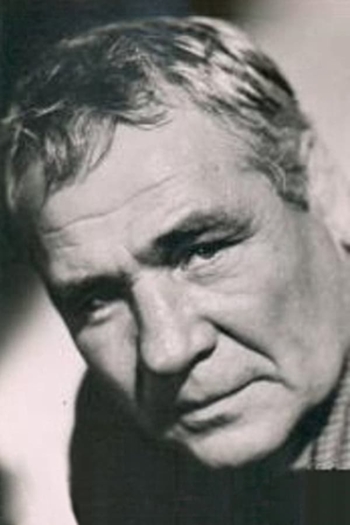
Nico Turoff
1899 - 1978

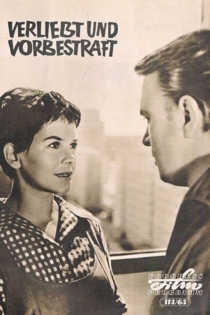
Verliebt und vorbestraft
Erwin Stranka
Doris Abeßer, Herbert Köfer
The young architect Hannelore becomes part of the all-male brigade Fröhlich whose members are supposed to build houses at the Strausberger Platz in Berlin. The brigade men drink a lot of beer and are less than thrilled about the new girl. Hanne is the only one who is absolutely delighted with Hannelore. When he starts a drunken fight on May Day, he is arrested and accused of armed robbery. Hannelore immediately convinces the other men in the brigade to help Hanne.
Verliebt und vorbestraft
Die Jagd nach dem Stiefel
Konrad Petzold
Günter Naumann, Gerry Wolff
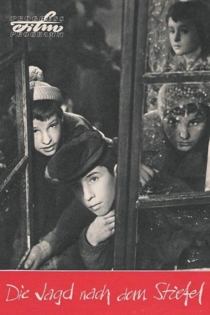
Germany 1932, constant fights between Communists and Nazis tear the country apart. When a Communist is found dead, the police accuses another Communist being his murderer. But the Communist youth group follows another trail - the murderer left a characteristic boot print at the scene of the crime.
Die Jagd nach dem Stiefel
Les Misérables
Jean-Paul Le Chanois
Jean Gabin, Danièle Delorme
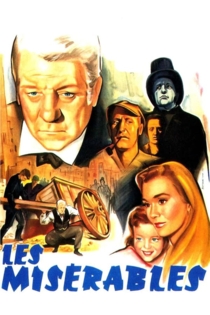
Victor Hugo's monumental novel Les Miserables has been filmed so often that sometimes it's hard to tell one version from another. One of the best and most faithful adaptations is this 240-minute French production, starring Jean Gabin as the beleaguered Jean Valjean. Arrested for a petty crime, Valjean spends years 20 in the brutal French penal system. Even upon his release, his trail is dogged by relentless Inspector Javert. Valjean's efforts to create a new life for himself despite the omnipresence of Javert is meticulously detailed in this film, which utilizes several episodes from the Hugo original that had hitherto never been dramatized. Originally released as a single film, Les Miserables was usually offered as a two-parter outside of France.
Les Misérables
Jetzt und in der Stunde meines Todes
Konrad Petzold
Inge Keller, Ulrich Thein
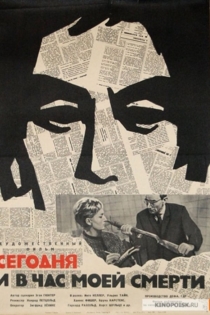
Ella Conradi, a dedicated journalist from Germany, is in Jerusalem to report about the trial against the Nazi criminal Eichmann. Disgusted by the monstrosities that are revealed, she eventually returns to Germany. There, she wants to cover common cases and trials again. Her first assignment is a murder trial against a man called Ralf Jordan who constantly maintains his innocence. Conradi, who believes Jordan and wants to help him, starts to investigate the case - and thus opens up a political can of worms. The backgrounds of the case reach back to the Nazi period and involve officials of the Third Reich, who in the meantime have returned to their powerful positions.
Jetzt und in der Stunde meines Todes
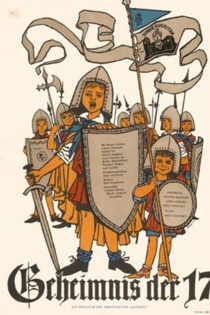
Oh, diese Tante
Konrad Petzold
Agnes Kraus, Fred Mahr
Heinz is a well-stocked veterinarian in Klückow and his Jana in quite firm, although not always present hands. And now - as Aunt Alma is slowly getting rid of the concern for her beloved nephew - Dr. Kröpelin finally got his chance: he makes a marriage proposal to Alma. She would not be averse if it had not been his "bloodthirsty" hobby, the hunt. A get-together on the high seat is still not a desirable prospect for Alma. But the more she refuses, the tighter Kröpelin bites into his intention to marry her anyway, whatever the cost.
Oh, diese Tante
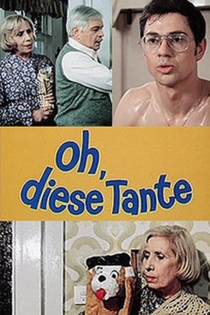
Sie nannten ihn Amigo
Heiner Carow
Ernst-Georg Schwill, Angelika Hurwicz
A refugee from a Nazi concentration camp is discovered by some boys in WWII Berlin. They provide him with food and help him to continue his flight. Later one of the boys, the son of a communist, is charged with theft, arrested and sent to a concentration camp.
They Called Him Amigo
Abwege
G.W. Pabst
Gustav Diessl, Brigitte Helm
Neglected by her husband, an ambitious lawyer, Irene seeks variety in Berlin's nightlife-- An evening of dancing, dolls, cocaine and immoral passion. Irene takes the "devious path" as she seeks to make her husband jealous.
The Devious Path

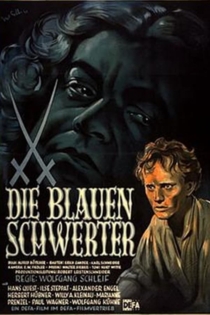
Die blauen Schwerter
Wolfgang Schleif
Hans Quest, Ilse Steppat
The story of Johann Friedrich Böttger, an apothecary’s apprentice and alchemist’s assistant. Fleeing from the Prussian King, he goes to Saxony, where King Frederick August the Strong takes him to a fortress and demands that he create gold. Böttger is equipped with everything he would need for the task, but he has known for a while that actual gold production is a myth and instead experiments with porcelain—white porcelain, as the Chinese are said to possess. In 1709, he finally succeeds in surprising the King with the "white gold," the first white porcelain made in Europe, he hopes for freedom.
The Blue Swords
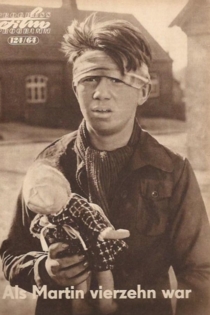
Als Martin vierzehn war
Walter Beck
Ulrich Balko, Erik Veldre
Martin′s and his girlfriend′s Kathrin′s childhood comes to an abrupt end in 1920, when their Mecklenburg village is drawn into the events surrounding the Kapp putsch. By accident, Martin discovers a charge of weapons that land owner von Bröder had put away for the reactionary forces, and gives them to the workers in the city. When the village starts to organize a strike against the putsch, soldiers arrive at the village to hold down the residents of the village.
When Martin Was Fourteen