François Daireaux
2021Bhagwati
François Daireaux
‘Devki’ is the owner of “Bhagwati Glass Enterprises”, a glass tube factory in Firozabad that he created in the year 1973. François Daireaux, spent days in Devki’s office for days filming these images displayed on the control screen along with recording some off-screen conversations. Behind closed doors, stories unfolded, intersected,and often tales were embroidered, while in the production spaces the workers rested, waited, breathed, and played, in close proximity to the incandescent glass stream that passed by.
Bhagwati
Haining
François Daireaux
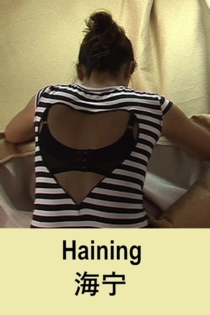
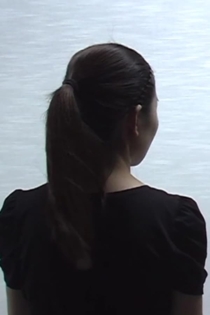
Haining is an industrial city in Zhejiang Province in China. It is known for its many home textiles factories. Daireaux immerses us in the heart of some of these factories. It starts with a workers back whose job is to scrutinize miles of tissues to detect any manufacturing defect. The body of the young woman oscillates in an endless goes and comes right-left in front of the tissue which does not stop it falling and becomes thereby curtain. A daylight, which snatches and keeps at a distance at the same time, irradiates the face which we shall never see or with so few details as the recognition is not possible. Then faces of workers appear surreptitiously and disappear behind the oscillation and the endless scrolling of tissues. They are faces closed, tired by the repetition of gestures and the hardness of the work.
Haining
Isidro Guerra
François Daireaux
François Daireaux has the demanding nature of someone receptive to the world, and the infinite patience required by a gentle form of empathy, a powerful but tender gaze at our crazy world. The central character of this film is Isidro. In simple, clear speech, he broaches every question shaking our contemporary world: the scandalous, toxic supremacy of globalized multinationals and financialization, the cultural catastrophe of religious proselytism, the danger of climate change and displacement, the vicious cynicism of overfishing, the folly or ignorance of discrimination on the grounds of gender, race or ethnic origin, pollution, overconsumption and of course the terrifying throes of nature, with its angry storms, floods and earthquakes.
Isidro Guerra

Dui ma?
François Daireaux
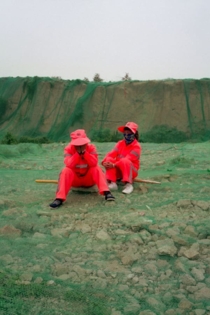
Dui ma? is a game of fragmentary stories. Emergencies. A hallucinatory account of the violent changes in China today, written freehand, in a visual style where one apparition chases the other. Nothing sets in except the feeling of a tremor. François Daireaux draws with this new film a vast social choreography where matter competes with the living with the absent bodies. Landscapes are consumed, cities appear without measure and in the middle the rough ballet of men who seek their place in a too big world. It is sometimes burlesque, often strange and ultimately perfectly chilling. Nothing is lost, everything is transformed.
Dui ma?
Les rêves de Daireaux
François Daireaux
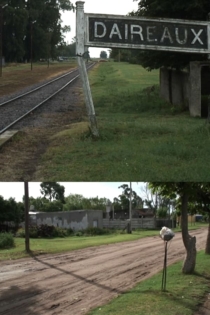
During the summer of 2010 François Daireaux left France in order to discover and experience the city of Daireaux in Argentine. He walked along for days on end, filming the city which carries his name. Throughout his nights at Daireaux hotel, he’s had numerous dreams.
Daireaux’s Dreams
Ce que je vois
François Daireaux
What I see is a video made in China in Haining , working city with over eight thousand textile factories. This video shows a working back whose job is to scrutinize kilometers of tissue to detect any defect. The body of the young woman oscillates in an endless coming and going right to left facing the tissue that never stops falling and thereby becomes curtain. A daylight, which grabs hold and both remotely, radiates the face we never see or with so few details that recognition is not possible.
What I see
Aires
François Daireaux
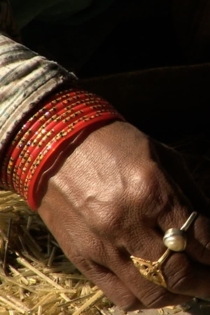
Matter and movement – these fragments are fascinating not only because of the web they weave but also for their intrinsic purity carved into a study of detail. We half recognise India here and there, but the unusual never becomes a symbol of the exotic. Be it the sandy trench being stamped down by a man’s expert sidestep or the leafage reflected in the tiny mirror decorating a woman’s costume, a chicken’s foot protruding from a steamer or the rhythmic thud of laundry beaten on stone, each element is captured in all its strangeness and, at the same time, in a familiar perfection that bears the mark of hand or tool. Like a Francis Ponge, François Daireaux uses the precision of his sharp cuts and fades-to-black to sculpt from reality, polish objects, movements, forms, elements, and finally rejuvenate our way of seeing.
Areas