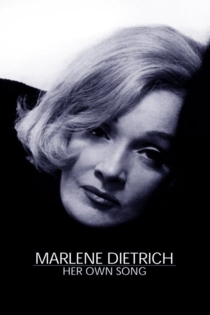
Marlene Dietrich
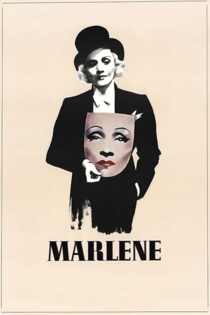
1901 - 1992Dietrich remained popular throughout her long career by continually re-inventing herself. In 1920s Berlin, she acted on the stage and in silent films. Her performance as Lola-Lola in The Blue Angel, directed by Josef von Sternberg, brought her international fame and a contract with Paramount Pictures in the US. Hollywood films such as Shanghai Express and Desire capitalized on her glamour and exotic looks, cementing her stardom and making her one of the highest paid actresses of the era. Dietrich became a US citizen in 1937; during World War II, she was a high-profile front-line entertainer. Although she still made occasional films in the post-war years, Dietrich spent most of the 1950s through the 1970s touring the world as a successful show performer.
In 1999, the American Film Institute named Dietrich the ninth greatest female star of all time.

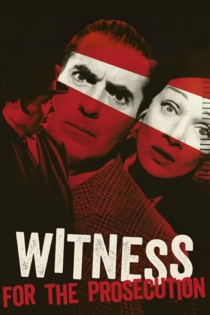
Witness for the Prosecution
Billy Wilder
Charles Laughton, Tyrone Power
When Leonard Vole is arrested for the sensational murder of a rich, middle-aged widow, the famous Sir Wilfrid Robarts agrees to appear on his behalf. Sir Wilfrid, recovering from a near-fatal heart attack, is supposed to be on a diet of bland, civil suits—but the lure of the criminal courts is too much for him, especially when the case is so difficult.
Witness for the Prosecution
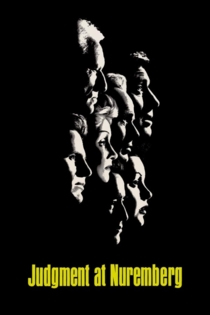
Judgment at Nuremberg
Stanley Kramer
Spencer Tracy, Burt Lancaster
In 1947, four German judges who served on the bench during the Nazi regime face a military tribunal to answer charges of crimes against humanity. Chief Justice Haywood hears evidence and testimony not only from lead defendant Ernst Janning and his defense attorney Hans Rolfe, but also from the widow of a Nazi general, an idealistic U.S. Army captain and reluctant witness Irene Wallner.
Judgment at Nuremberg
Triumph Over Violence
Mikhail Romm
Mikhail Romm, Marlene Dietrich
Romm's "Ordinary Fascism" pulls out all the stops in its selection of documentary material to draw the viewer not only into absolute horror about fascism and nazism in the 1920s–1940s Europe, but also to a firmest of convictions that nothing of the sort should be allowed to happen again anywhere in the world.
Triumph Over Violence

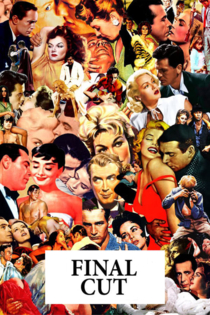
Final Cut: Ladies and Gentlemen
György Pálfi
Brigitte Bardot, Alain Delon
A film where anything can happen - the hero and the heroine changes their faces, age, look, names, and so on. The only same thing: The love between man and woman... in an archetypical love story cut from 500 classics from all around the world.
Final Cut: Ladies and Gentlemen
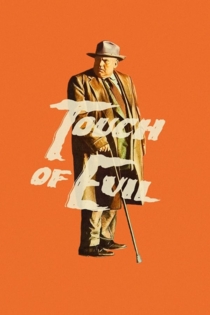
Touch of Evil
Orson Welles
Charlton Heston, Janet Leigh
When a car bomb explodes on the American side of the U.S./Mexico border, Mexican drug enforcement agent Miguel Vargas begins his investigation, along with American police captain Hank Quinlan. When Vargas begins to suspect that Quinlan and his shady partner, Menzies, are planting evidence to frame an innocent man, his investigations into their possible corruption quickly put himself and his new bride, Susie, in jeopardy.
Touch of Evil
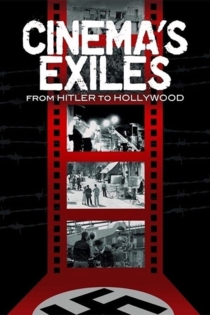
Cinema's Exiles: From Hitler to Hollywood
Karen Thomas
Сигурни Уивер, Marlene Dietrich
Eight hundred German filmmakers (cast and crew) fled the Nazis in the 1930s. The film uses voice-overs, archival footage, and film clips to examine Berlin's vital filmmaking in the 1920s; then it follows a producer, directors, composers, editors, writers, and actors to Hollywood: some succeeded and many found no work. Among those profiled are Erich Pommer, Joseph May, Ernst Lubitsch, Fritz Lang, Billy Wilder, and Peter Lorre. Once in Hollywood, these exiles helped each other, housed new arrivals, and raised money so others could escape. Some worked on anti-Nazi films, like Casablanca. The themes and lighting of German Expressionism gave rise in Hollywood to film noir.
Cinema's Exiles: From Hitler to Hollywood
Complicated Women
Hugh Munro Neely
Jane Fonda, Frances Dee
Looks at the stereotype-breaking films of the period from 1929, when movies entered the sound era, until 1934 when the Hays Code virtually neutered film content. No longer portrayed as virgins or vamps, the liberated female of the pre-code films had dimensions. Good girls had lovers and babies and held down jobs, while the bad girls were cast in a sympathetic light. And they did it all without apology.
Complicated Women

Cameraman: The Life and Work of Jack Cardiff
Craig McCall
Jack Cardiff, Martin Scorsese
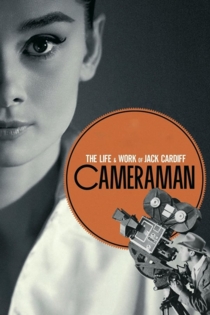
In 2001 Jack Cardiff (1914-2009) became the first director of photography in the history of the Academy Awards to win an Honorary Oscar. But the first time he clasped the famous statuette in his hand was a half-century earlier when his Technicolor camerawork was awarded for Powell and Pressburger's Black Narcissus. Beyond John Huston's The African Queen and King Vidor's War and Peace, the films of the British-Hungarian creative duo (The Red Shoes and A Matter of Life and Death too) guaranteed immortality for the renowned cameraman whose career spanned seventy years.
Cameraman: The Life and Work of Jack Cardiff
Der blaue Engel
Josef von Sternberg
Emil Jannings, Marlene Dietrich
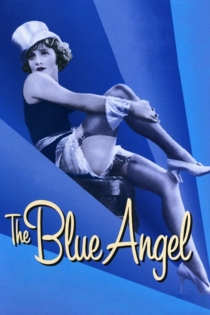
Prim professor Immanuel Rath finds some of his students ogling racy photos of cabaret performer Lola Lola and visits a local club, The Blue Angel, in an attempt to catch them there. Seeing Lola perform, the teacher is filled with lust, eventually resigning his position at the school to marry the young woman. However, his marriage to a coquette -- whose job is to entice men -- proves to be more difficult than Rath imagined.
The Blue Angel
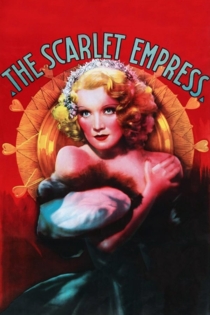
The Scarlet Empress
Josef von Sternberg
Marlene Dietrich, John Lodge
During the 18th century, German noblewoman Sophia Frederica, who would later become Catherine the Great, travels to Moscow to marry the dimwitted Grand Duke Peter, the heir to the Russian throne. Their arranged marriage proves to be loveless, and Catherine takes many lovers, including the handsome Count Alexei, and bears a son. When the unstable Peter eventually ascends to the throne, Catherine plots to oust him from power.
The Scarlet Empress
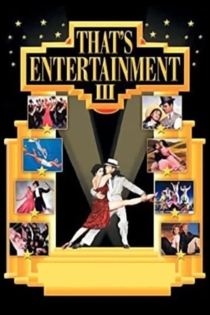
That's Entertainment! III
Bud Friedgen, Michael J. Sheridan
June Allyson, Cyd Charisse
Some of MGM'S musical stars review the studios history of musicals. From The Hollywood Revue of 1929 to Brigadoon, from the first musical talkies to Gene Kelly in Singin' in the Rain.
That's Entertainment! III