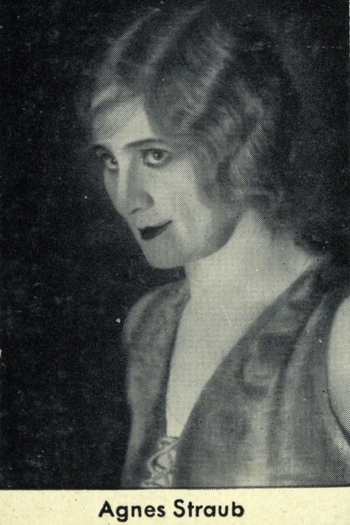
Agnes Straub
1890 - 1941
Die Teufelskirche
Hans Mierendorff
Hans Mierendorff, Agnes Straub
In a prologue and four acts (the prologue and the first act are lost so is necessary to describe what happens with title cards) the film depicts the terrible dream of Asmus wherein the devil joins the human world disguised as a tinker. He meets Frau Ane, Asmus' wife; Ane yearns to have a baby but in vain so the devil takes advantage of Frau Ane's motherly inner desire by making a deal with her but for his own purposes. As a result, the farmer's wife comes under the devil's spell and then seduces the local priest, giving the devil to chance to build his own church to replace the old church that has burned down.
The Devil's Church

Alraune
Richard Oswald
Brigitte Helm, Albert Bassermann
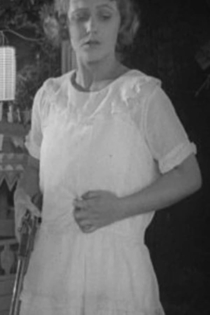
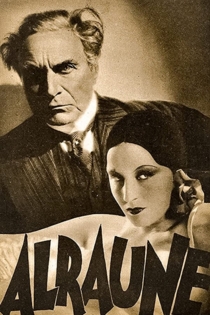
A scientist, Professor Jakob ten Brinken, interested in the laws of heredity, impregnates a prostitute in a laboratory with the semen of a hanged murderer. The prostitute conceives a female child who has no concept of love, whom the professor adopts. The girl, Alraune, suffers from obsessive sexuality and perverse relationships throughout her life. She learns of her unnatural origins and she avenges herself against the professor.
Alraune
Weiße Sklaven
Karl Anton
Theodor Loos, Gabriele Hoffmann
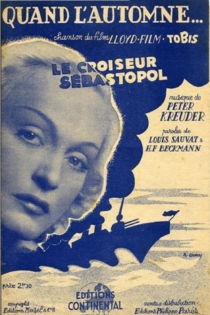
Russia, 1917. Revolution is in the air. The Sevastopol anchors In Saint Petersburg. The sailors are thirsty for women and celebration. The ship becomes a dancehall. Bloodbath, pillage and kidnapping follows. A Nazi/Germany propaganda film.
White Slaves
Die Warschauer Zitadelle
Fritz Peter Buch
Lucie Höflich, Werner Hinz
Considering Germany's own treatment of Poland in 1939, it is ironic in the extreme that the 1938 German film Um Freiheit und Liebe (For Freedom and Love) is a celebration of Poland's declaration of independence from Russia. Werner Hinz plays Konrad, an idealistic Polish student who courts disaster for his loved ones through his constant harrangues against Russian impression. When his mother promises the authorities that Konrad will cease his protests, he is honor bound to obey her, no matter what the provocation. Drowning his disappointment in liquor, Konrad falls in love with nightclub singer Anna Sasotska (Viktoria von Ballasko). While he never achieves his political goals, Konrad at least finds happiness romantically. The climax of the film is particularly exciting, even though it is motivated by anti-Russian (and implicitly pro-Nazi) propaganda.
Die Warschauer Zitadelle