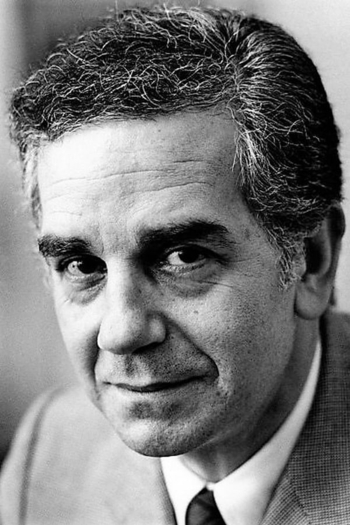
Riccardo Cucciolla
1924 - 1999Born in Bari, in southern Italy, Cucciolla gained a degree in law, then made his stage debut in an amateur production in his home city. From 1946, he started working in radio as a voice actor and as the narrator of documentaries; at the same time, he started working in cinema, as a dubber and a voice actor.
Cucciolla made his film debut in 1953, in Anton Giulio Majano's Good Folk's Sunday. After some minor roles, he had his first important role in Italiani brava gente (1965), followed by a further significant role in Giuliano Montaldo's Grand Slam (1967).
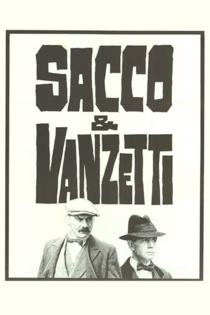
Cucciolla came to national and international recognition with the leading role in Montaldo's Sacco e Vanzetti, for which he was awarded best actor at Cannes and won a Silver Ribbon. In the wake of that sudden popularity, he intensively worked throughout the decade, alternating notable films with others of more modest quality and ambition. Starting from eighties he thinned out his appearances, mainly focusing on dubbing and television roles. As a dubber, he provided voice-overs for Roger Moore, Claudio Villa, Erland Josephson, John Cazale, Jonathan Pryce, Richard Egan, James Caan, Robert Duvall and more.
On 17 September 1999, Cucciolla died in Rome at the age of 75. He is survived by his wife, the poet Alida Sessa; their son Riccardo; and two children by his first wife, Francesco and Lietta.
Source: Article "Riccardo Cucciolla" from Wikipedia in English, licensed under CC-BY-SA 3.0.
I vitelloni
Federico Fellini
Franco Interlenghi, Alberto Sordi
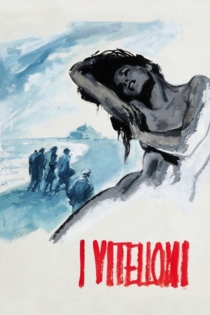
Five young men dream of success as they drift lazily through life in a small Italian village. Fausto, the group's leader, is a womanizer; Riccardo craves fame; Alberto is a hopeless dreamer; Moraldo fantasizes about life in the city; and Leopoldo is an aspiring playwright. As Fausto chases a string of women, to the horror of his pregnant wife, the other four blunder their way from one uneventful experience to the next.
I Vitelloni
Francesco d'Assisi
Liliana Cavani
Lou Castel, Marco Bellocchio
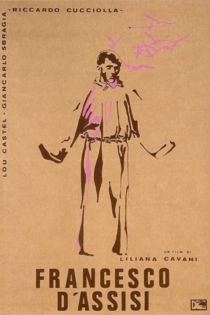
Cavani made her first full-length feature film in 1966 with Francis of Assisi (Francesco d'Assisi). Made for television and aired in two parts, it was deeply influenced by the style of Rossellini and the atmosphere typical of the films of Pasolini. Made in a period of political unrest, it was to become a kind of manifesto of dissenting Catholicism. Starring Lou Castel, it portrays Francis of Assisi as a slightly depressed protestor and an avid, albeit mad, supporter of armed brotherhood. The ideal defender of the 1968 student movement. The film was a great success, but also triggered many negative reactions. It was called "heretical, blasphemous and offensive for the faith of the Italian people". It was the first of many polemical reactions to Cavani's work.
Francis of Assisi
The Case Is Closed, Forget It
Damiano Damiani
Franco Nero, Georges Wilson
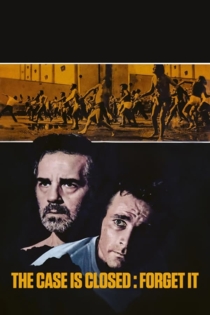
Arrested on suspicion of a hit and run, a succesful architect is put in prison awaiting trial or release. Whilst there he witnesses the grim reality of life behind bars: corrupt staff, corrupt inmates, an inhuman judicial system and the power of the Mafia.
The Case Is Closed, Forget It
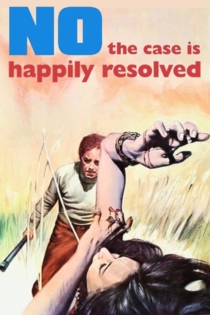
No, The Case Is Happily Resolved
Vittorio Salerno
Enzo Cerusico, Enrico Maria Salerno
When the eyewitness to a brutal murder decides not to testify, the actual murderer chooses to finger him as the murderer and claim eyewitness status for himself.
No, the Case Is Happily Resolved
Una casa in bilico
Antonietta De Lillo, Giorgio Magliulo
Marina Vlady, Riccardo Cucciolla
An elderly trio tries to adjust to each other when they all move into an apartment in Rome. When Giovanni (Ricardo Cucciolla) inherits the unit, he invites the Russian immigrant Maria (Marina Vlady) and his shy friend from college Teo (Luigi Pistilli) to live with him. Maria tries to get Teo to marry her friend so she can receive Italian citizenship. The three do their best to live in harmony in this bittersweet drama.
Tottering in the Dark