Oskar Fischinger
1900 - 1967Description above from the Wikipedia article Oskar Fischinger, licensed under CC-BY-SA, full list of contributors on Wikipedia.
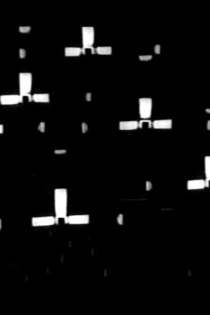
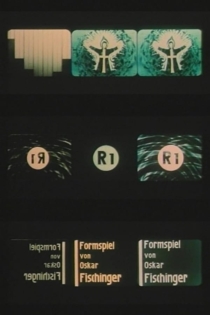
München-Berlin Wanderung
Oskar Fischinger
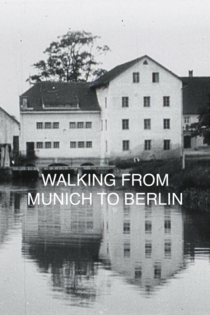
In 1927, motivated by a longing for freedom, Fischinger set off on a walking trip from Munich to Berlin. Covering the distance in nearly four weeks, he captured the country’s hidden beauty. His voyage serves as a symbolical transition and underlines a belief that people are the same everywhere.
Walking from Munich to Berlin
Seelische Konstruktionen
Oskar Fischinger
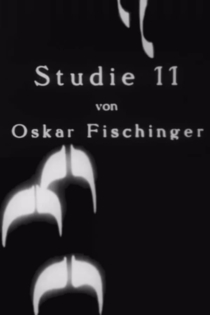
One of Oskar Fischinger's earliest films, Seelische Konstruktionen (as it is known in German), clearly points the way to the masterpieces of musically-blended experimental animation he would conceive in the decades to come. The sense of masterful timing and rhythm, the easy and natural -- though patently Fischinger-esque -- character traits of the subjects, and the smooth precision of both line and movement are all present already. Unique is the black-silhouetted, semi-cartoon characters (not nearly as rigidly self-contained as Lotte Reiniger's cut-out forms) which seem to adhere to no physical limitations whatsoever. Morphing into shapes, structures, objects, patterns, and even one another, as though they were made of pure mercury and set to music. As for the "story", it's rather non-sensical, and certainly silly, but also has a slightly dark and devious tinge to it as well; men becoming monsters, uncontrollable shape-shifting and the constant, almost desperate movement.
Spiritual Constructions

An Optical Poem
Oskar Fischinger
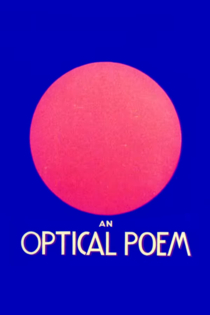
A dance of shapes. A title card tells us this is an experiment in conveying the mental images of music in a visual form. Liszt's "Second Hungarian Rhapsody" is the music. The shapes, all two-dimensional, are circles primarily, with some squares and rectangles, and a few triangles. The shapes move rhythmically to the music: receding from view or moving across the screen. Red circles on a blue background; light blue squares; white rectangles. Then, a red background of many circles with a few in the foreground. Red gives way to blue then to white. Shapes reappear as Liszt's themes re-occur. Then, with a few staccato notes and images, it's over.
An Optical Poem