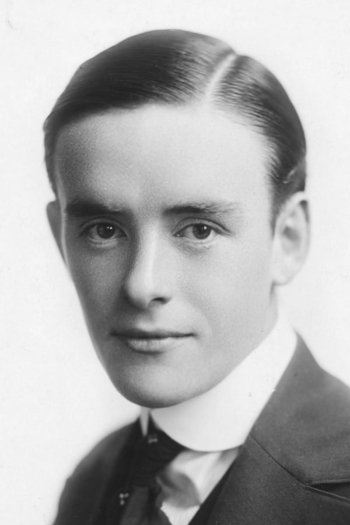
Robert Harron
1893 - 1920Thompson's Night Out
Wallace McCutcheon
Anthony O'Sullivan, Edward Dillon
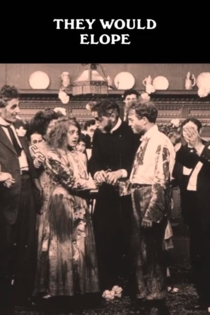
William Thompson and John Smith occupied offices in the same New York skyscraper, and both being seized with an irrepressible desire to cut loose and paint things crimson, arranged it as follows in this Biograph picture. Thompson sent a message to his wife that his friend Smith was ill, and it was his duty to perform that spiritual work of mercy, "comfort the afflicted," hence he would not have her wait up for him as he might be late. Smith did likewise, using Thompson as the object of his humane consideration. This done, they start off to make a night of it. First they visit the gilded throne room of a temple of Bacchus, where they moisten their parched spirits with dry Martinis. They are soon in a most glorious condition. Smith suggests the show where "Amateur Night" is on. - Written by Moving Picture World synopsis
Thompson's Night Out

Intolerance: Love's Struggle Throughout the Ages
D. W. Griffith
Lillian Gish, Mae Marsh
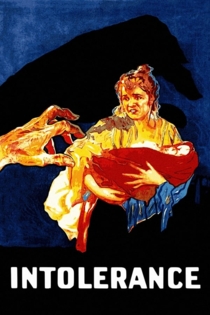
The story of a poor young woman, separated by prejudice from her husband and baby, is interwoven with tales of intolerance from throughout history.
Intolerance: Love's Struggle Throughout the Ages
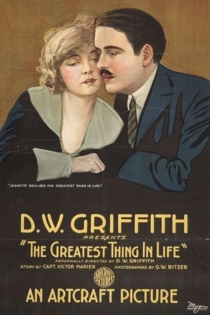
The Greatest Thing in Life
D. W. Griffith
Lillian Gish, Robert Harron
A lost film. Leo Peret has a small quiet tobacco shop in Greenwich Village. Edward Livingston, a wealthy young clubman and man-about-town, comes in frequently ostensibly to buy cigarettes but in reality to talk to the daughter Jeannette, and he is soon in love with the little shop girl. Leo is homesick for his native France, but lacks the funds to make the passage. Edward, learning of their plight, sends $1,000 with a note saying that the money is payment for a good deed. Leo accepts the money and he and Jeannette embark at once.
The Greatest Thing in Life
Sunshine Alley
John W. Noble
Mae Marsh, Robert Harron
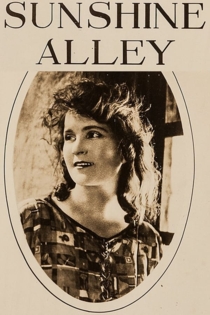
In the poorest section of the city lives Nell, who spends her days at her grandfather's bird store, finding constant delight in the companionship of her feathered friends. One day Nell's grandfather is run over by a car driven by Mr. Morris, a millionaire, who offers to purchase a bullfinch at a large price in order to forestall a damage suit.
Sunshine Alley
A Child of the Paris Streets
Lloyd Ingraham
Mae Marsh, Robert Harron
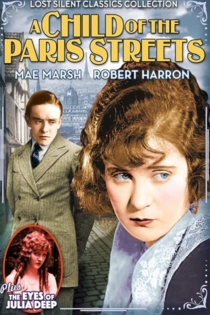
When the son of a leader of a Paris underworld family known as The Apaches is arrested and tried in court, the boy's mother asks the judge for mercy, but he refuses. In retaliation, the family kidnaps the judge's young daughter, and raises her to be one of their own, schooling her in the ways of crime.
A Child of the Paris Streets
The Mother and the Law
D. W. Griffith
Mae Marsh, Robert Harron
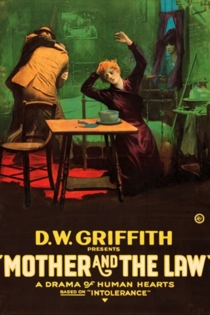
After the relatively low box office takings of 'Intolerance', D. W. Griffith would revisit his epic film three years later by releasing two of the film's interlocking stories as standalone features, with some new additional footage. The second of these was 'The Mother and the Law', which demonstrates how crime, moral puritanism, and conflicts between ruthless capitalists and striking workers help ruin the lives of marginal Americans.
The Mother and the Law
The Yaqui Cur
D. W. Griffith
Robert Harron, Kate Bruce
The prospector had taught the Indian boy the doctrine of peace. When his tribe resisted the attack of another tribe the boy did not take part. The din of the battle, as the horsemen circled them again and again, the moans of men caught under falling horses struck terror in the boy's heart The incensed warriors cast him from the tribe with the brand of a coward. It was then that his opportunity came to follow the white man's wonderful doctrine. "Big love man lay down life for friend,"
The Yaqui Cur
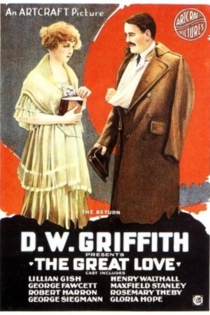
The Great Love
D. W. Griffith
Lillian Gish, Robert Harron
Jim Young of Youngstown, Pennsylvania, reads of the German war atrocities and decides to enlist in the British army, thus becoming a forerunner of the American forces that are subsequently to leave for the battlefields of Europe. He begins active training at a camp outside London. While enjoying a few hours of leave, he meets Susie Broadplains , a young woman from Australia. She is flattered by his attentions and their friendship soon blossoms into love. However German plotters plan to destroy an arsenal at night and Sir Roger is inveigled into driving an automobile along a London road with its lights turned skyward to guide the Zeppelins. Jim, wounded and home on furlough, detects Sir Roger on the lonely road, follows and traps him in his cottage. Sir Roger turns his pistol on himself rather than be taken alive. Susie finds the "great love" in service for the cause of democracy and her country, with a greater love in sight.
The Great Love
The Reformers
D. W. Griffith
Charles Hill Mailes, Jennie Lee
Behold in this film the Uplifter, a peculiarity of the human species, quite convinced that all that is, is wrong. Forth to the uplift he minds everybody's business but his own, until that business is as clean, pure and spotless as himself. Verily in these later days is there no school of art named, "Minding One's Business."
The Reformers
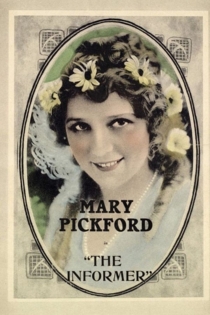
The Informer
D. W. Griffith
Walter Miller, Mary Pickford
The young lover leaving home at the opening of the war to join the Confederate Army, tells his brother to take care of his fatherless sweetheart during the perilous times which are to follow. But the brother weakens and fails to be true to his trust. He permits her to believe that her lover is dead. Caught in the neighborhood, however, between the lines of the enemy, the brother appears before them at the crucial moment. In retaliation the false brother turns informer. Both forces are aroused to arms and during the attack upon the girl defending her wounded lover and family alone in the negro's cabin retribution comes in the form of a stray bullet.
The Informer
A Corner in Wheat
D. W. Griffith
Frank Powell, Grace Henderson
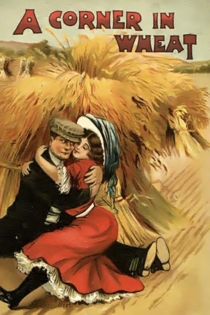
On a whim, a greedy tycoon decides to corner the world market in wheat. This doubles the price of bread, forcing grain producers into charity lines and others further into poverty. The film contrasts the differences between the lives of those who work to grow the wheat and the life of the man who dabbles in its sale for profit.
A Corner in Wheat
The Lady and the Mouse
D. W. Griffith
Lillian Gish, Dorothy Gish
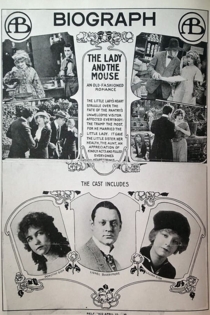
The question is, would the young tramp really have fallen in love with the groceryman's daughter if he had not caught her in the heart struggle? Be that as it may, she could not find it in her to drown the unwelcome visitor to the pantry, so she let it go and the silent little drama witnessed by the tramp greatly impressed him. Not so the strict aunt, she declared the whole thing to be in exact accordance with everything else in the family. Their hearts ran away with their heads. That was why they lost money on credit, could not pay off the mortgage and send the sick sister to a better climate. As for the tramp, they had no business to take him in. He could not pay for his keep. But the tramp surprised them all.
The Lady and the Mouse