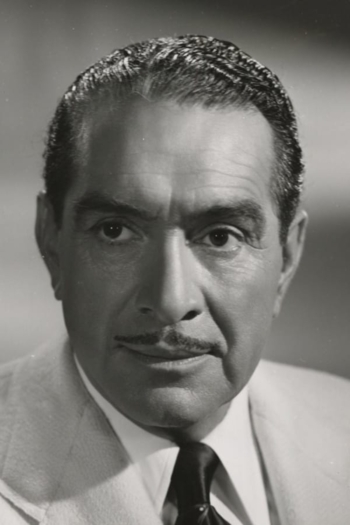
J. Carrol Naish
1896 - 1973Joseph Patrick Carrol Naish (January 21, 1896 – January 24, 1973) was an American character actor born in New York City, New York. Naish did many film roles, but they were eclipsed when he found fame in the title role of radio's Life with Luigi (1948–1953), which surpassed Bob Hope in the 1950 ratings.
Naish appeared on stage for several years before he began his film career. He began as a member of Gus Edwards's vaudeville troupe of child performers. In Paris after World War I, Naish formed his own song and dance act. He was traveling the globe from Europe to Egypt to Asia, when his China-bound ship developed engine problems, leaving him in California in 1926.
His uncredited bit role in What Price Glory (1926) launched his career in more than two hundred films. He was twice nominated for an Academy Award for Best Supporting Actor, the first for his role in the 1943 film Sahara, then for his performance in the 1945 film A Medal for Benny, for which he won the Golden Globe Award for Best Supporting Actor, Motion Picture. He notably played Boris Karloff's hunchback assistant in The House of Frankenstein in 1944.
He was of Irish descent, but never used his dialect skills to play Irishmen, explaining, "When the part of an Irishman comes along, nobody ever thinks of me." Instead, he portrayed myriad other ethnic groups on screen: Latino, Native American, East Asian, Polynesian, Middle Eastern/North African, South Asian, Eastern European, and Mediterranean. Besides his film roles, he often appeared on television later in his career. He spent many of his later years in San Diego studying philosophy and theology.
Naish was married (1929–1973) to actress Gladys Heaney (1907–1987). They had one daughter.
For his contributions to television and film, J. Carrol Naish has a star on the Hollywood Walk of Fame at 6145 Hollywood Boulevard.
Hollywood Out-takes and Rare Footage
Stanley Sheff, Bruce Goldstein
Gig Young, Bud Abbott
Out-takes (mostly from Warner Bros.), promotional shorts, movie premieres, public service pleas, wardrobe tests, documentary material, and archival footage make up this star-studded voyeuristic look at the Golden age of Hollywood during the 30s, 40, and 50.
Hollywood Out-takes and Rare Footage
Star in the Night
Don Siegel
J. Carrol Naish, Donald Woods
Nick, a motel owner who has lost faith in more than just the humanity of mankind, is visited by a kindly stranger on Christmas Eve. The motel's guests are only concerned for themselves until a poor man and his wife drive up to the motel, unable to go any further. Out of rooms, Nick's wife prepares a place for them in a shed under a neon star Nick had just finished hanging. Their plight brings out the generosity in everyone, including Nick, who remembers another family almost two thousand years earlier that also found a makeshift room at an inn under another kind of star.
Star in the Night
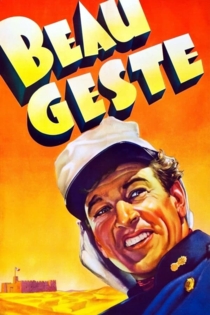
Beau Geste
William A. Wellman
Gary Cooper, Ray Milland
When three brothers join the Foreign Legion to escape a troubled past, they find themselves trapped under the command of a sadistic sergeant deep in the scorching Sahara. Now the brothers must fight for their lives as they plot mutiny against tyranny and defend a desert fortress against a brutal enemy.
Beau Geste
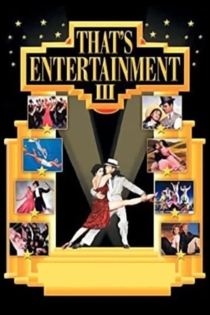
That's Entertainment! III
Bud Friedgen, Michael J. Sheridan
June Allyson, Cyd Charisse
Some of MGM'S musical stars review the studios history of musicals. From The Hollywood Revue of 1929 to Brigadoon, from the first musical talkies to Gene Kelly in Singin' in the Rain.
That's Entertainment! III
Disneyland '59
Hamilton Luske, Marshall Diskin
Eddie Albert, Danny Alguire
Walt Disney and Art Linkletter co-host a live celebration of Disneyland's 1959 expansion that consisted of the debuts of Matterhorn Bobsleds, the Disneyland-Alweg Monorail, and the Submarine Voyage, a project so massive that it was called "The Second Opening of Disneyland". Highlights include a mammoth, star-studded parade and the official launching of the Disneyland submarines by U.S. Navy officers. Among the guests are then-Vice-President Richard Nixon and family, Clint Eastwood, and Meredith Willson, who leads the Disneyland band in his own "76 Trombones." Sponsored by Kodak, the commercial spokespersons include Ozzie and Harriet Nelson.
Disneyland '59
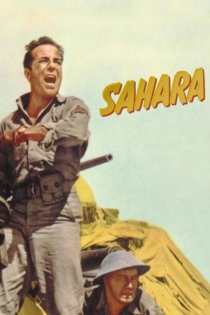
Sahara
Zoltan Korda
Humphrey Bogart, Bruce Bennett
Sergeant Joe Gunn and his tank crew pick up five British soldiers, a Frenchman and a Sudanese man with an Italian prisoner crossing the Libyan Desert to rejoin their command after the fall of Tobruk. Tambul, the Sudanese leads them to an abandoned desert fortress where they hope to find water. Soon a detachment of German soldiers arrives and attempts to barter food for water, but Gunn and his followers refuse. When the Germans attack, Gunn leads his desert-weary men in a desperate battle, hoping that British reinforcements can arrive in time.
Sahara
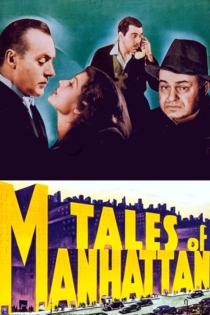
Tales of Manhattan
Julien Duvivier
Charles Boyer, Rita Hayworth
Ten screenwriters collaborated on this series of tales concerning the effect a tailcoat cursed by its tailor has on those who wear it. The video release features a W.C. Fields segment not included in the original theatrical release.
Tales of Manhattan
The Pied Piper
Irving Pichel
Monty Woolley, Roddy McDowall
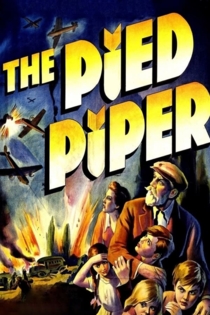
Englishman Mr. Howard is on a fishing holiday in eastern France when the Germans invade in 1940. Setting off to try and get back home he is persuaded to take along the two Cavanaugh children, and as his journey progresses his family keeps growing in size. Once in German-occupied northern France a new problem arises — the risk of being heard speaking English.
The Pied Piper
The Southerner
Jean Renoir
Zachary Scott, Betty Field
Sam Tucker, a cotton picker, in search of a better future for his family, decides to grow his own cotton crop. In the first year, the Tuckers battle disease, a flood, and a jealous neighbor. Can they make it as farmers?
The Southerner
