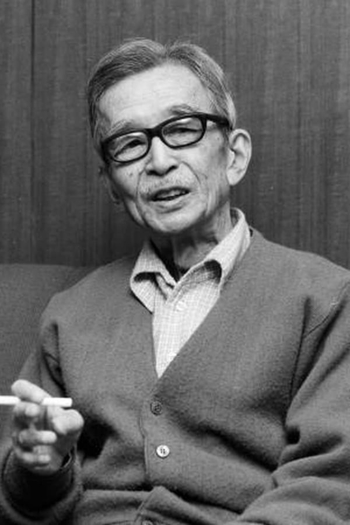
Nobuo Nakamura
1908 - 1991Nakamura is famous for many notable performances in theatre. In 1937, he founded the Bungakuza company along with Haruko Sugimura, Seiji Miyaguchi, and Masayuki Mori. Nakamura played Polonius in Hamlet, Herod in Wilde's Salome, Aleksandr Vladimirovich Serebryakov in Chekov's Uncle Vanya, and Krapp in Krapp's Last Tape. He also appeared in Macbeth, The Merchant of Venice, and The Cherry Orchard . In the 1950s and 1960s, he played major roles in Yukio Mishima's plays such as Rokumeikan, My Friend Hitler, and so on. In 1963, Nakamura left Bungakuza company and founded the NLT company with Mishima. His most famous and successful role is considered to be The Professor in Ionesco's The Lesson. He performed The Lesson for the first time in 1972 and had played The Professor every Friday night at a small theatre in Shibuya, Tokyo until 1983.
Description above from the Wikipedia article Nobuo Nakamura, licensed under CC-BY-SA,full list of contributors on Wikipedia.
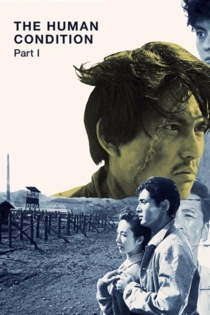
The Human Condition I: No Greater Love
Masaki Kobayashi
Tatsuya Nakadai, Michiyo Aratama
After handing in a report on the treatment of Chinese colonial labor, Kaji is offered the post of labor chief at a large mining operation in Manchuria, which also grants him exemption from military service. He accepts, and moves to Manchuria with his newly-wed wife Michiko, but when he tries to put his ideas of more humane treatment into practice, he finds himself at odds with scheming officials, cruel foremen, and the military police.
The Human Condition I: No Greater Love
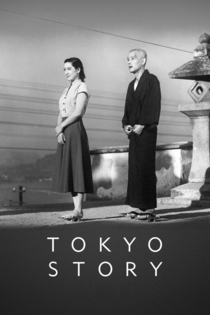
東京物語
Yasujirō Ozu
Chishū Ryū, Chieko Higashiyama
The elderly Shukishi and his wife, Tomi, take the long journey from their small seaside village to visit their adult children in Tokyo. Their elder son, Koichi, a doctor, and their daughter, Shige, a hairdresser, don't have much time to spend with their aged parents, and so it falls to Noriko, the widow of their younger son who was killed in the war, to keep her in-laws company.
Tokyo Story
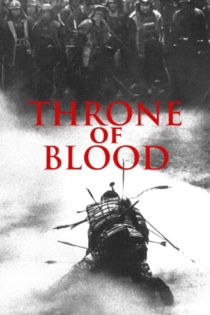
Throne of Blood
Akira Kurosawa
Toshirō Mifune, Isuzu Yamada
Returning to their lord's castle, samurai warriors Washizu and Miki are waylaid by a spirit who predicts their futures. When the first part of the spirit's prophecy comes true, Washizu's scheming wife, Asaji, presses him to speed up the rest of the spirit's prophecy by murdering his lord and usurping his place. Director Akira Kurosawa's resetting of William Shakespeare's "Macbeth" in feudal Japan is one of his most acclaimed films.
Throne of Blood
Tampopo
Juzo Itami
Tsutomu Yamazaki, Nobuko Miyamoto
In this humorous paean to the joys of food, a pair of truck drivers happen onto a decrepit roadside shop selling ramen noodles. The widowed owner, Tampopo, begs them to help her turn her establishment into a paragon of the "art of noodle-soup making". Interspersed are satirical vignettes about the importance of food to different aspects of human life.
Tampopo

The Bad Sleep Well
Akira Kurosawa
Toshirō Mifune, Masayuki Mori
In this loose adaptation of "Hamlet," illegitimate son Kôichi Nishi climbs to a high position within a Japanese corporation and marries the crippled daughter of company vice president Iwabuchi. At the reception, the wedding cake is a replica of their corporate headquarters, but an aspect of the design reminds the party of the hushed-up death of Nishi's father. It is then that Nishi unleashes his plan to avenge his father's death.
The Bad Sleep Well

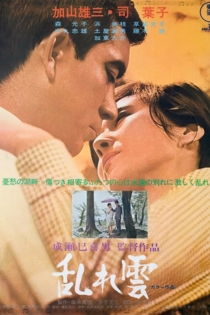
Two in the Shadow
Mikio Naruse
Yûzô Kayama, Yôko Tsukasa
A man is involved in a fatal car accident, and though he is blameless, his company transfers him to a remote branch in a small town. Before he leaves, he gives the man's widow a large sum of money that she uses to move back to her hometown.
Two in the Shadow