Charles Lang
1902 - 1998Charles Bryant Lang, Jr., A.S.C. (born March 27, 1902, Bluff, Utah – died April 3, 1998, Santa Monica, California) was an American cinematographer.
Early in his career, he worked with the Akeley camera, a gyroscope-mounted "pancake" camera designed by Carl Akeley for outdoor action shots. Lang's first credits were as co-cinematographer on the silent films The Night Patrol (1926) and The Loves of Ricardo (1927).
After completing Tom Sawyer for Paramount Pictures in 1930, he continued working at the studio for more than twenty years. The style of lighting he introduced in A Farewell to Arms became heavily identified with all of Paramount's films during the 1930s and 1940s, though he occasionally worked for other studios, for instance on The Ghost and Mrs. Muir (1947).
In 1951, he began the second phase of his career, this time as a free-lance cinematographer.[1] His credits include The Big Heat (1953) with Glenn Ford and Lee Marvin, Sabrina (1954) with Humphrey Bogart and William Holden, Gunfight at the O.K. Corral (1957) with Burt Lancaster and Kirk Douglas, The Matchmaker (1958), Some Like It Hot (1959) with Marilyn Monroe and Jack Lemmon, The Magnificent Seven (1960) with Steve McQueen, One-Eyed Jacks (1961) with Marlon Brando, How the West Was Won (1962) in Cinerama, Charade (1963) with Cary Grant and Audrey Hepburn, Bob & Carol & Ted & Alice (1969), and Butterflies Are Free (1972).
Lang received a Lifetime Achievement Award from the American Society of Cinematographers in 1991, for a career which included at least 114 feature films.
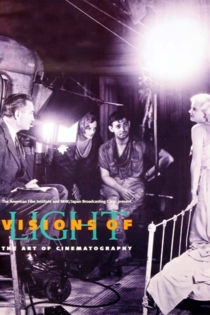
Visions of Light
Stuart Samuels, Arnold Glassman
Vilmos Zsigmond, Sven Nykvist
Cameramen and women discuss the craft and art of cinematography and of the "DP" (the director of photography), illustrating their points with clips from 100 films, from Birth of a Nation to Do the Right Thing. Themes: the DP tells people where to look; changes in movies (the arrival of sound, color, and wide screens) required creative responses from DPs; and, these artisans constantly invent new equipment and try new things, with wonderful results. The narration takes us through the identifiable studio styles of the 30s, the emergence of noir, the New York look, and the impact of Europeans. Citizen Kane, The Conformist, and Gordon Willis get special attention.
Visions of Light