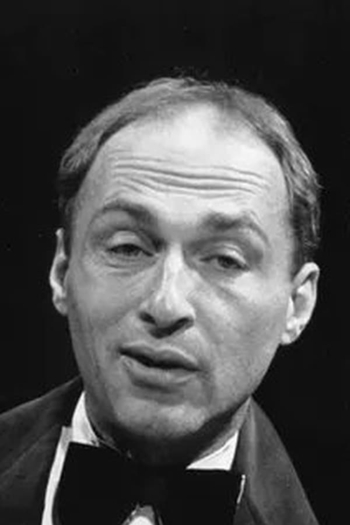
Ron Vawter
1948 - 1994The Silence of the Lambs
Jonathan Demme
Jodie Foster, Anthony Hopkins
Clarice Starling is a top student at the FBI's training academy. Jack Crawford wants Clarice to interview Dr. Hannibal Lecter, a brilliant psychiatrist who is also a violent psychopath, serving life behind bars for various acts of murder and cannibalism. Crawford believes that Lecter may have insight into a case and that Starling, as an attractive young woman, may be just the bait to draw him out.
The Silence of the Lambs

King of the Hill
Steven Soderbergh
Jesse Bradford, Jeroen Krabbé
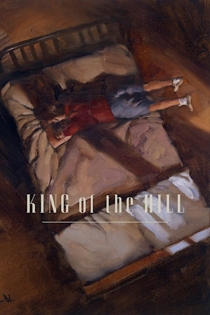
Based on the Depression-era bildungsroman memoir of writer A. E. Hotchner, the film follows the story of a boy struggling to survive on his own in a hotel in St. Louis after his mother is committed to a sanatorium with tuberculosis. His father, a German immigrant and traveling salesman working for the Hamilton Watch Company, is off on long trips from which the boy cannot be certain he will return.
King of the Hill

Swoon
Tom Kalin
Daniel Schlachet, Craig Chester
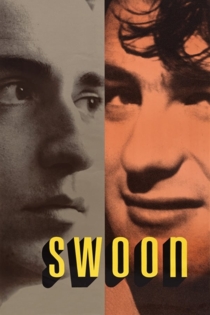
Teenagers Nathan Leopold Jr. and Richard Loeb share a dangerous sexual bond and an amoral outlook on life. They spend afternoons breaking into storefronts and engaging in petty crimes, until the calculating Nathan ups the ante by kidnapping, and murdering, a young boy.
Swoon

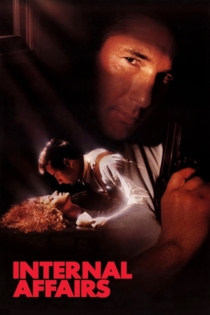
Internal Affairs
Mike Figgis
Richard Gere, Энди Гарсия
Keen young Raymold Avila joins the Internal Affairs Department of the Los Angeles police. He and partner Amy Wallace are soon looking closely at the activities of cop Dennis Peck whose financial holdings start to suggest something shady. Indeed Peck is involved in any number of dubious or downright criminal activities. He is also devious, a womaniser, and a clever manipulator, and he starts to turn his attention on Avila.
Internal Affairs
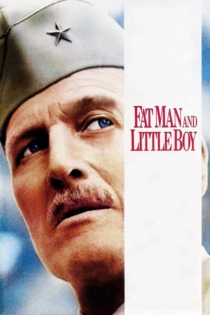
Fat Man and Little Boy
Roland Joffé
Paul Newman, Dwight Schultz
Assigned to oversee the development of the atomic bomb, Gen. Leslie Groves is a stern military man determined to have the project go according to plan. He selects J. Robert Oppenheimer as the key scientist on the top-secret operation, but the two men clash fiercely on a number of issues. Despite their frequent conflicts, Groves and Oppenheimer ultimately push ahead with two bomb designs — the bigger "Fat Man" and the more streamlined "Little Boy."
Fat Man and Little Boy
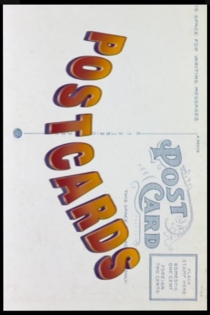
Postcards
Mark Rappaport
Ron Vawter, Dorothy Cantwell
A separated couple try to keep in touch through postcards of typically "American" sights: motels, monuments, parks; but their postcards cross in the mail. Misunderstandings arise; passion subsides; romance fades... Yet the postcards keep on coming.
Postcards
Used Innocence
James Benning
Kevin Henderson, Michael Weber
Using experimental narrative structure as his vehicle, Benning recreates the sensationalized and controversial circumstances surrounding Lorencia Bembenek, aka "Bambi", former "Playboy bunny" turned cop, turned accused and convicted killer who disappeared after a daring escape from prison. The film shows the evolution of Benning's and Bembenek's relationship presented through their actual letters read in voice over which depict the filmmaker's curiosity with the subject as it evolves from intrigue to a love obsession.
Used Innocence

Made in Hollywood
Norman Yonemoto
Patricia Arquette, Michael Lerner
Steeped in irony, Made in Hollywood depicts the personal and cultural mediation of reality and fantasy, desire and identity, by the myths of television and cinema. Quoting from a catalogue of popular styles and sources, from TV commercials to The Wizard of Oz, the Yonemotos construct a parable of the Hollywood image-making industry from a pastiche of narrative cliches: A small-town ingenue goes West to find her dream and loses her innocence; the patriarch of a Hollywood studio nears death; a New York couple seeks screenwriting fame and fortune in the movies. With deadpan humor and hyperbolic visual stylization, the Yonemotos layer artifice upon artifice, constructing an image-world where reality and representation, truth and simulation, are meaningless distinctions.
Made in Hollywood

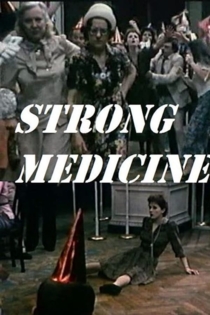
Strong Medicine
Richard Foreman
Bill Raymond, Kate Manheim
Adaptation of an avant-garde play about Rhoda, a hysterical heroine who feels oppressed by the people around her. She suffers through her birthday party, goes to see a doctor, plans a vacation, argues a lot and even breaks the fourth wall.
Strong Medicine
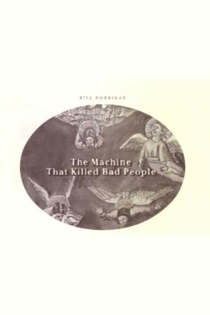
The Machine That Killed Bad People
Steve Fagin
Steve Fagin, Trinh T. Minh-ha
The Machine That Killed Bad People is about the cultural and political history of the Philippines leading up to the overthrow of President Ferdinand Marcos in 1986. It also addresses the role of electronic media in the struggle for power, and more broadly, American intervention in the Third World. Using a structure that emulates the way television news programs construct meaning through fragmentation, the tape interweaves clips of Filipino activists and reporters, a fictional television anchorwoman and correspondent, commentary by independent filmmaker Trinh T. Minh-ha, Fagin's off-camera voice and script, and anonymous excerpts from commercial television.
The Machine That Killed Bad People