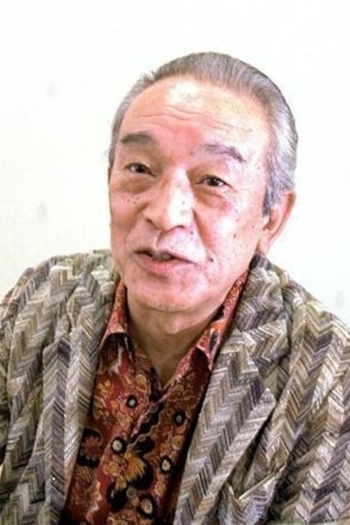
Kei Satō
1928 - 2010
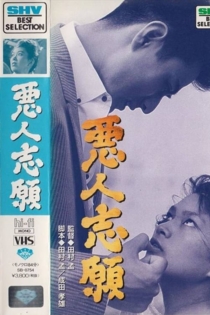
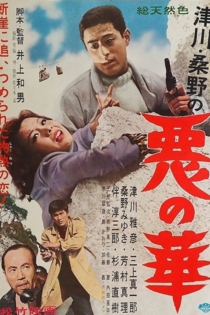
悪の華
Kazuo Inoue
Masahiko Tsugawa, Miyuki Kuwano
The daughter of the wealthy Soga family is kidnapped and her fiance is murdered. But the kidnappers, Tatsu and Sanko are unaware that Tatsuko is the heiress to a fortune. Two strong-arm brothers, Kosaka and Takeshi, learn of her identity and join the gang in an effort to shake down the tycoon for ten million yen. Upon joining forces, their first move is to rid themselves of the driver whose identity is known to the police because of a cap which he left behind at the scene of the crime. Upon obtaining the ransom money, the brothers murder the two kidnappers and go to the port city of Kobe. The younger brother, Takeshi, has fallen in love with the prisoner and refuses to allow her to be killed and they take her with them from one hideout to another.
Incidental Murders

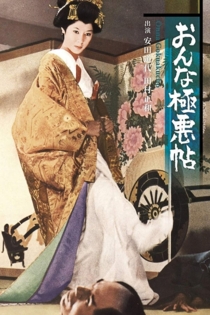
おんな極悪帖
Kazuo Ikehiro
Michiyo Ookusu, Masakazu Tamura
Wicked woman Ogin is a concubine of a powerful feudal lord Tayu. At first Ogin gains power by poisoning lawful wife of Tayu. To gain more power Ogin let her lover Isogai Iori, kill whoever interrupts her. Film it is based on Jun'ichirō Tanizaki's novel "Kyofu Jidai".
Naked Ambition
切腹
Masaki Kobayashi
Tatsuya Nakadai, Akira Ishihama
Down-on-his-luck veteran Tsugumo Hanshirō enters the courtyard of the prosperous House of Iyi. Unemployed, and with no family, he hopes to find a place to commit seppuku—and a worthy second to deliver the coup de grâce in his suicide ritual. The senior counselor for the Iyi clan questions the ronin’s resolve and integrity, suspecting Hanshirō of seeking charity rather than an honorable end. What follows is a pair of interlocking stories which lay bare the difference between honor and respect, and promises to examine the legendary foundations of the Samurai code.
Harakiri

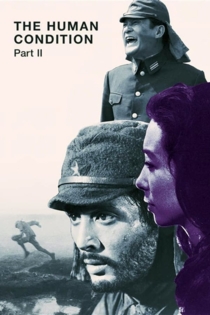
人間の條件 第3部望郷篇/第4部戦雲篇
Masaki Kobayashi
Tatsuya Nakadai, Michiyo Aratama
Kaji is sent to the Japanese army labeled Red and is mistreated by the vets. Along his assignment, Kaji witnesses cruelties in the army and revolts against the abusive treatment against the recruit Obara. He also sees his friend Shinjô Ittôhei defecting to the Russian border, and he ends in the front to fight a lost battle against the Russian tanks division.
The Human Condition II: Road to Eternity
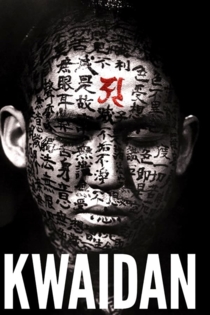
Kwaidan
Masaki Kobayashi
Michiyo Aratama, Misako Watanabe
Taking its title from an archaic Japanese word meaning "ghost story," this anthology adapts four folk tales. A penniless samurai marries for money with tragic results. A man stranded in a blizzard is saved by Yuki the Snow Maiden, but his rescue comes at a cost. Blind musician Hoichi is forced to perform for an audience of ghosts. An author relates the story of a samurai who sees another warrior's reflection in his teacup.
Kwaidan
Onibaba
Kaneto Shindō
Nobuko Otowa, Jitsuko Yoshimura
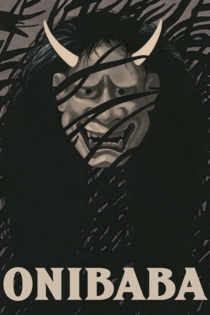
While her son, Kichi, is away at war, a woman and her daughter-in-law survive by killing samurai who stray into their swamp, then selling whatever valuables they find. Both are devastated when they learn that Kichi has died, but his wife soon begins an affair with a neighbor who survived the war, Hachi. The mother disapproves and, when she can't steal Hachi for herself, tries to scare her daughter-in-law with a mysterious mask from a dead samurai.
Onibaba
Kuroneko
Kaneto Shindō
Kichiemon Nakamura, Nobuko Otowa
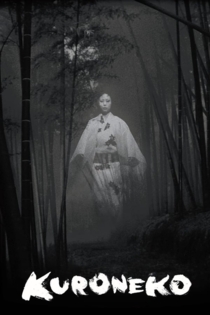
In the Sengoku period, a woman and her daughter are raped and murdered by soldiers during a time of civil war. Afterwards, a series of samurai returning from the war through that area are found mysteriously dead with their throats torn out. The governor calls in a wild and fierce young hero to quell what is evidently an Onryō ghost. He encounters the two beautiful women in an eerie, beautiful scene. After spiritual purification, he meets the demon in a thrilling fight.
Kuroneko
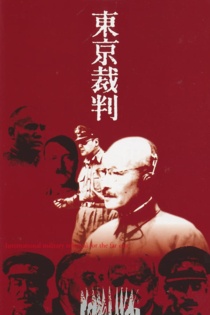
東京裁判
Masaki Kobayashi
Kei Satō
One of the major documentaries on a specific chapter in modern Japanese history, this look at the trial of Japanese militarists accused of war crimes is excellently handled by director Masaki Kobayashi. Kobayashi and his assistants had to plough through 30,000 reels from the proceedings of the International Military Tribunal which took place between May, 1946 and November, 1948. It took two days to read the charges against the 100 alleged war criminals in the docket (only 28 top officials are actually in the courtroom, which was limited in space), and the final judgment took one week to read.
Tokyo Trial