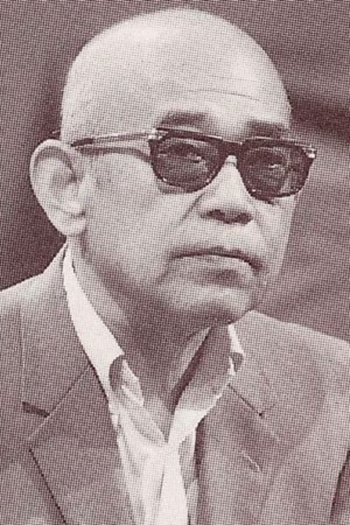
Taiji Tonoyama
1915 - 1989春駒のうた
Seijiro Koyama
Taiji Tonoyama
Hoshino Bunzo raises up his orphan grandson, Keiji whose right leg gets paralyzed when he was an infant. Bunzo loves Keiji so much that he does every thing to protect his grandson. Sonoda Keiko, a new young teacher comes to the school when a new term starts. She wants Keiji to go back to school. After two years absence from school, Keiji tries to attend the class but he cannot continue. All pupils hold an exhibition of Keiji’s paintings in the village shrine to make him happy. He is very pleased and gives his paintings to them and to Keiko, he gives a painting entitled "Spring Pony". When this picture is awarded a prize in the National Friendship Painting Compettition, it is like a new beginning for Keiji’s family.
Song of the Spring Pony

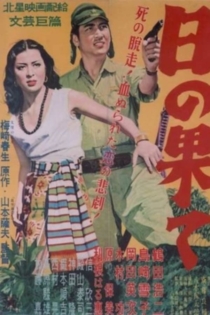
日の果て
Satsuo Yamamoto
Koji Tsuruta, Yasumi Hara
Based on Philippines war experiences. Military doctor Leutenant Hanada deserts with a local girl. The officer in command orders Lieutenant Uji to shoot Hanada. Uji takes a sharpshooter called Takagi and tracks him. At first Uji cannot forgive Hanada but as Uji is isolated from the main force he too starts to think of desertion.
The End of a Day
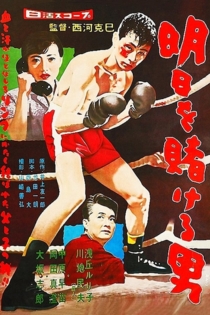
明日を賭ける男
Katsumi Nishikawa
Tamio Kawachi, Ruriko Asaoka
Former boxer Daishiro lost his wife, and his only son, Kaoru, went missing, it was a heavy blow for Daishiro. One day, Daishiro got a call from his relative Morihiko. He said he forgot the winning lottery ticket of 2 million yen at the hotel, so he wants Daishiro to go and pick it up. Morihiko used the hotel for secret meetings, so he said he couldn't go there himself because he was afraid it would become public. When Daishiro entered the hotel, the Yakuza, who learned about the lottery from the newspaper, threaten the hotel maid Noriko, and want to rob her. Daishiro helps Noriko and safely picks up the lottery, but a message arrives from his relative Seikichi from Osaka. His missing son Kaoru is said to be a boxer in Osaka. "My son... He has the blood of a boxer in him..." Daishiro is heading to Osaka in a hurry...
The Man Who Wagers Tomorrow
看護婦のオヤジがんばる
Seijiro Koyama
Gin Maeda, Orie Satō
“Quit working as a nurse!” “All right, I will!” thus began the married life of Yasuo and Keiko. But the reality is harsh. Keiko even had to work on the first night after her marriage. Ten years later, the married couple is still at it. Yauso tends to the house and their children, while Keiko sacrifices family life for life as an overworked nurse. One day, after Keiko comes home utterly exhausted and dejected from her work, Yasuo makes up his mind and writes a letter of resignation in her place. Upon learning of this, Keiko angrily declares that nursing is what she lives for and she will keep on working. Realising that that is one battle he will never win, Yasuo sends a letter to a newspaper -- “Nurses’ husbands, aren’t you having a hard time? Get together nurses’ husbands. Contact me.” There is a tremendous response. This leads to the formation of many unions of nurses’ husbands throughout the country.
Nurse's Husband
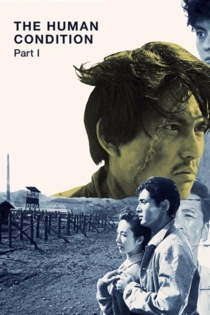
The Human Condition I: No Greater Love
Masaki Kobayashi
Tatsuya Nakadai, Michiyo Aratama
After handing in a report on the treatment of Chinese colonial labor, Kaji is offered the post of labor chief at a large mining operation in Manchuria, which also grants him exemption from military service. He accepts, and moves to Manchuria with his newly-wed wife Michiko, but when he tries to put his ideas of more humane treatment into practice, he finds himself at odds with scheming officials, cruel foremen, and the military police.
The Human Condition I: No Greater Love
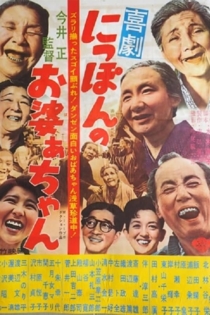
Nippon no obaachan
Tadashi Imai
Chôchô Miyako, Tanie Kitabayashi
Two obaachans become fast friends listening to music in front of a record store. They both boast about their loving sons but in reality, one had just escaped a retirement home and the other was looking for an escape from her son and daughter-in-law. With nowhere to go, the two wander around, befriending a cosmetics salesman and a kind waitress who give them beer. This biting social satire starring two memorable grandmothers, scripted by Yôko Mizuki, picked up on Japan’s aging population problem far ahead of its time.
Nippon no obaachan

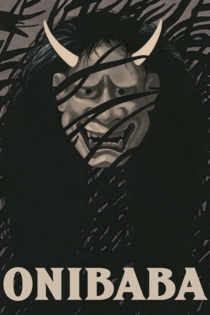
Onibaba
Kaneto Shindō
Nobuko Otowa, Jitsuko Yoshimura
While her son, Kichi, is away at war, a woman and her daughter-in-law survive by killing samurai who stray into their swamp, then selling whatever valuables they find. Both are devastated when they learn that Kichi has died, but his wife soon begins an affair with a neighbor who survived the war, Hachi. The mother disapproves and, when she can't steal Hachi for herself, tries to scare her daughter-in-law with a mysterious mask from a dead samurai.
Onibaba