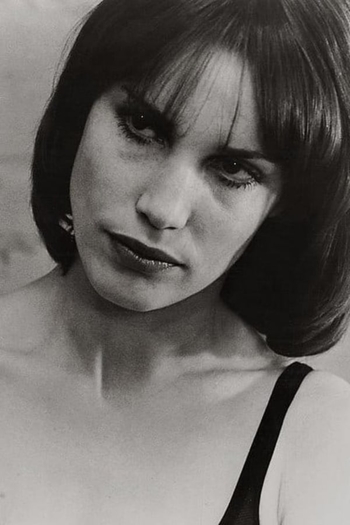
Zouzou
1943 (82 года)Description above from the Wikipedia article Zouzou, licensed under CC-BY-SA, full list of contributors on Wikipedia.
Love in the Afternoon
Éric Rohmer
Bernard Verley, Zouzou
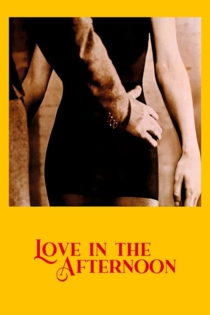
The last of Rohmer's Six Moral Tales. Frederic leads a bourgeois life; he is a partner in a small Paris office and is happily married to Helene, a teacher expecting her second child. In the afternoons, Frederic daydreams about other women, but has no intention of taking any action. One day, Chloe, who had been a mistress of an old friend, begins dropping by his office. They meet as friends, irregularly in the afternoons, till eventually Chloe decides to seduce Frederic, causing him a moral dilemma.
Love in the Afternoon
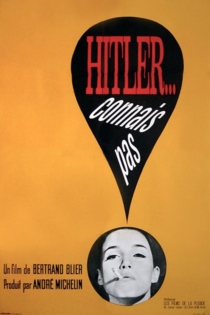
Hitler... connais pas
Bertrand Blier
Zouzou
In 1963, 22-year-old Bertrand Blier invited 11 of his peers to come to a film studio and talk about their lives. The record of what was said is a discussion of values that remains relevant and fascinating today. The footage was shot just five years prior to May 1968, and the atmosphere of that time is clearly discernible: these young people may not yet be revolutionaries, but there is clearly a ferment in the air.
Hitler - Never Heard of Him
Les contes secrets ou les Rohmériens
Marie Binet
Éric Rohmer, Marie Rivière
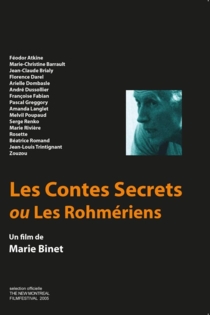
Les Contes Secrets ou les Rohmériens features interviews with 16 actors who have appeared in Rohmer's films, and they talk on camera about his unusual working methods, his personality, and his spare but evocative signature style. Among the thespians who share their memories are Jean-Louis Trinitignant, Marie-Christine Barrault, Zouzou, Jean-Claude Brialy, Béatrice Romand, Françoise Fabian, and Andre Dussolier; the film also includes rare footage of Rohmer himself at work on the set of his 1978 effort Perceval.
Les Contes secrets ou les Rohmériens
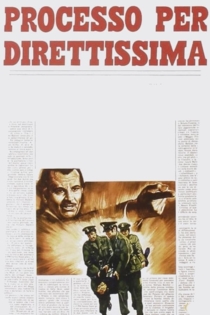
Processo per direttissima
Lucio De Caro
Ira von Fürstenberg, Michele Placido
After a terrorist attack against a train, the police arrest the young laborer Stefano Baldini, member of a group of militant leftists. Entrusted for interrogation to Sergeant Pendicò and special agents Lorusso and Spasiani, Stefano dies, after four days, in unclear circumstances. Doubting the official version of the police, the second time in which a young person died in custody, journalist Cristina Visconti tries, with the aid of the sister of Stefano, to discover the truth. They rub up against a conspiracy of silence that encircles the acts of Pendicò and his associates. Frustrated beyond reason, Cristina tries a desperate ploy: publishing a story without evidence in the newspaper, accusing the three agents of having caused the death of Stefano with their blows. Cristina is put on trial for defamation. Can she avoid going to jail and also reveal the facts surrounding Stefano's death?
Processo per direttissima
Cinématon
Gérard Courant
Gérard Courant, Alain-Alcide Sudre
Cinématon is a 156-hour long experimental film by French director Gérard Courant. It was the longest film ever released until 2011. Composed over 36 years from 1978 until 2006, it consists of a series of over 2,821 silent vignettes (cinématons), each 3 minutes and 25 seconds long, of various celebrities, artists, journalists and friends of the director, each doing whatever they want for the allotted time. Subjects of the film include directors Barbet Schroeder, Nagisa Oshima, Volker Schlöndorff, Ken Loach, Benjamin Cuq, Youssef Chahine, Wim Wenders, Joseph Losey, Jean-Luc Godard, Samuel Fuller and Terry Gilliam, chess grandmaster Joël Lautier, and actors Roberto Benigni, Stéphane Audran, Julie Delpy and Lesley Chatterley. Gilliam is featured eating a 100-franc note, while Fuller smokes a cigar. Courant's favourite subject was a 7-month-old baby. The film was screened in its then-entirety in Avignon in November 2009 and was screened in Redondo Beach, CA on April 9, 2010.
Cinématon

Le Lit de la vierge
Philippe Garrel
Zouzou, Pierre Clémenti
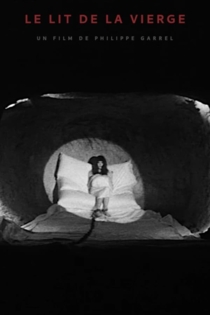
30 year old child enters the new city, riding on a donkey. He says he is the Savior. He has spent no time among men. He is trembling with cold. His clothes are soaked. His mother was overprotective ; his father conspicuously absent. He knows that he must face the mockery, refusal, ignorance and blindness of the men around him. They travel in gangs, in large numbers : soldiers, mercenaries or the like, on majestic, imposing horses. Everything is out of proportion to his thin, bewildered, innocent body ; he is the madman of the new city...
The Virgin's Bed