
Pierre Jourdan
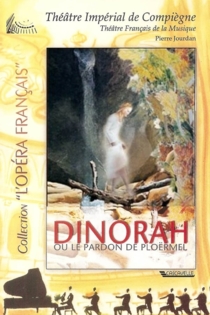
1907 - 1993Dinorah, or The Pardon of Ploërmel
Pierre Jourdan
Isabelle Philippe, Armand Arapian
Giacomo Meyerbeer's pastoral opera,based on a Breton tale, is the tale of DINORAH who has gone mad because her bridegroom Hoël has disappeared during their wedding. This production, performed as part of Théâtre Impérial de Compiegne's purpose of reviving obscure French opera, is the only version of 'Dinorah' available on DVD, but it is a great production! The painterly pastoral settings and décor and rustic costumes are very easy on the eye. Opera traditionalists who dislike modern stagings will be delighted to know that this is a traditional production. Pierre Jourdan's stage direction is charming and always involving, never once falling into static movements or gestures, gratuitous distaste and irrelevance. With Isabelle Philippe, Armand Arapian and Frédéric Mazzotta. Conducted by Olivier Opebeek.
Dinorah, or The Pardon of Ploërmel
Norma
Pierre Jourdan, Sandro Sequi
Giuseppe Patanè, Montserrat Caballé
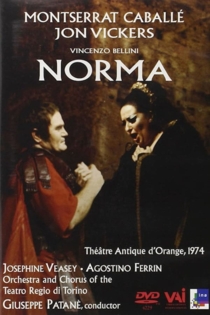
Oroveso, a Druid High Priest, gathers his people in a sacred forest and prays to their gods for help in vanquishing the Romans who have taken over Gaul. Unbeknownst to Oroveso, his daughter, Norma, a High Priestess, has for some time been the lover of Pollione, the leader of the Romans; she has, in fact, not only broken her sacred vow of chastity but has borne two children to the warrior. Norma uses her position to dissuade the Gauls from attacking the Romans, claiming that the gods have told her that the time is not favourable. Recorded at Théâtre Antique d'Orange, 1974
Norma
Henry VIII
Pierre Jourdan
Philippe Rouillon, Michèle Command
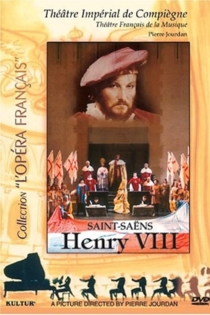
Henry VIII is an opera in four acts by Camille Saint-Saëns, from a libretto by Léonce Détroyat and Armand Silvestre, based on El cisma en Inglaterra (The schism in England) by Pedro Calderón de la Barca. It was revived in 1991 at the Théatre Impérial de Compiègne in a production by Pierre Jourdan, with Philippe Rouillon as Henry VIII, Michèle Command as Catherine of Aragon and Lucile Vignon as Anne Boleyn. The production was made into this film.
Henry VIII
Le Comte de Monte Cristo, 2e époque : Le Châtiment
Robert Vernay, Ferruccio Cerio
Pierre Richard-Willm, Michèle Alfa
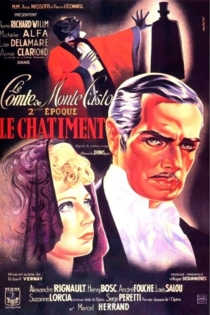
Having found the fabulous treasure of which Abbé Faria had spoken to him, Dantès has only one idea left: revenge. He will succeed patiently, but will not however have the heart to break the poor Mercedes. Then he will leave for the East, accompanied by a lovely Levantine, Haydé, who served him to accomplish his revenge.
The Count of Monte Cristo Part 2 - The Retaliation
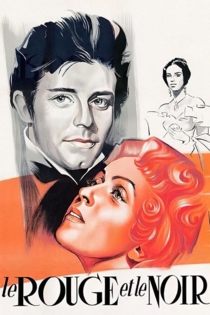
Le Rouge et le Noir
Claude Autant-Lara
Gérard Philipe, Danielle Darrieux
It's no holds barred for Julian in pursuit of upward mobility. Although expected to channel career aspirations into the Church of the post-Napoleonic era, his intensely romantic liaisons propel him forward at a pace he cannot control.
Le Rouge et le Noir

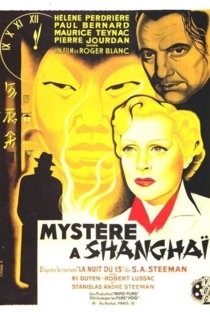
Mystère à Shanghai
Roger Blanc
Hélène Perdrière, Paul Bernard
In Shangai, the "Green Dragon" threatens to kill Herbert Aboody, a rich exporter, unless he pays him 50,000 dollars. One of Aboody's secretaries calls inspector Wens for help. An amazing fact occurs, Wens kills Aboody and then disappears. What is the key to this mystery?
Mystère à Shanghai
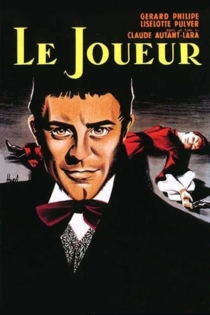
Le Joueur
Claude Autant-Lara
Gérard Philipe, Liselotte Pulver
In 1866, a young Muscovite named Alexei Ivanovitch arrives in Baden Baden, then the gambling capital of Austria, and is soon engaged by General Zagorianski to look after his children. Alexei discovers that his employer is a compulsive gambler who has been almost ruined by his addiction. The only money the General has is provided by the Marquis de Grieux, an adventurer who intends to marry Zagorianski’s sister, Pauline. In doing so, de Grieux hopes to profit from the vast inheritance that will come the General’s way from his Aunt Antonina, who is presently very ill. Alexei is appalled by this society which lives only for money. He loves Pauline and wants to take her to a healthier place, but when she refuses to marry him, he begins to gamble at the casino…
The Gambler
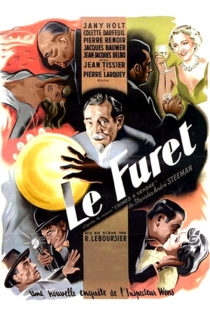
Le furet
Raymond Leboursier
Jany Holt, Colette Darfeuil
A mysterious figure signing himself "The Ferret" keeps sending letters to the police, tipping them off about murders that are to be committed around Paris. Among those caught up in the police manhunt is a fraudulent clairvoyant.
The Ferret
Aïda
Pierre Jourdan
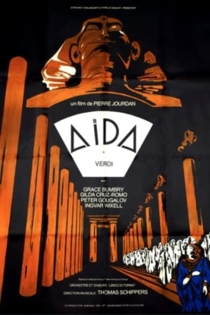
Verdi's opera was filmed during a performance at the Theatre Antique (The Roman Theater) in Orange, France in July 1976. This highly lauded production is marvelously translated to the screen by Pierre Jourdan. The story of an Ethiopian princess' love for an Egyptian general in the age of the pharaohs stars Gilda Cruz Romo as Aida, Grace Bumbry as Amneris and Peter Gougalov as Radames. The ancient Roman Theater is photographed in its sweeping grandeur, the spacious stage imaginatively employed.
Aïda
La Ligne de mire
Jean-Daniel Pollet
Pierre Assier, Michèle Mercier
Pedro returns to the castle of his childhood, inhabited by his uncle, an indifferent being who scarcely notices his presence. At the castle, Pedro wanders between the park and the salons, playing the songs he composed on the guitar. He notices strange people around the castle.
Line of Sight

Lucrèce
Léo Joannon
Edwige Feuillère, Pierre Jourdan
Lucrèce, a famous actress, is bothered first, then flattered by the passionate testimonies of love given to her by François, a 12th grade student infatuated with her. Taking pity on the boy, Lucrèce decides to heal him of his madness and with this in mind she invites him for a working holiday on her farm. Instead, she falls in love with the cherub. At a time, her young lover grows so jealous of her that he attempts suicide. The mature actress then understands that their love story is going nowhere. She will remain alone while François will forget her.
Lucrèce