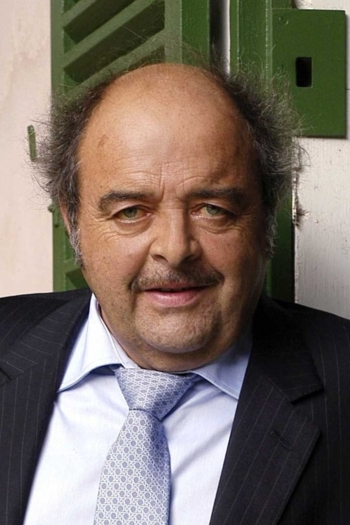
Jacques Villeret
1951 - 2005Villeret was born Jacky Boufroura in Loches, Indre-et-Loire, France, to an Algerian father and a French mother. He studied at the Conservatoire de Paris (CNSAD) in the same class as Louis Seigner, the grandfather of Emmanuelle Seigner and Mathilde Seigner. While he was most famous for his role as François Pignon in Le Dîner de Cons; both on the stage and in the film, his other celebrated roles included the extra terrestrial in La soupe aux choux, the autistic Mo in L'été en pente douce, and marshal Ludwig von Apfelstrudel in Papy fait de la résistance.
At the time of making the film Un aller simple directed by Laurent Heynemann – a film about integration and racism and the clash of generations – he said that watching the young actors in the film, Barbara Schulz and Lorant Deutsch, reminded him of the insouciance he had had as a young man with his friends at the Conservatoire.
When his career was at its height, with the success of Le Dîner de Cons, everything collapsed in a tragedy mirroring the plot of the film. Villeret separated from his wife and suffered an enormous financial downfall due to tax issues, plunging him into depression. Villeret turned to alcohol for comfort, and became an alcoholic. He isolated himself and hid away for long periods. He later said: Alcohol is a friend, but a friend who means you harm.
Villeret's love of his profession helped to bring his career back from the brink. In an interview in 2001 he spoke of his admiration for performers like Johnny Hallyday and Jacques Brel for their level of commitment, and quoted the author Louis-Ferdinand Céline: When I write, I put my balls on the table.
In 1979 Villeret married Irina Tarassov, an actress and writer. They separated in 1998. Tassarov wrote about their life together in her book Un jour, tout ira bien. (One day, everything will go well).
In 2002 Villeret met Seny, a Senegalese-French widow descended through her grandfather, Mor Diarra N'Dao, from a long line of Sérès nobles of the ancient Kingdom of Saloum, and they fell instantly and deeply in love. They were partners for three years, and she was about to move to Paris to be with him when he died in Évreux in January 2005 of a liver haemorrhage. Seny wrote a memoir of their life together, Jacques Villeret, mon bébé blanc, which was published in Paris by Le Cherche Midi in 2005.
Source: Article "Jacques Villeret" from Wikipedia in English, licensed under CC-BY-SA 3.0.

The Dinner Game
Francis Veber
Jacques Villeret, Thierry Lhermitte
For Pierre Brochant and his friends, Wednesday is “Idiots' Day”. The idea is simple: each person has to bring along an idiot. The one who brings the most spectacular idiot wins the prize. Tonight, Brochant is ecstatic. He has found a gem. The ultimate idiot, “A world champion idiot!”. What Brochant doesn’t know is that Pignon is a real jinx, a past master in the art of bringing on catastrophes...
The Dinner Game

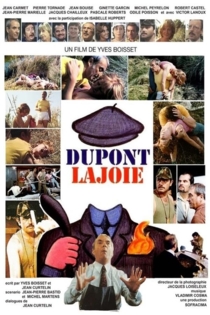
Dupont Lajoie
Yves Boisset
Jean Carmet, Pascale Roberts
As every summer, Georges Lajoie, his wife Ginette and grown-up son Léon go on holiday to Loulou's campsite. They join old friends, the Schumachers and the Colins. Brigitte Colin, the daughter, is quite a pretty young girl now. One day, Georges rapes and murders her. He hides the body near the barracks of the immigrant Arab workers. The racism of the campers will do the rest... A virulent lampoon against the average Frenchman's racism.
The Common Man
Danton
Andrzej Wajda
Gérard Depardieu, Wojciech Pszoniak
Danton and Robespierre were close friends and fought together in the French Revolution, but by 1793 Robespierre was France's ruler, determined to wipe out opposition with a series of mass executions that became known as the Reign of Terror. Danton, well known as a spokesman of the people, had been living in relative solitude in the French countryside, but he returned to Paris to challenge Robespierre's violent rule and call for the people to demand their rights. Robespierre, however, could not accept such a challenge, even from a friend and colleague, and he blocked out a plan for the capture and execution of Danton and his allies.
Danton

The Children of the Marshland
Jean Becker
Jacques Villeret, Jacques Gamblin
The film is set in Marais, a quiet region along the banks of Loire river in 1918. Riton is afflicted with a bad-tempered wife and three unruly children. Garris lives alone with his recollections of World War I trenches. Their daily life consists of seasonal work and visits from their two pals: Tane, the local train conductor and Amédée, a dreamer and voracious reader of classics.
The Children of the Marshland

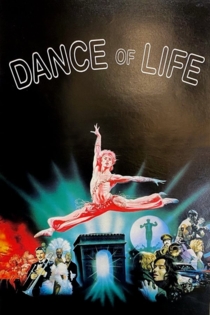
Bolero: Dance of Life
Claude Lelouch
Robert Hossein, Nicole Garcia
The film follows four families, with different nationalities (French, German, Russian and American) but with the same passion for music, from the 1930s to the 1960s. The various story lines cross each other time and again in different places and times, with their own theme scores that evolve as time passes. The main event in the film is the Second World War, which throws the stories of the four musical families together and mixes their fates. Although all characters are fictional, many of them are loosely based on historical musical icons (Édith Piaf, Josephine Baker, Herbert von Karajan, Glenn Miller, Rudolf Nureyev, etc.) The Boléro dance sequence at the end brings all the threads together.
Bolero: Dance of Life
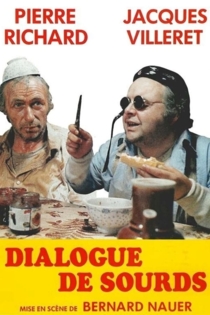
Strange Gardens
Jean Becker
Jacques Villeret, André Dussollier
Lucien, 14, can’t understand why his father, a serious and respected teacher, makes a fool of himself by dressing up as a clown and giving a show. André, Lucien’s father’s best friend, feels for the teenager and decides to reveal something from their mutual past that will explain the reason for Lucien’s father’s strange behavior.
Strange Gardens

Nothing to Report
Yves Boisset
Jacques Spiesser, Jacques Weber
In 1956, the professional army of France lacks the manpower to keep the peace in Algeria, the colony which the country is determined to hold on to at any price. For this reason, reservists are called up and subject to an intense period of training before being sent to the front. Rémy March, Alain Charpentier and Raymond Dax are three such young men who have no interest in the military escapade and are reluctant conscripts. What they witness in Algeria will appall and transform them. Rape, torture, executions... there is no end to the atrocities in which they become unwilling participants. No wonder the French military are so willing to proclaim that there is nothing to report...
Nothing to Report
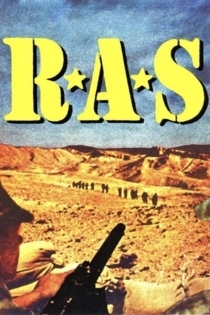
588 Rue Paradis
Henri Verneuil
Richard Berry, Claudia Cardinale
This family drama is the sequel to director Henri Verneuil's autobiographical film, Mayrig. It takes place some forty years after the end of the previous film. In the earlier film, a young man has moved with his family to Marseilles from Armenia and is adapting to his new country to the best of his ability. This tends to put him in conflict with his traditional Armenian family. Nonetheless, they are all hardworking and loving. Now, forty years later, the lead character has changed his name to Pierre Zakar, because it is easier for the French to pronounce and relate to. He has also become a very successful playwright.
588 Rue Paradis
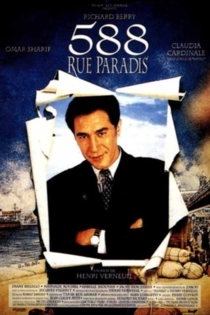
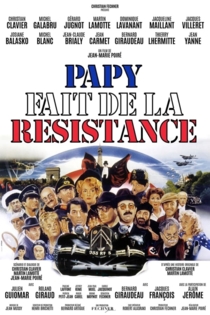
Papy fait de la résistance
Jean-Marie Poiré
Christian Clavier, Michel Galabru
It is 1943 in Paris. Like so many others, the Bourbelle family's home has been taken over by the Germans and they now live in their cellar. Little do they know that the son, Guy-Hubert Bourdelle, is far from being the cowardly hairdresser he pretends. He is in truth the Germans’ most feared opponent: le super-résistant!
Gramps Is in the Resistance
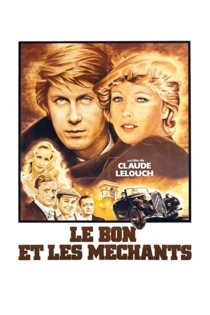
Le Bon et les méchants
Claude Lelouch
Jacques Dutronc, Marlène Jobert
The film follows the exploits of Jacques, a car-mechanic turned pro-thief, and his Jewish co-conspirator Simon as their robberies, beginning well before the Second World War, take on a political coloration under the occupation.
The Good and the Bad
Le batteur du Boléro
Patrice Leconte
Jacques Villeret, Laurent Petitgirard
Probably no one in the public listening to the orchestra's rendition of Ravel's Bolero notices him but the drummer is a regular hero. For, although his mind is assailed by loads of unsettling thoughts and worries, he tries to keep the rhythm at any cost. He knows all too well that he falls out of time only once all the magic of the piece will vanish.
The Drummer of Ravel's Boléro