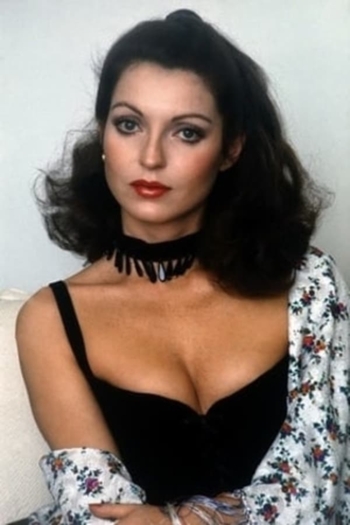
Marie-France Pisier
1944 - 2011Description above from the Wikipedia article Marie-France Pisier, licensed under CC-BY-SA, full list of contributors on Wikipedia.
The Phantom of Liberty
Luis Buñuel
Adriana Asti, Milena Vukotić
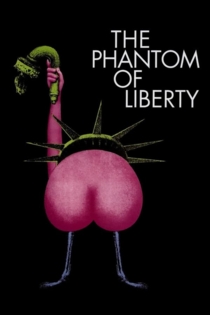
This Surrealist film, with a title referencing the Communist Manifesto, strings together short incidents based on the life of director Luis Buñuel. Presented as chance encounters, these loosely related, intersecting situations, all without a consistent protagonist, reach from the 19th century to the 1970s. Touching briefly on subjects such as execution, pedophilia, incest, and sex, the film features an array of characters, including a sick father and incompetent police officers.
The Phantom of Liberty
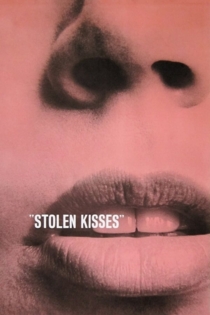
Stolen Kisses
François Truffaut
Jean-Pierre Léaud, Claude Jade
The third in a series of films featuring François Truffaut's alter-ego, Antoine Doinel, the story resumes with Antoine being discharged from military service. His sweetheart Christine's father lands Antoine a job as a security guard, which he promptly loses. Stumbling into a position assisting a private detective, Antoine falls for his employers' seductive wife, Fabienne, and finds that he must choose between the older woman and Christine.
Stolen Kisses
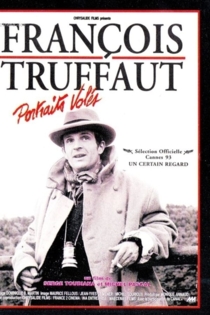
François Truffaut: Portraits volés
Michel Pascal, Serge Toubaina
François Truffaut, Jean-Pierre Léaud
Twenty-six people - including two daughters, an ex-wife, his last lover, actors, fellow directors and writers, a neighbor, and boyhood friends - talk about François Truffaut. They discuss his attitudes toward wealth, his early writings about cinema, the undercurrent of violence in his films and his personality, the way he used and altered events in his life when making films, his search for a father (both artistic and biological), his relationship with his mother, the scenes in his films that cause a squirm of embarrassment, and his ultimate mysticism. Clips from a dozen of his films are included.
François Truffaut: Stolen Portraits
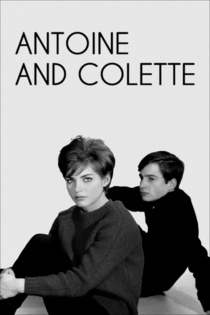
Antoine et Colette
François Truffaut
Jean-Pierre Léaud, Marie-France Pisier
Now aged 17, Antoine Doinel works in a factory which makes records. At a music concert, he meets a girl his own age, Colette, and falls in love with her. Later, Antoine goes to extraordinary lengths to please his new girlfriend and her parents, but Colette still only regards him as a casual friend. First segment of “Love at Twenty” (1962).
Antoine and Colette
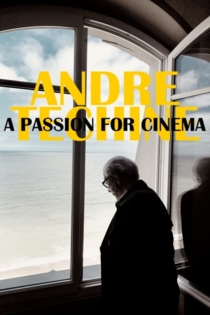
André Téchiné, cinéaste insoumis
Thierry Klifa
André Téchiné, Thierry Klifa
A walk through the career of French filmmaker André Téchiné, from his own point of view and that of those who worked with him: Catherine Deneuve, Daniel Auteuil, Emmanuelle Béart, Juliette Binoche and Sandrine Kiberlain, among others.
André Téchiné: A Passion for Cinema
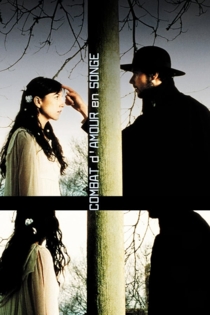
Love Torn in Dreams
Raúl Ruiz
Melvil Poupaud, Elsa Zylberstein
A serious young man of free spirit is forced by his surroundings to become rich at all costs. A group of blind children tries to open the eyes of the unbelievers to the Christian faith. Retired nuns who open a brothel, to pay the running costs of the convent. These rather ironic paradoxes turn this fairytale into a philosophical fable.
Love Torn in Dreams
Love at Twenty
François Truffaut, Shintarô Ishihara
Jean-Pierre Léaud, Marie-France Pisier
Love at Twenty unites five directors from five different countries to present their different perspectives on what love really is at the age of 20. The episodes are united with the score of Georges Delerue and still photos of Henri Cartier-Bresson.
Love at Twenty

Love on the Run
François Truffaut
Jean-Pierre Léaud, Marie-France Pisier
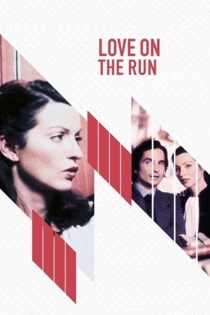
Antoine is now 30, working as a proofreader and getting divorced from his wife. It's the first "no-fault" divorce in France and a media circus erupts, dredging up Antoine's past. Indecisive about his new love with a store clerk, he impulsively takes off with an old flame.
Love on the Run
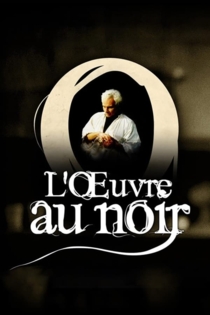
L'oeuvre au noir
André Delvaux
Gian Maria Volonté, Jacques Lippe
The Inquisition is in full swing in 16th century Flanders. Wanted for his dissident writings, the alchemist doctor Zeno has been wandering Europe under an assumed name for twenty years. But he remains a non-conformist. He returns to his native Bruges, where he thinks he has been forgotten. In this silent labyrinth where the faces of the past resurface, he rediscovers his identity and thus signs his death warrant.
The Abyss
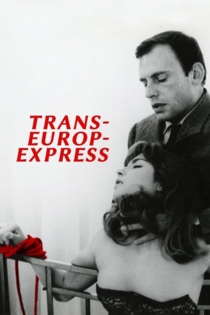
Trans-Europ-Express
Alain Robbe-Grillet
Jean-Louis Trintignant, Marie-France Pisier
A movie producer, director and assistant take the Trans-Europ-Express from Paris to Antwerp. They get the idea for a movie about a drug smuggler on their train and visualize it while taping the script.
Trans-Europ-Express
Der stille Ozean
Xaver Schwarzenberger
Hanno Pöschl, Marie-France Pisier
Cinematographer turned director (Xaver Schwarzenberger) has filmed a small, wintry story of epic human proportions. A young doctor (Hanno Poeschi) exiles himself to a remote Austrian village when he accidentally causes a death. Once at the village, winter sets in and against that harsh and poetic backdrop a rabies epidemic sweeps through the population. The doctor convinces people he is a biologist but then he treats someone bitten and gives his real profession away. As the epidemic raises questions of life and death, the doctor's mind is brought back to the death that caused his exile and he considers suicide for awhile. The same issues come up again when an enraged villager goes on a killing spree and in turn, is hunted by the citizens. Faced with the prevalence of death all around him, the doctor starts to gain some perspective on the personal experience that brought him here in the first place.
Der stille Ozean

Time Regained
Raúl Ruiz
Catherine Deneuve, Emmanuelle Béart
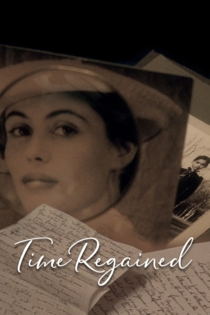
Marcel Proust (1871–1922) is on his deathbed. Looking at photographs brings memories of his childhood, his youth, his lovers, and the way the Great War put an end to a stratum of society. His memories are in no particular order, they move back and forth in time. Marcel at various ages interacts with Odette, with the beautiful Gilberte and her doomed husband, with the pleasure-seeking Baron de Charlus, with Marcel’s lover Albertine, and with others; present also in memory are Marcel’s beloved mother and grandmother. It seems as if to live is to remember and to capture memories is to create a work of great art. The memories parallel the final volume of Proust’s novel.
Time Regained