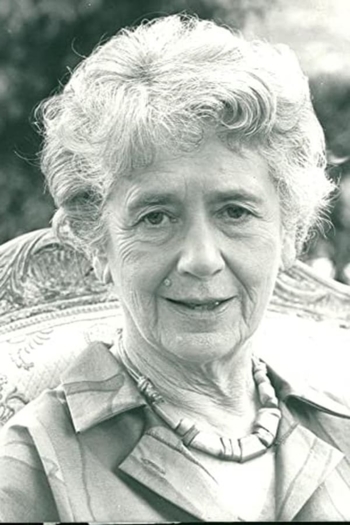
Peggy Ashcroft
1907 - 1991Révolution d'octobre
Frédéric Rossif
John Gielgud, Suzanne Flon
French director Frederic Rossif presents this historical documentary that coincided with the 50th anniversary of the Russian Revolution. Stock footage from both World Wars are included with 30 minutes of new scenes filmed especially for the project. The historical timeline is traced from the time Czar Nicholas II is crowned. The emergence of Lenin, his death in 1924, and the later contributions of Trotsky and Stalin give the viewer a sense of death, betrayal, and ideological devotion to the communist agenda. Rossif effectively uses scenes from the landmark 1929 film The Man With A Movie Camera by celebrated director Dziga Vertov. Rossif researched the film archives from several countries in his meticulous gathering of materials for this timely historical feature.
October Revolution
The Wars of the Roses
Michael Hayes, John Barton
David Warner, Janet Suzman
A 1965 BBC adaptation of William Shakespeare's first historical tetralogy (1 Henry VI, 2 Henry VI, 3 Henry VI and Richard III), which deals with the conflict between the House of Lancaster and the House of York over the throne of England, a conflict known as the Wars of the Roses. It was based on the 1963 theatre adaptation by John Barton, and directed by Peter Hall for the Royal Shakespeare Company.
The Wars of the Roses
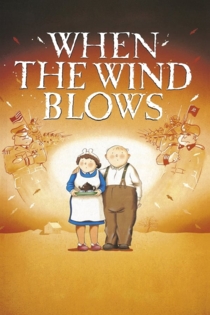
When the Wind Blows
Jimmy T. Murakami
Peggy Ashcroft, John Mills
With the help of government-issued pamphlets, an elderly British couple build a shelter and prepare for an impending nuclear attack, unaware that times and the nature of war have changed from their romantic memories of World War II.
When the Wind Blows
The 39 Steps
Alfred Hitchcock
Robert Donat, Madeleine Carroll
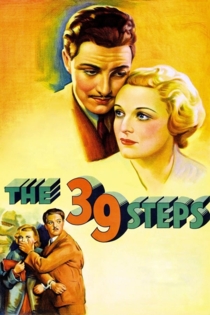
Richard Hanney has a rude awakening when a glamorous female spy falls into his bed - with a knife in her back. Having a bit of trouble explaining it all to Scotland Yard, he heads for the hills of Scotland to try to clear his name by locating the spy ring known as The 39 Steps.
The 39 Steps
Edward & Mrs. Simpson
Waris Hussein
Edward Fox, Cynthia Harris
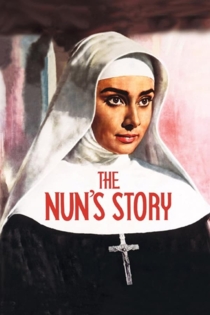
While still the Prince of Wales, the future Edward VIII meets the married American socialite, Wallis Simpson. Their relationship causes furor in the palace and in parliament, especially when King George V dies, Mrs. Simpson gets divorced, and King Edward announces his intentions to marry her.
Edward & Mrs. Simpson

A Passage to India
David Lean
Judy Davis, Victor Banerjee
Set during the period of growing influence of the Indian independence movement in the British Raj, the story begins with the arrival in India of a British woman, Miss Adela Quested, who is joining her fiancé, a city magistrate named Ronny Heaslop. She and Ronny's mother, Mrs. Moore, befriend an Indian doctor, Aziz H. Ahmed.
A Passage to India
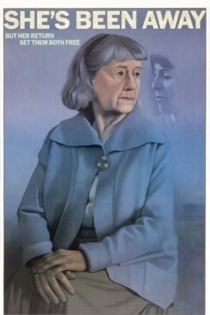
She's Been Away
Peter Hall
Peggy Ashcroft, Geraldine James
A woman who has been institutionalized for 60 years for the "crime" of not conforming to the 1920s image of what a proper young woman should be (in other words, she did what she wanted and didn't care what anyone else thought about it) is finally released to the custody of her family, consisting of her grand-nephew and his family. At first she keeps a self-imposed distance from the relatives, but she soon finds herself coming around to her nephew's wife, a free spirit who is under the thumb of her cold and controlling husband
She's Been Away
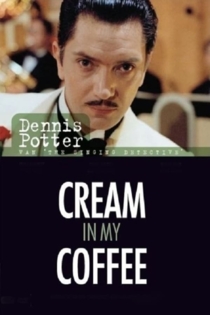
Cream in My Coffee
Gavin Millar
Peggy Ashcroft, Lionel Jeffries
Past and present intertwine: An elderly couple returns to the hotel where they became close when they were young and flashbacks to the earlier visit reveal the origins of both their pleasures and problems. Somewhere between the past and the present, Dennis Potter attempted to find "the shape of a life, of two lives..."
Cream in My Coffee
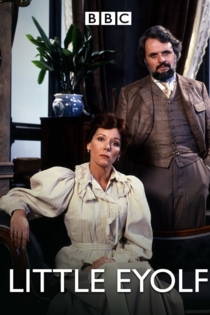
Little Eyolf
Michael Darlow
Anthony Hopkins, Diana Rigg
Alfred Allmers has spent his whole life writing a book on "responsibility," a luxury he can afford as a result of his marriage to the wealthy and beautiful Rita. However, much to Rita's annoyance, his attention isn't always undivided toward her, as Alfred shifts his focus between his book, their son Eyolf, and his half-sister Asta. As Allmers slowly feels trapped in an unfulfilling marriage, emotions and a painful past threaten to boil over into a terrible finale.
Little Eyolf
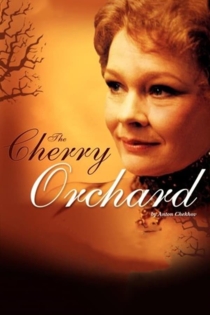
The Cherry Orchard
Michael Elliott
Judi Dench, Ian Holm
Madame Ranevsky and her daughter Anya return home from Paris to find that their beloved family estate and cherry orchard are to be auctioned off to pay debts. Lopahin, a former serf on the estate who is now a wealthy landowner, proposes razing the home and cherry orchard and dividing the estate into plots that could be leased at great profit. The family, however, continues to hold out hope that their beloved home can somehow be saved from destruction.
The Cherry Orchard
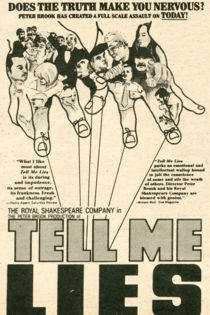
Tell Me Lies
Peter Brook
Mark Jones, Robert Langdon Llyod
Adapted and directed by Peter Brook from the Royal Shakespeare Company’s ‘production-in-progress US’, this long-unseen agitprop drama-doc – shot in London in 1967 and released only briefly in the UK and New York at the height of the Vietnam War – remains both thought-provoking and disturbing. A theatrical and cinematic social comment on US intervention in Vietnam, Brook’s film also reveals a 1960s London where art, theatre and political protest actively collude and where a young Glenda Jackson and RSC icons such as Peggy Ashcroft and Paul Scofield feature prominently on the front line. Multi-layered scenarios staged by Brook combine with newsreel footage, demonstrations, satirical songs and skits to illustrate the intensity of anti-war opinion within London’s artistic and intellectual community.
Tell Me Lies
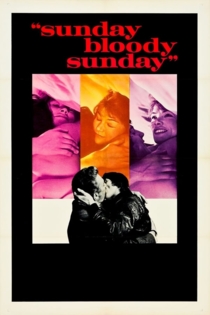
Sunday Bloody Sunday
John Schlesinger
Peter Finch, Glenda Jackson
Recently divorced career woman Alex Greville begins a romantic relationship with glamorous mod artist Bob Elkin, fully aware that he's also intimately involved with middle-aged doctor Daniel Hirsh. For both Alex and Daniel, the younger man represents a break with their repressive pasts, and though both know that Bob is seeing both of them, neither is willing to let go of the youth and vitality he brings to their otherwise stable lives.
Sunday Bloody Sunday
Murder by the Book
Lawrence Gordon Clark
Peggy Ashcroft, Ian Holm
Agatha Christie’s agents propose that it’s time for her to publish the manuscript she wrote thirty-five years earlier, a novel in which she finally kills off her most famous creation. And it’s not an entirely sad occasion. “That wretched little man,” she says. “He’s always been so much trouble. How is it Miss Marple has never upset me at all, not ever?” That night, who should appear at her doorstep but the wretched little man himself, Hercule Poirot? The great fictional detective and his creator proceed to play a very Christie-like game of cat and mouse for the manuscript – and for their own lives.
Murder by the Book