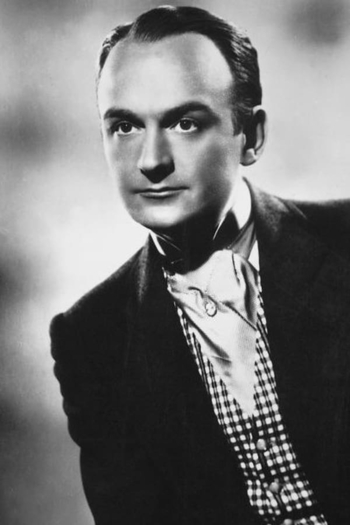
Willi Forst
1903 - 1980
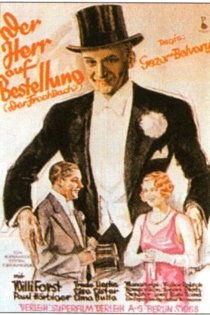
Der Herr auf Bestellung
Géza von Bolváry
Willi Forst, Paul Hörbiger
"Der Herr auf Bestellung" has the Weimar dream team of Walter Reisch as scriptwriter, Geza von Bolvary as director and most importantly, the incomparable Willi Forst as main actor. This 'musical burlesque' tells about a stylish young gentleman (Willi Forst) who works as a so-called 'Festredner'; an untranslatable term, it indicates a person who makes speeches at important events like marriages etc. for people who don't feel able to do it themselves. Willi lends his voice to a speech-impaired professor (Paul Hörbiger), but the baroness (Trude Lieske) who falls in love with Hörbiger only does so because of Willi's voice, and you can guess that this leads to all sorts of complications…
The Darling of Vienna
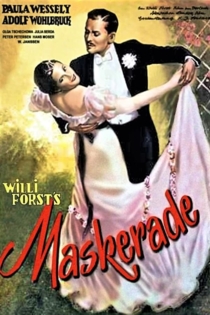
Maskerade
Willi Forst
Paula Wessely, Adolf Wohlbrück
After a masked carnival ball, Gerda Harrandt, wife of the surgeon Carl Ludwig Harrandt, allows the fashionable artist Ferdinand von Heidenick to paint a portrait of her wearing only a mask and a muff. This muff however belongs to Anita Keller, in secret the painter's lover but also the fiancée of the court orchestra director Paul Harrandt. The picture is then published in the newspaper. When Paul sees it and asks von Heidenick some questions about the identity of the model, the artist is forced to improvise a story and on the spur of the moment invents a woman called Leopoldine Dur as the alleged model. Leopoldine Dur however turns out to be a real woman whose acquaintance Heidenick makes shortly afterwards.
Masquerade in Vienna
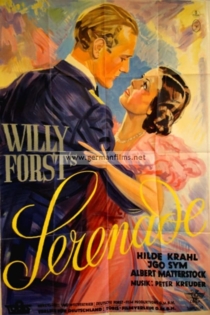
Serenade
Willi Forst
Hilde Krahl, Albert Matterstock
The violin virtuoso Ferdinand Lohner is lonely and depressed after the death of his wife. But then he gets to know the much younger Irene and forgets all about his dead wife, marrying the young tart soon after. Irene moves into the house in the mountains, where Ferdinand, his son Heinz and his former mother-in-law Mrs. Leuthoff live. The bitter Mrs. Leuthoff makes life difficult for Irene, since she had no way of preventing Ferdinand from re-marrying after her daughter bit the dust. When Ferdinand conveniently goes out on tour once again, Irene has to sit at home with the bitter woman. One day, Irene’s cousin Gustl comes on a visit and Mrs. Leuthoff takes the opportunity to “accidentally” let slip to Ferdinand, that his current wife is a whore. As if living with your current mother-in-law isn’t enough to deal with!
Serenade
Operette
Willi Forst
Willi Forst, Maria Holst
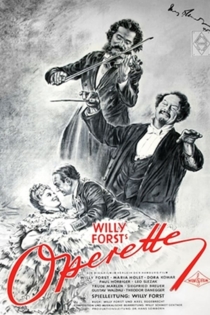
Operetta (German: Operette) is a 1940 musical film directed by Willi Forst and starring Forst, Maria Holst and Dora Komar. The film was made by Wien-Film, a Vienna-based company set up after Austria had been incorporated into Greater Germany following the 1938 Anschluss. It is the first film in director Willi Forst's "Viennese Trilogy" followed by Vienna Blood (1942) and Viennese Girls (1945). The film portrays the life of Franz Jauner (1832–1900), a leading musical figure in the city. It is both an operetta film and a Wiener Film.
Operette
Unfinished Symphony
Willi Forst, Anthony Asquith
Mártha Eggerth, Helen Chandler
Composer Franz Schubert--broke, struggling and unhappy--gets a break when a wealthy friend wangles him an invitation to a command performance in front of a princess of the royal family. Schubert performs a version of his new work, "Symphony in B Minor", for the princess, but a misunderstanding results in Schubert storming out of the concert in a rage. Complications ensue.
Unfinished Symphony

Das Lied ist aus
Géza von Bolváry
Liane Haid, Willi Forst
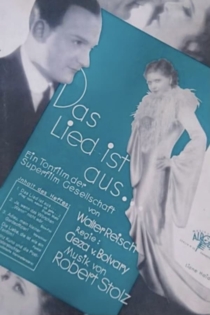
Das Lied ist Aus (The Song Is Ended) is a typical early-talkie German musical in every respect, save one. The story, concerning the lives and loves of show folk, ends unhappily -- and surprisingly so. The doleful denouement didn't seem to have much effect on the film's box-office appeal, since Das Lied ist Aus proved a major moneymaker.
The Song Is Over
Wiener Mädeln
Willi Forst
Willi Forst, Dora Komar
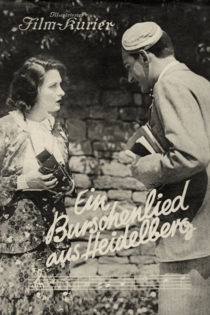
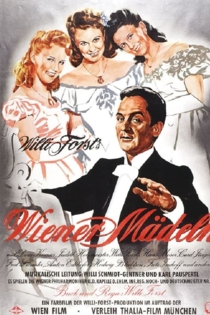
Begun in Austria in 1944/45, finished and released in 1949, this is a biography of the minor Austrian composer Carl Michael Ziehrer, who overcomes hypersensitivity in competitive situations which leads initially to failures in both career and romance.
Vienna Girls
Die lustigen Weiber von Wien
Géza von Bolváry
Willi Forst, Paul Hörbiger
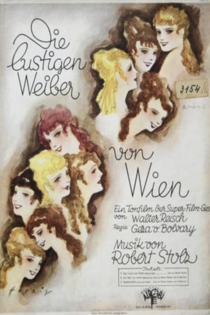
A dance teacher helps his ten well-bred student sisters when they leave home as a protest against their father's intended wedding. They form a café group called Die lustigen Weiber aus Wien (The merry Viennese girls).
The Merry Wives of Vienna
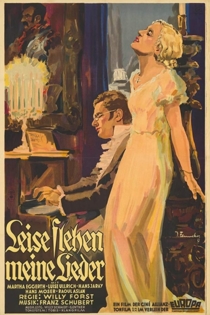
Leise flehen meine Lieder
Willi Forst
Mártha Eggerth, Luise Ullrich
A section from the life of composer Franz Schubert as a material for a love story. Also known in English as Gently My Songs Entreat. An English version called Unfinished Symphony would follow in 1934.
Lover Divine