María Isbert
1917 - 2011
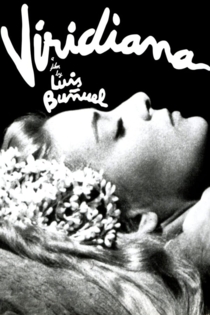
Viridiana
Luis Buñuel
Silvia Pinal, Francisco Rabal
Viridiana is preparing to start her life as a nun when she is sent, somewhat unwillingly, to visit her aging uncle, Don Jaime. He supports her; but the two have met only once. Jaime thinks Viridiana resembles his dead wife. Viridiana has secretly despised this man all her life and finds her worst fears proven when Jaime grows determined to seduce his pure niece. Viridiana becomes undone as her uncle upends the plans she had made to join the convent.
Viridiana

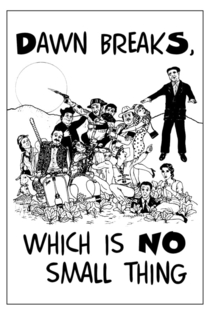
Amanece, que no es poco
José Luis Cuerda
José Sazatornil, Carmen de Lirio
Theodore, a young Spanish engineer who works as a professor at the University of Oklahoma, returned to Spain to enjoy a sabbatical year. Upon arrival, he discovers that his father killed his mother and, to compensate for the loss, he bought a motorcycle with sidecar to travel together. Father and son arrive in a remote mountain village seems empty, what happens is that all residents are in church every day, because the Mass is a true spectacle. Jimmy and Theodore are discovering the peculiarities of the people, attend the elections held each year to appoint mayor, priest, teacher... In addition, the town has come a group of students at the American University of Eaton, a Belgian meteorologists, a dissident group of the Russian Army Choir, invading people's hidden above ...
Dawn Breaks, Which Is No Small Thing
Un, dos, tres, al escondite inglés
Iván Zulueta
José Luis Borau, Antonio Drove
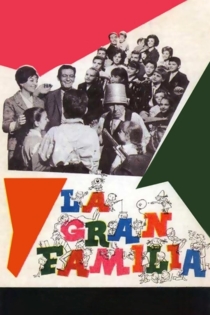
A band of young musicians will do the impossible to boycott a song they didn't like at all, and that's supposed to represent Spain in a famous musical contest. An unusual film by the odd Zulueta in which, after the success of Spanish singer Massiel in Eurovision contest, this kind of contests are parodied with an insane story shot without a script and with the performance of several top music bands of that time.
Un, dos, tres, al escondite inglés
Corazón solitario
Francesc Betriu
Jacques Dufilho, La Polaca
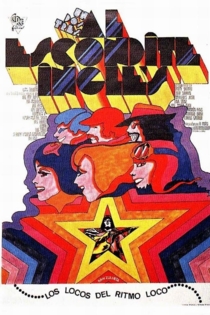
Antoñito is a bachelor who works in a cabaret as a clarinetist. He has put an advertisement in the newspaper, looking for a good and honest girl, and to which responds Rocío, who escapes from her native Córdoba to hide the embarrassment of her pregnancy. The coexistence with the naive clarinetist, who refuses the insinuations of a co-worker dedicated to prostitution, who idolizes his deceased mother and keeps as a relic the orthopedic leg of his late father, is not easy. The other men will tend their ties around Rocío, that makes way in the world of the spectacle pretending to be blind. When she can no longer conceal that she is pregnant, Antoñito decides to give his name to the fruit of sin.
Corazón solitario
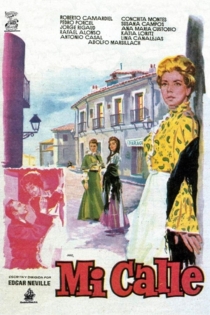

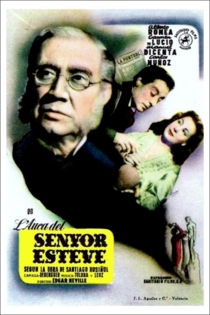
El señor Esteve
Edgar Neville
Alberto Romea, Carmen de Lucio
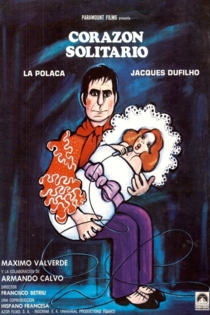
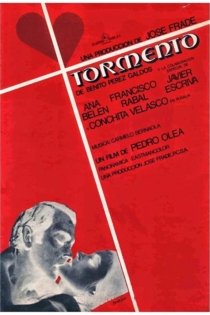
Barcelona, 1860. Mr. Esteve, owner of a haberdashery and proud of his son, attends the christening of his grandson who, years later, determined to become a renowned artist, seems unwilling to continue the tradition and take over the family business. (Only badly preserved and severely mutilated copies of this film survive, just 69 out of a total of 108 minutes.)
El señor Esteve