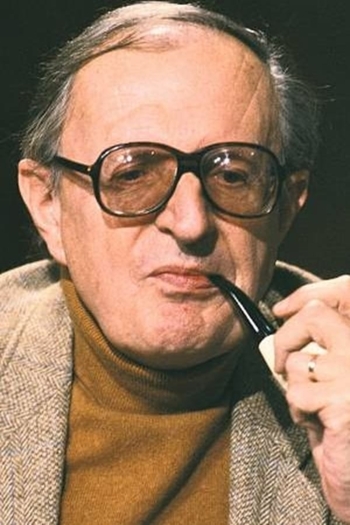
Georges Conchon
1925 - 1990He grew up in a family of teachers, and after graduating in philosophy, passed the support of the parliamentary and between the Assembly French Union where he was division head from 1952 to 1958. He began writing, while traveling extensively, notably in Africa. He became secretary in 1960 debates in the Senate until 1980. He was journalist and novelist, he began his career as a scriptwriter in 1967.
His first published novel will be Les Grandes Lessives in 1953, followed by Chemins écartés. He is then hired by Pierre Lazareff to France-Soir as a journalist. This experience led to L'État sauvage, which earned him the Prix Goncourt in 1964.
Before the Goncourt, he had received the Fénéon in 1956, then the Booksellers prize in 1960 for La Corrida de la victoire.
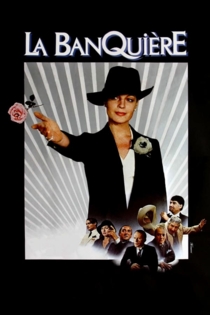
As a screenwriter, his record is brilliant, including L'Horizon (directed by Jacques Rouffio 1967), Sept Morts sur ordonnance (J. Rouffio 1976), La Victoire en chantant (Jean-Jacques Annaud 1976), Judith Therpauve (Patrice Chéreau, 1978), La Banquière (Francis Girod 1980). It also works in television, directing A2 on a collection of films and with the launch of the series Châteauvallon. Some of his books were made into movies, including The Savage State and Le sucre by Jacques Rouffio.
His last film collaboration scenario has been devoted to the history of the famous assassin of the nineteenth century, Lacenaire. Directed by Francis Girod, the film was released in theaters in 1990.
He was Chevalier de la Légion d'honneur and an Officer of the Order of Merit and Arts and Letters, and was politically active at PSU and then the Socialist Party.
Source: Article "Georges Conchon" from Wikipedia in english, licensed under CC-BY-SA 3.0.
L'horizon
Jacques Rouffio
Jacques Perrin, Macha Méril
Antonin is a young French soldier who returns home from World War I to recover from his wounds. When he falls in love with a young widow, Antonin questions his role in battle and contemplates desertion as he recalls the horrors of war. He is pressured by his patriotic father to honor his military commitment even if it means he will die.
Horizon

La Banquière
Francis Girod
Romy Schneider, Marie-France Pisier
The scene is the restless Paris of the interwar years where an attractive and ambitious woman successfully makes her way in a world previously reserved for men: that of high finance. Originating from a humble background, she quickly becomes popular with small savers by offering them outstanding interest rates. Extremely popular, she makes no secret of her taste for the good things in life and her homosexual affairs. They will cost her dearly...
The Lady Banker