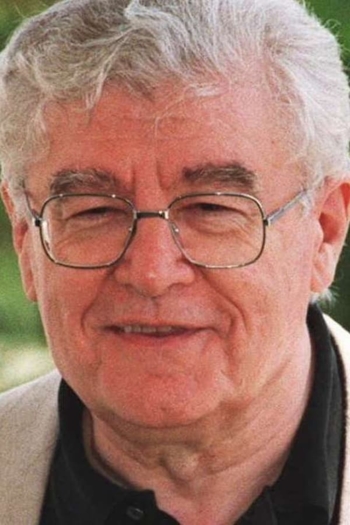
Roger Planchon
1931 - 2009Roger Planchon spent his childhood in the Ardèche, notably in Dornas. He found its inspiration from his rural origins and this issue was a recurring theme in his writings.
He started on stage in 1949 after winning an amateur theater. In 1952, he founded the Théâtre de la Comédie, located in the rue des Marronniers, in Lyon. He was the director of the Théâtre de la Cité of Villeurbanne since 1957 (which became the Théâtre National Populaire in 1972).
Roger Planchon transposed many works by Brecht, Molière, Shakespeare, and many works of contemporary authors, including Arthur Adamov and Michel Vinaver, but also opened the Théâtre National Populaire to Patrice Chéreau, then Georges Lavaudant.
As films, he directed George Dandin ou le Mari confondu by Molière, Louis, enfant roi, which was entered at Cannes, and another one by Lautrec.
In 2002, Christian Schiaretti succeeded him as director of the TNP; he created his own company with which he continued to write and direct until his death.
He died on 12 May 2009 after a heart attack, he is buried in the Père Lachaise Cemetery (22nd division).
Source: Article "Roger Planchon" from Wikipedia in English, licensed under CC-BY-SA 3.0.
Molière
Ariane Mnouchkine
Philippe Caubère, Marie-Françoise Audollent
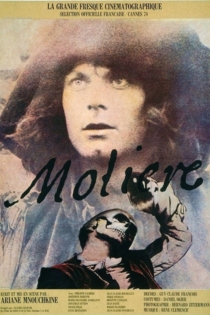
Jean-Baptiste Poquelin is raised by his father and his grandfather because his mother dies when he's still very little. He works as a handyman, studies the law at a university and travels the country as an actor before he becomes the celebrated playwright Molière who impresses firstly the Duke of Orleans and then even King Louis XIV.
Molière
The Return of Martin Guerre
Daniel Vigne
Gérard Depardieu, Nathalie Baye
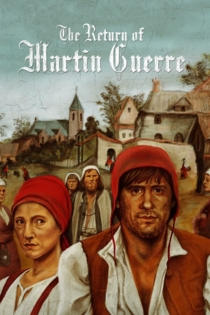
Village of Artigat, southern France, summer 1542, during the reign of Francis I. Martin Guerre and Bertrande de Rols marry. A few years later, accused of having committed a robbery, Martin suddenly disappears. When, almost a decade later, a man arrives in Artigat claiming to be Martin, the Guerre family recognizes him as such; but doubts soon arise about his true identity.
The Return of Martin Guerre
Danton
Andrzej Wajda
Gérard Depardieu, Wojciech Pszoniak
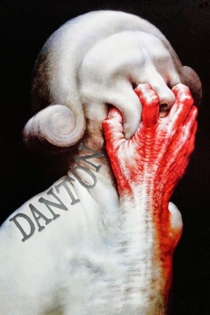
Danton and Robespierre were close friends and fought together in the French Revolution, but by 1793 Robespierre was France's ruler, determined to wipe out opposition with a series of mass executions that became known as the Reign of Terror. Danton, well known as a spokesman of the people, had been living in relative solitude in the French countryside, but he returned to Paris to challenge Robespierre's violent rule and call for the people to demand their rights. Robespierre, however, could not accept such a challenge, even from a friend and colleague, and he blocked out a plan for the capture and execution of Danton and his allies.
Danton
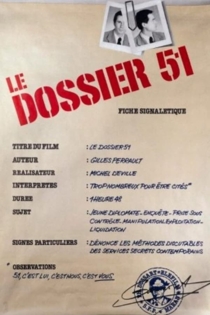
Dossier 51
Michel Deville
François Marthouret, Roger Planchon
French diplomat Dominique Auphal is put under surveillance by an unnamed secret service. They wish to find a weakness in his life in order to control him politically. Auphal becomes "File no. 51": his private life is spied, analysed and commented.
Dossier 51
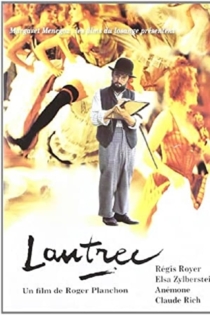
Lautrec
Roger Planchon
Régis Royer, Elsa Zylberstein
The life of Henri de Toulouse Lautrec, famous french painter, who lived, enjoyed, loved in the late 1800s Paris' Montmartre cultural life. He suffered from suffered from congenital health conditions traditionally attributed to inbreeding. His lifestyle and work are a testimony of the late-19th-century parisian bohemian lifestyle, as he was commissioned to produce a series of posters for the Moulin Rouge cabaret opening. As an alcoholic, he was addicted to absinthe. The movie related his love affair with the french painter Suzanne Valadon.
Lautrec
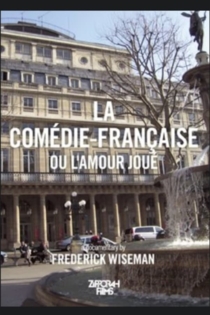
La Comédie-Française ou L'amour joué
Frederick Wiseman
Jean-Pierre Miquel, Claire Vernet
La Comédie-Française is the oldest continuous repertory company in the world, founded in Paris in the late 17th century. This is the first time a documentary film-maker has been allowed to look at all the aspects of the work of this great theatrical company. Sequences in the film include sections of plays, casting, set and costume design, administrative meetings and rehearsals and performances of four classic French plays, Don Juan by Molière, La Thebaide by Racine, La Double Inconstance by Marivaux and Occupe-toi d'Amelie by Feydeau. (Zipporah Films)
La Comédie-Française ou L'amour joué
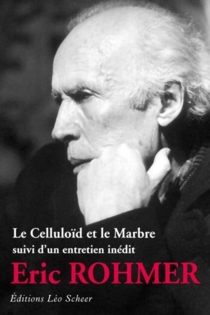
Le Celluloïd et le Marbre
Éric Rohmer
César Baldaccini, Georges Candilis
Celluloid and Marble is based on Rohmer's own articles published in "Cahiers du cinéma", discussing film in relation to the other arts, maintaining that, in an age of cultural self-consciousness, cinema was “the last refuge of poetry” - the only contemporary art form from which metaphor could still spring naturally and spontaneously.
Celluloid and Marble
La 7ème cible
Claude Pinoteau
Lino Ventura, Lea Massari
Bastien Grimaldy, a man driven to heightened anxiety as the plot against him begins to take effect. Bastien's personal relationships give him enough cause for anxiety -- between his new lover Laura and a feisty mother, life provides its own insecurities. When he goes to the police with his problems, Bastien is assigned an off-beat inspector to protect him but is still faced with skepticism about his dilemma.
The Seventh Target
Louis, enfant Roi
Roger Planchon
Carmen Maura, Maxime Mansion
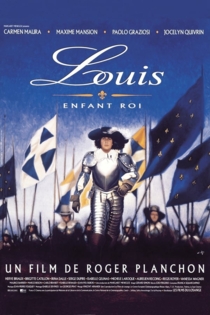
History buffs will glory in the riches of Louis, Enfant Roi, others will perhaps find this complex story of intrigues and betrayals in the court of the young king tough sledding. When Louis the Fourteenth (1638-1715) was born, the power of government was shared between the monarchy, the church, the nobility, and the Parlement. His predecessor had greatly centralized the powers of government following the advice of Cardinal Richelieu. Louis XIV (often called "The Sun King" for the brilliance of his rule) followed the advice of Richelieu's successor, Cardinal Mazarin (Paolo Graziosi), and brought the powers of government under the sole sway of the monarch. He expanded the territory and influence of France in a series of wars throughout his reign. How he came to be so autocratic and ruthless both personally and politically is the subject of this biographical drama.
Louis, the Child King
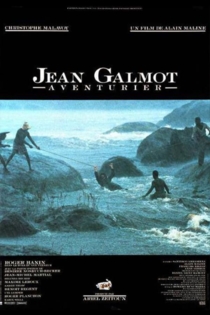
Jean Galmot, aventurier
Alain Maline
Christophe Malavoy, Roger Hanin
Evocation of the life of the journalist Jean Galmot, adventurer, who established himself as a gold digger in Guyana in 1906. Madly in love with this country, he will die for having wanted to give dignity and freedom to the Guyanese people.
Jean Galmot, aventurier
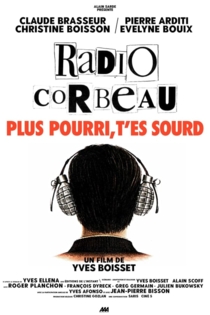
Radio Corbeau
Yves Boisset
Claude Brasseur, Pierre Arditi
This fast-paced mystery is in part based on a novel by Yves Ellena and is at least equally based on the 1943 classic Le Corbeau, which in 1951 was produced in English by Otto Preminger as The Thirteenth Letter. In this movie, someone is using a pirate radio broadcast to dish the dirt on the lives of the elite of a small French town.
Radio Corbeau