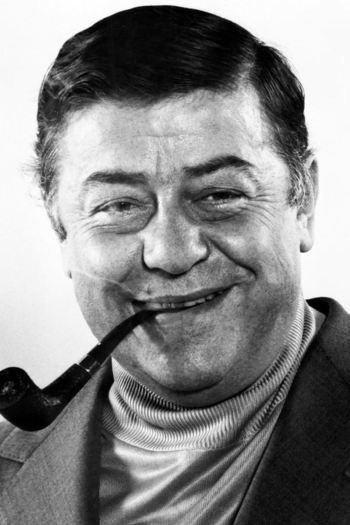
Francis Blanche
1921 - 1974Blanche was born in an artistic family, mainly of stage actors—including his father Louis Blanche and his uncle, Emmanuel Blanche, who was a painter—. He completed his secondary schooling at fourteen, the youngest in France to do so at the time.
In the 1940s and 1950s, Blanche was part of Robert Dhéry's theatrical company Les Branquignols, with whom he played in the film Ah! Les belles bacchantes, starring Robert Dhéry, Colette Brosset (Dhéry's then-wife), and Louis de Funès; directed by Jean Loubignac in 1954.
Blanche teamed up with Pierre Dac to form a comic duo best remembered for Le Sâr Rabindranath Duval, a sketch about a phony and nonsensical Indian clairvoyant and guru (1957). They also created a popular and equally nonsensical radiophonic series, loosely based on a highly improbable espionage and conspiration plot, Malheur aux barbus, which was broadcast on Paris Inter in 213 episodes from 1951 to 1952. The same plot and characters were revived on Europe 1 in a series called Signé Furax, enjoying no less than 1,034 daily episodes between 1956 and 1960. Both broadcasts were phenomenal audience successes in the pre-television era. Blanche was also renowned for broadcasting phone pranks, in which he entertained listeners by making the most improbable situations sound plausible.
He wrote poems, and the lyrics of 673 songs. On stage, he acted in Tartuffe and Néron and, in 1955, Chevalier du Ciel, an operetta by Luis Mariano at the Gaîté-Lyrique theatre.
Blanche also enjoyed a successful cinematographic career, both as an actor and scriptwriter. He appeared as a hard-headed German colonel ("Obersturmführer Schulz") opposite Brigitte Bardot in Babette s'en va-t-en guerre (1959). He was one of the favourite actors of French filmmaker Georges Lautner, and played Maître Folace (a shady solicitor counselling a colourful gangster mob) in Les Tontons flingueurs (1963). Blanche also appeared in Boris Vassilief's Les Barbouzes (1964).
He delighted in parodying classical music, adapting famous works such as Schubert's "Die Forelle" (The Trout) into a crazy and slightly risqué piece about a 16-year-old romantic girl obsessed with Schubert's song to the point of giving birth to a live trout while performing it on her piano. Similarly, he turned Beethoven's 5th Symphony into a lengthy and quite repetitive musical glorification of the clothes peg and its fictitious inventor, Jérémie-Victor Opdebec.
Blanche died at the age of 52, from a heart attack with a background of untreated Type 1 diabetes. He is buried in Èze cemetery.
Source: Article "Francis Blanche" from Wikipedia in English, licensed under CC-BY-SA 3.0.
Crooks in Clover
Georges Lautner
Lino Ventura, Bernard Blier
An aging gangster, Fernand Naudin is hoping for a quiet retirement when he suddenly inherits a fortune from an old friend, a former gangster supremo known as the Mexican. If he is ambivalent about his new found wealth, Fernand is positively nonplussed to discover that he has also inherited his benefactor’s daughter, Patricia. Unfortunately, not only does Fernand have to put up with the thoroughly modern Patricia and her nauseating boyfriend, but he also had to contend with the Mexican’s trigger-happy former employees, who are determined to make a claim.
Crooks in Clover
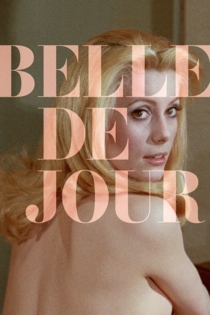
Belle de Jour
Luis Buñuel
Catherine Deneuve, Jean Sorel
Beautiful young housewife Séverine Serizy cannot reconcile her masochistic fantasies with her everyday life alongside dutiful husband Pierre. When her lovestruck friend Henri mentions a secretive high-class brothel run by Madame Anais, Séverine begins to work there during the day under the name Belle de Jour. But when one of her clients grows possessive, she must try to go back to her normal life.
Belle de Jour
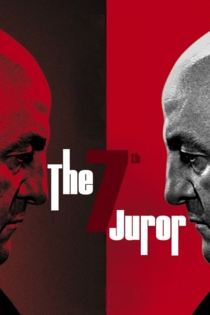
Le septième juré
Georges Lautner
Bernard Blier, Maurice Biraud
In a moment of madness a middle-aged, married and respectable pharmacist kills a young woman who is sun-bathing by a lake. Unable to take in what he has done, he flees from the scene of the crime and behaves as if nothing has happened. Eventually her boyfriend is charged with the crime and, in a strange twist of fate, the killer finds himself serving on the jury.
The Seventh Juror
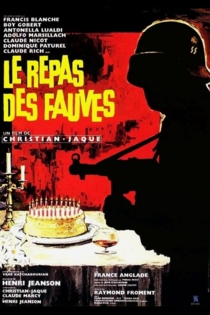
Le Repas des fauves
Christian-Jaque
France Anglade, Francis Blanche
A diverse group of friends gather to celebrate a witless woman's birthday in this comedy drama set in France during World War II. The guests include an uncle who is a Nazi collaborator, a blind war veteran, a simpering physician, an arrogant educator, a patriotic girl, and the husband of the guest of honor. When some German soldiers are killed outside the house, the group is told by the Gestapo that they must choose among themselves two who will be shot if the killer is not caught. If two victims are not chosen, all seven at the party will be captured. Things sound pretty grim, but the black comedy begins when all seven try to save themselves by any means possible.
Champagne for Savages
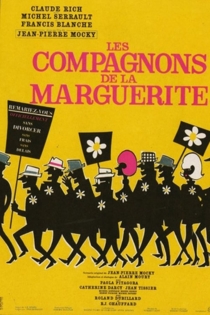
Les compagnons de la marguerite
Jean-Pierre Mocky
Claude Rich, Michel Serrault
Jean-Louis Matouzec works for French National Library as an expert looking after the restoration of old manuscripts.He falsifies marriage certificates as his wife refuses divorce.
Les compagnons de la marguerite
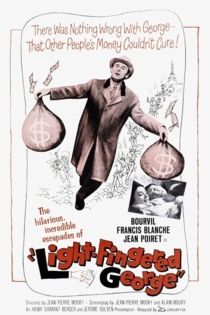
The Great Spy Chase
Georges Lautner
Lino Ventura, Francis Blanche
A cold-war spy parody. After the death of an armaments manufacturer, an international group of spies is drawn into a high-stakes battle of wits to obtain the valuable military patents which have been inherited by the lovely widow.
The Great Spy Chase

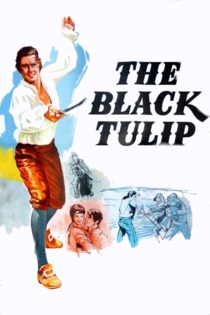
The Black Tulip
Christian-Jaque
Alain Delon, Virna Lisi
Aristocrat Guillaume de Saint Preux leads a double life as a masked bandit known as the Black Tulip. The Black Tulip only robs rich aristocrats, so the local peasants regard him as a hero. Baron La Mouche is convinced Guillaume is the Tulip. During a robbery, he scars the Tulip's face, and hopes to use this to expose Guillaume, but Guillaume is one step ahead.
The Black Tulip
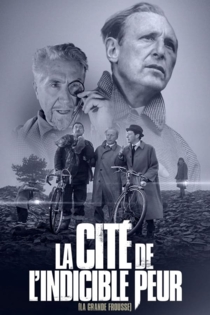
La grande lessive (!)
Jean-Pierre Mocky
Bourvil, Roland Dubillard
Sickened to see his students always sleeping in class, a teacher with a colleague and an anarchist start a war against the television. They climbed on Paris roofs to coat the T.V. antennas with a special product cutting the signal reception.
The Big Wash
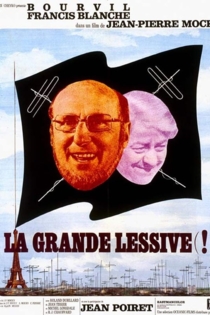
Babette s'en va-t-en guerre
Christian-Jaque
Brigitte Bardot, Jacques Charrier
Comedy about a naive French country girl in London who helps the war effort by parachuting into German-occupied France to help kidnap an important German general. She bungles through to a heroic finish of plot and counter-plot.
Babette Goes to War
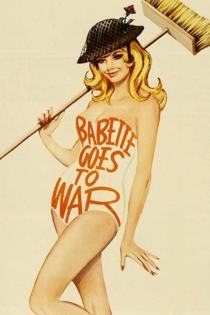
Les petits matins
Jacqueline Audry
Agathe Aems, Arletty
"Les petits matins" is a story of eighteen-year old Agathe (Agathe Aëms) with a firm independence of men even if she uses them to get to the côte d'azur. Along the way she meets a lot of people , mostly men. And the director does not spare the sterotypical image of early 60s middle aged male cliches to lampoon. But this is all very light stuff, nothing too intellectual. But it's often charming, and there's a bevy of well-known actors involved. Jean -Claude Brialy (the pompous, self absorbed male lead of Rohmer's "Claire's Knee"), Claude Rich, Lino Ventura, François Perrier, Pierre Brasseur, and the couple Bernard Blier & Arletty, who team up here for the first time since Marcel Carné's "Hôtel du Nord" (1938).
Hitch-Hike
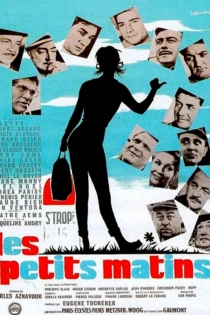
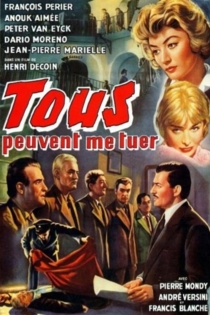
Tous peuvent me tuer
Henri Decoin
François Périer, Peter van Eyck
The holdup of the bank is a success. All happened according to plan. Now, Cyril Gad and his four accomplices must secure an alibi. What better place than a prison cell? As a result the five gangsters have themselves arrested on minor charges and start waiting until they are released. Unfortunately three of them die mysteriously, another one is openly murdered. The only man still alive, Tony, is scared. Easy to understand why...
Anyone Can Kill Me