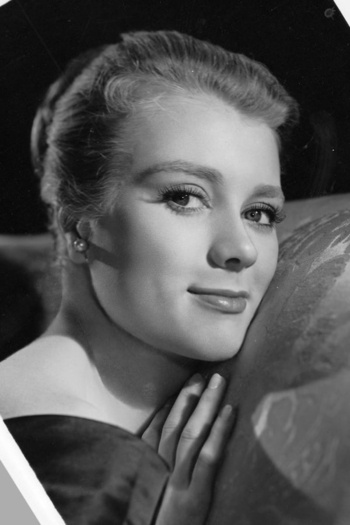
Inger Stevens
1934 - 1970Stevens was born in Stockholm, Sweden, the eldest child of Per Gustaf and Lisbet Stensland. When she was six years old, her mother abandoned the family (taking her youngest son Peter with her). Soon afterwards Stevens' father moved to the United States, leaving Stevens and her brother, Ola, in the custody of the family maid—and then later with an aunt in Lidingö, near Stockholm. In 1944, she and her brother moved to the United States and lived with their father and his new wife in New York City where he was teaching at Columbia University. At age 13, Stevens moved with her family to Manhattan, Kansas, where her father taught at Kansas State University. Stevens attended Manhattan High School.
At 16, she ran away from home to Kansas City, and worked in burlesque shows. At 18, she left Kansas City to return to New York City, where she worked as a chorus girl and in the Garment District while taking classes at the Actors Studio.
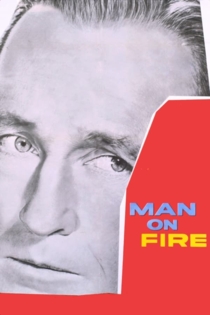
Stevens appeared on television series, in commercials, and in plays until she received her big break in the film Man on Fire, starring Bing Crosby.
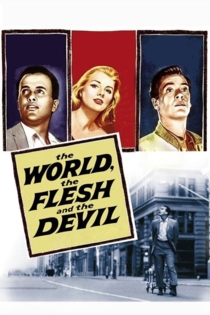
Roles in major films followed, including a starring role opposite Harry Belafonte in 1959's The World, the Flesh and the Devil, but she achieved her greatest success in the television series The Farmer's Daughter (1963–1966), with William Windom. Previously, Stevens had appeared in episodes of Bonanza, Route 66, The Alfred Hitchcock Hour, The Eleventh Hour, Sam Benedict The Aquanuts (1960 TV series) and The Twilight Zone.
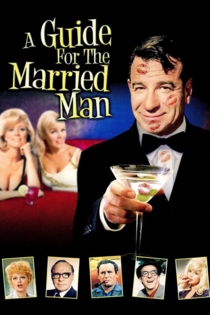
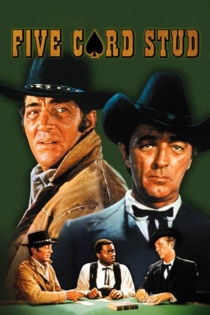
Following the cancellation of The Farmer's Daughter in 1966, Stevens appeared in several films: A Guide for the Married Man (1967), with Walter Matthau; Hang 'Em High, with Clint Eastwood; 5 Card Stud, with Dean Martin and Robert Mitchum; and Madigan with Henry Fonda and Richard Widmark. At the time of her death, Stevens was attempting to revive her television career with the detective drama series The Most Deadly Game.
Her first husband was her agent Anthony Soglio, to whom she was married from 1955 to 1957.
In January 1966, she was appointed to the Advisory Board of the UCLA Neuropsychiatric Institute by then-California governor Edmund G. "Pat" Brown. She also was named Chairman of the California Council for Retarded Children. Her aunt was Karin Stensland Junker, author of The Child in the Glass Ball.
On the morning of April 30, 1970, Stevens's sometime roommate and companion, Lola McNally, found her on the kitchen floor of her Hollywood Hills home. According to McNally, when she called Stevens's name, she opened her eyes, lifted her head, and tried to speak, but was unable to make any sound. McNally told police that she had spoken to Stevens the previous night and had seen no sign of trouble. Stevens died in the ambulance on the way to the hospital. On arrival, medics removed a small bandage from her chin that revealed a small amount of fresh blood oozing from a cut that appeared to have been a few hours old. Los Angeles County Coroner Dr. Thomas Noguchi attributed Stevens's death to "acute barbiturate poisoning" that was eventually ruled a suicide.

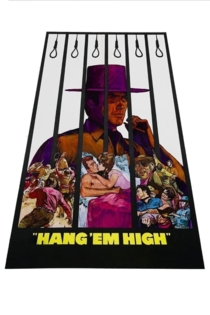
Hang 'em High
Ted Post
Clint Eastwood, Inger Stevens
Marshall Jed Cooper survives a hanging, vowing revenge on the lynch mob that left him dangling. To carry out his oath for vengeance, he returns to his former job as a lawman. Before long, he's caught up with the nine men on his hit list and starts dispensing his own brand of Wild West justice.
Hang 'em High
The World, the Flesh and the Devil
Ranald MacDougall
Harry Belafonte, Inger Stevens
Ralph Burton is a miner who is trapped for several days as a result of a cave-in. When he finally manages to dig himself out, he realizes that all of mankind seems to have been destroyed in a nuclear holocaust. He travels to New York City only to find it deserted. Making a life for himself there, he is flabbergasted to eventually find Sarah Crandall, who also managed to survive. Together, they form a close friendship until the arrival of Benson Thacker who has managed to pilot his small boat into the city's harbor. At this point, tensions rise between the three, particularly between Thacker, who is white, and Burton, who is black.
The World, the Flesh and the Devil

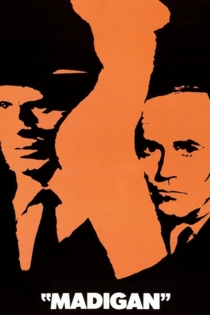
Madigan
Don Siegel
Richard Widmark, Henry Fonda
Policemen Bonaro and Madigan lose their guns to fugitive Barney Benesch. As compensation, the two NYC detectives are given a weekend to bring Benesch to justice. While Bonaro and Madigan follow up on various leads, Police Commissioner Russell goes about his duties, including attending functions, meeting with aggrieved relatives, and counseling the spouses of fallen officers.
Madigan
The Buccaneer
Anthony Quinn
Yul Brynner, Claire Bloom
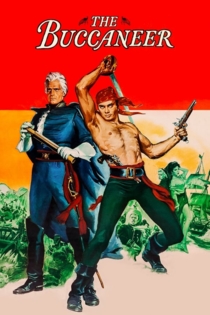
During the War of 1812 against Britain: General Andrew Jackson has only 1,200 men left to defend New Orleans when he learns that a British fleet will arrive with 60 ships and 16,000 men to take the city. In this situation an island near the city becomes strategically important to both parties, but it's inhabited by the last big buccaneer: Jean Lafitte. Although Lafitte never attacks American ships, the governor hates him for selling merchandise without taxes - and is loved by the citizens for the same reason. When the big fight gets nearer, Lafitte is drawn between the fronts. His heart belongs to America, but his people urge him to join the party that's more likely to win.
The Buccaneer



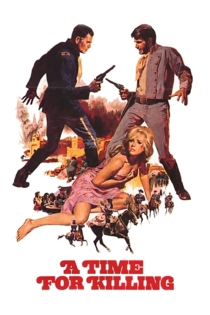
A Time for Killing
Roger Corman, Phil Karlson
Glenn Ford, George Hamilton
During the Civil War, Confederate soldiers escape from a Union prison and head for the Mexican border. Along the way, they kill a Union courier bearing the news that the war is over. Keeping the message a secret, the captain has his men go on and they soon find themselves in a battle with the Union search party who also is unaware of the war's end.
A Time for Killing