Anna Magnani
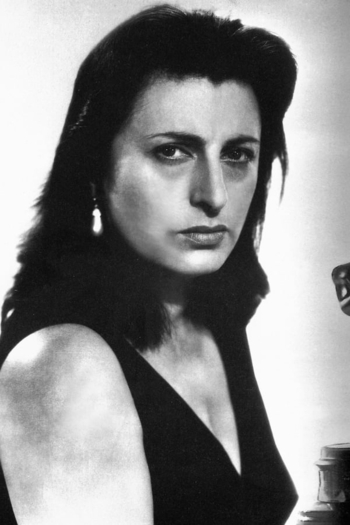
1908 - 1973Born in Rome to an Egyptian father and an Italian mother, she worked her way through Rome's Academy of Dramatic Art by singing at night clubs. During her career, her only child was stricken by polio when he was 18 months old and remained crippled.
She was referred to as "La Lupa," the "perennial toast of Rome" and a "living she-wolf symbol" of the cinema. Time magazine described her personality as "fiery", and drama critic Harold Clurman said her acting was "volcanic". In the realm of Italian cinema, she was "passionate, fearless, and exciting," an actress that film historian Barry Monush calls "the volcanic earth mother of all Italian cinema." Director Roberto Rossellini called her "the greatest acting genius since Eleonora Duse. Playwright Tennessee Williams became an admirer of her acting and wrote The Rose Tattoo specifically for her to star in, a role for which she received her first Oscar in 1955.
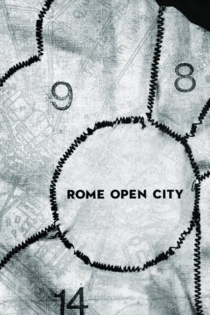
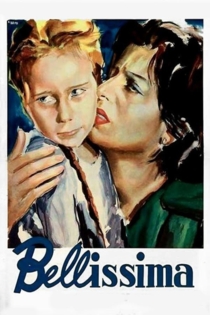
After meeting director Goffredo Alessandrini she received her first screen role in La cieca di Sorrento (The Blind Woman of Sorrento) (1934) and later achieved international fame in Rossellini's Rome, Open City (1945), considered the first significant movie to launch the Italian neorealism movement in cinema. As an actress she became recognized for her dynamic and forceful portrayals of "earthy lower-class women" in such films as The Miracle (1948), Bellissima (1951), The Rose Tattoo (1955), The Fugitive Kind (1960), with Marlon Brando and directed by Sidney Lumet, and Mamma Roma (1962). As early as 1950, Life magazine had already stated that Magnani was "one of the most impressive actresses since Garbo".
Description above from the Wikipedia article Anna Magnani, licensed under CC-BY-SA, full list of contributors on Wikipedia
Barbra Streisand: The Movie Album
Barbra Streisand, Anna Magnani
Bonus DVD accompanying the special edition CD "The Movie Album". The DVD contains Barbra performing "Wild Is The Wind" & "I'm In The Mood For Love", with excepts from the films they originate from playing in the background. The Movie Album is the thirtieth studio album by American singer Barbra Streisand, released on October 14, 2003, by Columbia Records. Overall her sixtieth release with her record label, it was executively produced by Streisand and her manager, Jay Landers. A concept album, it contains twelve songs from the singer's favorite films ranging in release from 1935 to 1988.
Barbra Streisand: The Movie Album

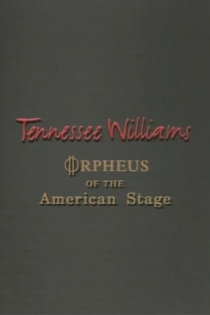
Tennessee Williams: Orpheus of the American Stage
Merrill Brockway
Tennessee Williams, Carroll Baker
A study of Tennessee Williams's life and work as a whole, ranging from his youth in Mississippi and in St. Louis to success and acclaim, followed by the final difficult years. Includes some of the most celebrated scenes from film adaptations of Williams' work, among them extracts of A Streetcar Named Desire (1951),Cat on a Hot Tin Roof (1958), Night of the Iguana, The (1964), and Suddenly, Last Summer (1993) (TV). Contains footage of Williams being interviewed, including conversations with David Frost, 'Edward R. Murrow (I)', and Melvyn Bragg, as well as reminiscences from people who knew and worked with him, among them Edward Albee, Gore Vidal, and his lifelong friend, Lady Maria St. Just. Features readings from Elia Kazan's Notebook by Kim Hunter.
Tennessee Williams: Orpheus of the American Stage
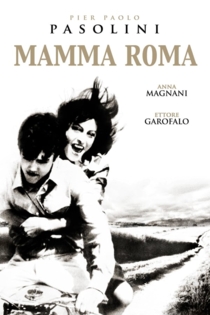
Mamma Roma
Pier Paolo Pasolini
Anna Magnani, Ettore Garofolo
After years spent working as a prostitute in her Italian village, middle-aged Mamma Roma has saved enough money to buy herself a fruit stand so that she can have a respectable middle-class life and reestablish contact with the 16-year-old son she abandoned when he was an infant. But her former pimp threatens to expose her sordid past, and her troubled son seems destined to fall into a life of crime and violence.
Mamma Roma
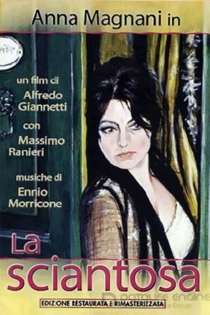
Tre donne - La sciantosa
Alfredo Giannetti
Anna Magnani, Massimo Ranieri
La Sciantosa is part of a project created by writer/director Alfredo Gianetti for the Italian TV. The objective was to portrait a hundred years of Italian history through three movies, all of them with Anna Magnani. The other two are "1943: un incontro" and "L'autmobile". In this first movie, La Magnani is Flora Torres, a "sciantosa" (kind of a small stage diva) who is forgotten during the WWI, living only to remember her past glory. One day she receives a letter to present herself to the high command. There, Flora is called to go to the front and entertain the troops. Along with her maid Cristina, Flora goes to the front. There they are welcomed by the young private Tonino (Massimo Ranieri). Flora starts to act like a prima donna, making absurd demands to everyone. But when she is about to present herself, the vision of the wounded soldiers makes her change her way
Tre donne - La sciantosa
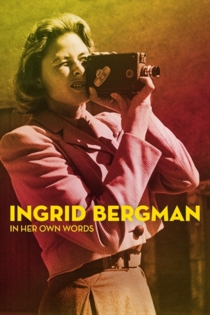
Jag är Ingrid
Stig Björkman
Alicia Vikander, Isabella Rossellini
A personal and captivating account of the extraordinary life and work of Ingrid Bergman (1915-82), a young Swedish woman who became one of the most celebrated actresses in world cinema.
Ingrid Bergman: In Her Own Words
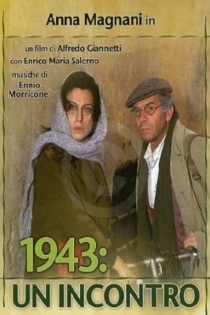
Tre donne - 1943: Un incontro
Alfredo Giannetti
Anna Magnani, Enrico Maria Salerno
This vehicle for the great actress Anna Magnani was one of the four made for Italian television and shown in 1971-1972 at the end of her career. The other three were "La sciantosa," "Correva l'anno di grazia 1870," and "L'automobile" and were all directed by Alfredo Giannetti.
Tre donne - 1943: Un incontro
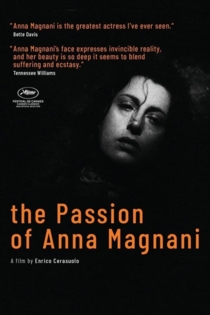
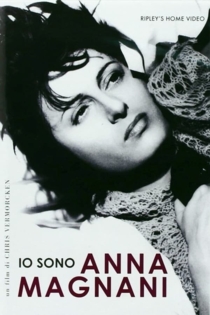
Io sono Anna Magnani
Chris Vermorcken
Anna Magnani, Claude Autant-Lara
Traces the life of Anna Magnani, her creations, her successes, her triumphs, her boycotted career, her nonconformism, her anxieties, her generosity ... Punctuated with photos that tell her career in theater and cinema, Extracts of films, this documentary portrait also gives the floor to his friends and relatives, from Roberto Rossellini to Marcello Mastroianni, through Federico Fellini.
My Name Is Anna Magnani
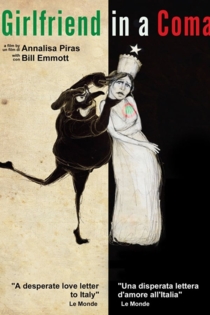
Girlfriend in a Coma
Annalisa Piras
Bill Emmott, Silvio Berlusconi
Girlfriend in a Coma is a documentary that exposes the dire situation of Italian politics and the process of economic and social decline the country has suffered during the last two decades, treating the decline as a warning of what might happen elsewhere in the West. The decline has occurred amid a collapse of moral values and the victory of “Mala Italia” over “Buona Italia”. It has been lauded as being ground-breaking in its creative combination of animation, interviews and hard facts, and has caused fierce controversy in Italy.
Girlfriend in a Coma