Magdalena Montezuma
1942 - 1984Welt am Draht
Rainer Werner Fassbinder
Klaus Löwitsch, Barbara Valentin
Институт кибернетики создал революционный суперкомпьютер — Симулакрон, с помощью которого можно моделировать целые миры и населять их искусственными людьми. Изначально Симулакрон должен был использоваться в благих общественных целях, но глава Института Сискинс начинает осуществлять свои корыстные планы. Помешать Сискинсу, а также разгадать ряд тайн и загадок вокруг суперкомпьютера должен гений компьютерных технологии Фред Штиллер…
Welt am Draht

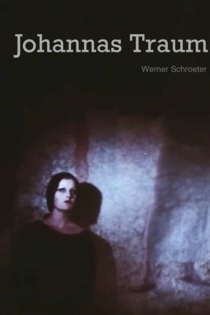
Johannas Traum
Werner Schroeter
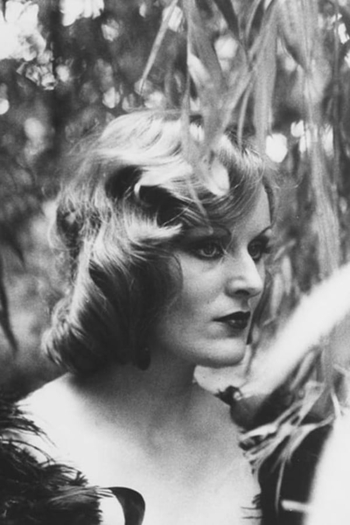
Magdalena Montezuma, Candy Darling
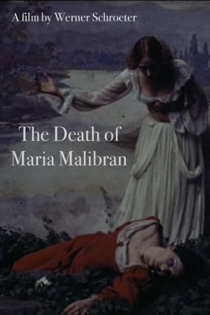
With the ascetic grandeur of Carl Th. Dreyer’s The Passion of Joan of Arc, Schroeter evokes the visions of Saint Joan, partly through unused footage of Darling and Caven pantomiming in his 1972 film The Death of Maria Malibran. - MoMA
Johannas Traum
Tally Brown, New York
Rosa von Praunheim
Tally Brown, Paul Ambrose
Tally Brown, New York is a 1979 documentary film directed, written and produced by Rosa von Praunheim. The film is about the singing and acting career of Tally Brown, a classically trained opera and blues singer who was a star of underground films in New York City and a denizen of its underworld in the late 1960s. In this documentary, Praunheim relies on extensive interviews with Brown, as she recounts her collaboration with Andy Warhol, Taylor Mead and others, as well as her friendships with Holly Woodlawn, and Divine. Brown opens the film with a cover of David Bowie’s “Heroes” and concludes with “Rock ’n’ Roll Suicide.” The film captures not only Tally Brown’s career but also a particular New York milieu in the 1970s.
Tally Brown, New York

Salome
Werner Schroeter
Mascha Rabben, Magdalena Montezuma
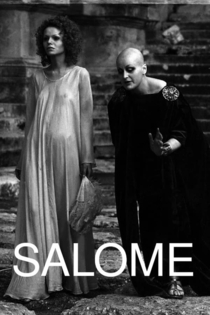
Schroeter's virtuosic staging of the Oscar Wilde tragedy is a complex montage of image and sound, filmed on the grand steps of Baalbeck, the ancient Roman temple in Lebanon, and interweaving Lebanese and German folk songs with the music of Verdi, Wagner, Strauss, Mozart, Bellini, and Donizetti. Elfi Mikesch, the cinematographer of Schroeter’s later films, designed the film’s sumptuous costumes. A contemporary critic for Le Monde wrote admiringly of Schroeter’s depiction of "the deadly struggle between dark Christian morality and luminous paganism.“
Salome
Goldflocken
Werner Schroeter
Magdalena Montezuma, Ila von Hasperg
Werner Schroeter's rhapsody of excess leaps from 1949 Cuba to contemporary France to points in between, while its feverishly shifting visual style evokes and parodies everything from kitschy Mexican telenovelas to silent French art films.
Goldflocken

Taxi zum Klo
Frank Ripploh
Frank Ripploh, Bernd Broaderup
Frank, a gay school teacher, has a very active sex life and an interest in making films. One evening, he meets Bernd and they become lovers. But while Bernd is attentive and caring, Frank gets bored and continues his polymorphously perverse ways.
Taxi zum Klo


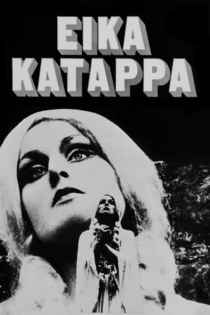
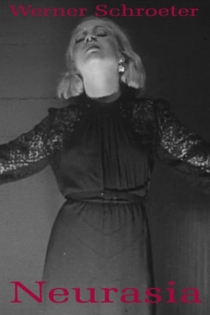
Liebeskonzil
Werner Schroeter
Magdalena Montezuma, Kurt Raab
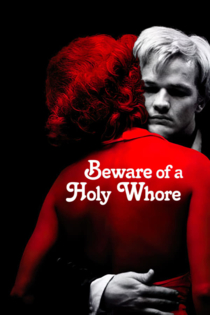
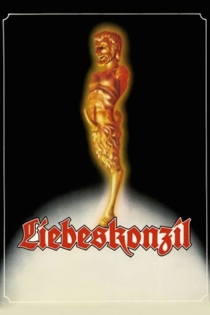
Oskar Panizza’s The Council of Love (1895) is a blasphemous play set in 1495, during the first recorded outbreak of syphilis, which Panizza satirically presents as the punishment from Satan for sexually active humans. As a result, Panizza was imprisoned for obscenity. Schroeter alternates scenes from the Panizza’s work with a dramatization of his trial, presenting the play as an expressionist spectacle performed by actors wearing exaggerated makeup who gesture and grimace grotesquely. The film thus forms a bridge between Schroeter’s use of tableaux in his early experiments with the political urgency of his 1980s films. On the eve of the AIDS crisis, Schroeter is presciently worried about disease as an excuse for governmental repression and the oppression of sexuality. - Harvard Film Archive
Liebeskonzil
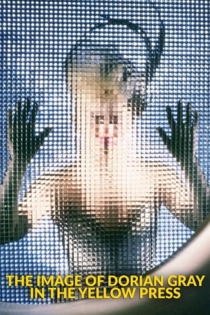
Dorian Gray im Spiegel der Boulevardpresse
Ulrike Ottinger
Veruschka von Lehndorff, Delphine Seyrig
Our organization will create a human being whom we can shape and manipulate according to our needs. Dorian Gray: young, rich and handsome. We will make him, seduce him and break him. Ulrike Ottinger, 1984
Dorian Gray in the Mirror of the Yellow Press