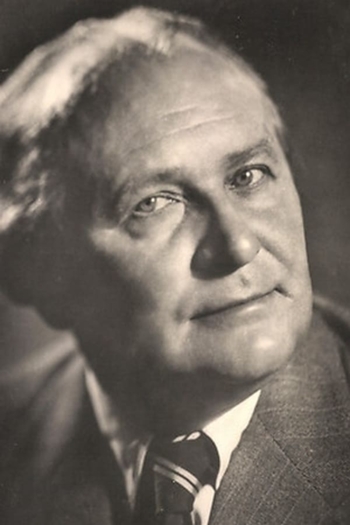
Eugen Klöpfer
1886 - 1950
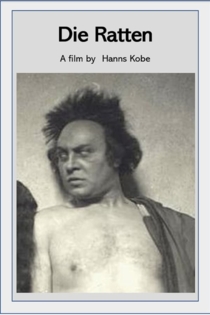
Die Ratten
Hanns Kobe
Emil Jannings, Lucie Höflich
Die Ratten was produced by actress and singer Grete Ly. Her company, Grete Ly-Film, made five films between 1919 and 1921. Die Ratten, which is based on the play of the same name by Gerhart Hauptmann, was the last one. Hauptmann, one of the most important promoters of literary naturalism, had received the Nobel Prize for Literature in 1912. The screen adaptation of his play is beautifully photographed in a realistic style by Karl Freund, one of best German cameraman of that time who also worked with directors such as Lang, Murnau, Dreyer, Dupont and Ruttmann. Moreover, the cast of Die Ratten also acts in a very naturalistic way, far from the affected expressionistic style. Die Ratten was made on a modest budget, but the collaboration of an excellent team produced a film that was ahead of its time.
The Rats
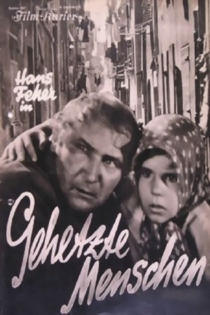
Gehetzte Menschen
Friedrich Fehér
Eugen Klöpfer, Jan Fehér-Weiss
Widowed carpenter Vincenz Olivier lives with his 8-year-old son Boubou in a small French town. But on the day he is supposed to marry the mayor′s daughter, Louise, his dark past catches up with him: Ten years ago, Vincenz – whose real name is Leon Bernier – escaped from prioson after being convicted of murdering his lover′s sister. Taking Boubou with him, Vincenz, who then and now still denies the crime, flees from the police in a desperate attempt to prove his innocence.
Haunted People
Der ewige Quell
Fritz Kirchhoff
Eugen Klöpfer, Bernhard Minetti
The farmers on the Lohhof, the largest farm in the area, are well known all around and have the highest prestige amongst their peers, not the least, because they never suffer any shortage of water. When in times of drought the water everywhere else has dried into nothingness, the water on the Lohhof is abundant and fresh. But one very dry summer, the drought comes to the Lohhof, too, and this time, the source of the water has dried up. And so, with diving rod in hand, one of the farm's old peasants goes on his merry little way to find a new source of water. At one point, the diving rod bends so strongly, that it almost slips out of the old man's hands. Convinced that there must be a huge source of water nearby, all the farmers of the Lohhof bend their backs to find the new well. They dig long, but they dig in vain: no water is found, only a strange sand, which is yellowish, shiny and flickers golden in the sun.
Der ewige Quell