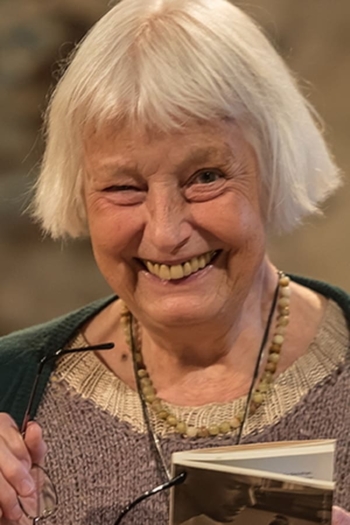
Elfriede Irrall
1938 - 2018
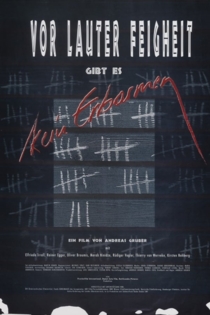
Hasenjagd - Vor lauter Feigheit gibt es kein Erbarmen
Andreas Gruber
Oliver Broumis, Elfriede Irrall
This film is based on the actual events referred to as the "Mühlviertler Hasenjagd" (Hare-hunt in the Mühlviertel) which occurred in February 1945 around the Mauthausen concentration camp. 500 Soviet officers form death block 20 attempt to escape, but only 150 of them actually succeed. Following the tally-ho of the SS, a barbaric manhunt begins. Only very few fugitives survive. With a lot of good luck, the two young officers Michail and Nikolai reach the Karner family's farm. Frau Karner persuades her husband to hide the two escapees.
Hasenjagd - Vor lauter Feigheit gibt es kein Erbarmen
Eden
Michael Hofmann
Charlotte Roche, Josef Ostendorf
Fat German star restaurant chef Gregor shows romantic interest in waitress Eden Drebb. She's happily married to hunky Xaver Drebb, but feels romantically neglected. Gregor's deserts seduce her, first trough her brat daughter Leonie, to spend time with him and his fabulous dishes. That soon becomes a rather platonic affair, and domestic troubles. Xaver decides to exact revenge on Gregor, with tragic results.
Eden

Lemminge, Teil 2 Verletzungen
Michael Haneke
Monica Bleibtreu, Elfriede Irrall
This two-part drama examines the fate of Haneke’s own generation which came of age after World War II. The first part depicts the generational gap between 1950s teenagers and their parents while the second shows this same group of characters twenty years later as they have grown up to be dysfunctional and suicidal adults. Regarded as the most significant of Haneke’s early works, Lemmings contains incipient treatments of many of the themes he would later elaborate on in his theatrical features.
Lemmings, Part 2: Injuries

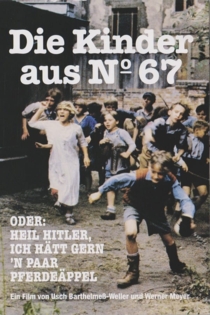
Die Kinder aus Nr. 67
Usch Barthelmeß-Weller, Werner Meyer
Bernd Riedel, René Schaaf
The "Our Gang" type adventures of German working class kids from a Berlin apartment building (number 67) during the early 1930s. With Nazism's rise, however, their tight-knit group unravels. One leader, Paul, becomes a Nazi.
Die Kinder aus Nr. 67

Die glücklichen Jahre der Thorwalds
Wolfgang Staudte, John Olden
Elisabeth Bergner, Hansjörg Felmy
The Thorwald family is well-off and contented when a tragedy strikes: the father is killed in an accident. Miss Thorwald takes over the raising of her children, four girls and two boys with the youngest already fifteen years old. She manages to keep them together in spite of the fact that their economic situation deteriorates after World War I. Never one to look too critically upon her brood, the woman undergoes a moving and gradual transformation as the adult activities of her children bring home the fact that none of them are what she had once imagined.
The Happy Years of the Thorwalds
The Tobacconist
Nikolaus Leytner
Simon Morzé, Bruno Ganz
Vienna, 1937, on the eve of the annexation of Austria into Nazi Germany. The young and inexperienced Franz Huchel begins to learn about both the joys and hardships of life by working as an apprentice to the mutilated war veteran Otto Trsnjek in a small tobacco shop, where he meets the famous psychiatrist Sigmund Freud, a regular customer, who will become a valuable friend in times of chaos and uncertainty.
The Tobacconist

Herr Puntila und sein Knecht Matti
Alberto Cavalcanti
Curt Bois, Maria Emo
This first film adaptation of Bertolt Brecht’s play about class distinctions was made in 1955 in the Vienna Rosenhügel studios, but it was only premiered five years later. Curt Bois plays the rich capitalist Puntila who only becomes somewhat agreeable when he is drunk (which he is most of the time in this film). In his inebriated state, Puntila not only gets amorously involved with three different ladies but also suggests that his daughter Eva marries his chauffeur Matti. The chauffeur, however, doesn’t really agree…
Herr Puntila and His Servant Matti