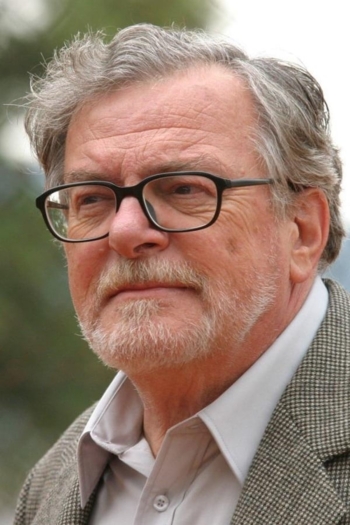
Jan Kačer
1936 (89 лет)И(с)згубени
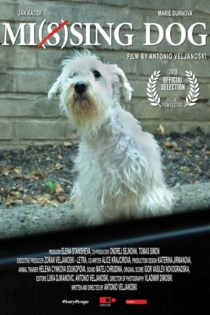
Antonio Veljanoski
Jan Kačer, Marie Durnová
It's one bad day for Rudolf, a lonely 77-year old retired linguist, when he finds himself tailed by a dog he can't get rid of on his way to the post office. This encounter eventually leads to a complete and unexpected change in his life.
Mi(s)sing Dog
Romanetto
Eva Sadková
Jana Brejchová, Jiří Adamíra
A young woman from an old patrician family in Prague collapses and is institutionalized in a psychic ward. The non-linear narration unveils here fortunes one by one. The prose of Jakub Arbes is the basis for this experimental film poem. The storyline is uncovered in a mosaic of pictures in a purely visual form, without a single word.
Romanetto

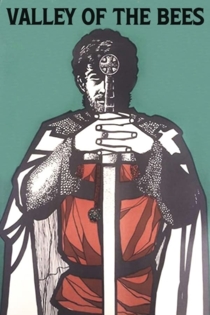
Údolí včel
František Vláčil
Jan Kačer, Věra Galatíková
Cast out by his father, young Ondrej joins the Order of the Teutonic Knights, where he is raised by strict monk Armin. After years of hardship, Ondrej escapes from the Order when he is wrongly punished, and sets out for his former home. Arriving to discover his father to be dead, Ondrej now not only assumes control of his father's properties, but seeks to marry his former stepmother.
The Valley of the Bees
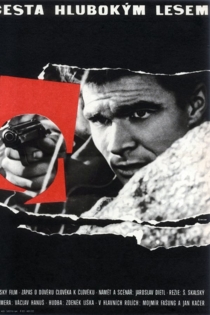
Respice finem
Jan Špáta
Jan Kačer
"A refined film essay about the loneliness, wisdom and humility of old women. The film, most valued by Jan Špáta, was awarded the Grand Prize at the International Short Film Festival in Oberhausen, the Trilobit Award and Special Mention at the IFF in Karlovy Vary."
Respice finem
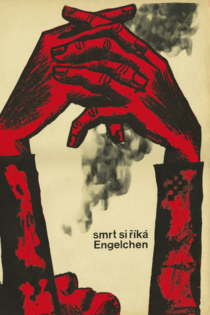
Death Is Called Engelchen
Elmar Klos, Ján Kadár
Jan Kačer, Eva Poláková
Pavel is a Czech partisan fighter in the waning days of the war. Just as peace is declared, Pavel is shot in the spine and sent to the hospital emergency ward. As he fades in and out of consciousness, he recalls the events that led to his participation in the underground. Holding German occupation commander Engelchen responsible for all the horrors and deprivations heaped upon his comrades, Pavel is kept alive by the possibility of recovering and exacting vengeance upon the Nazi officer - no matter how long it takes.
Death Is Called Engelchen
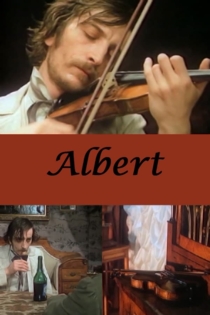
Albert
František Vláčil
Jaroslav Filip, Jan Kačer
Story of an extraordinary musician, violinist, who was famous, but his alcoholism led him to poverty. Now he is playing time from time to rich people. Then Albert meets count Delesov, who tries to change Albert's life. Two different characters, two ways of life confront... Will Albert change? Should he?
Albert
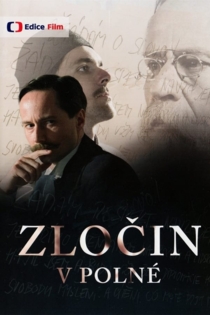
Zločin v Polné
Viktor Polesný
Jaroslav Plesl, Karel Heřmánek
An exciting drama from a detective history. In 1899 a dead girl - seamstress Anežka Hrůzová - was found between the village of Věžnička and the town of Polná. She was 19 and she had a cutting wound on the throat. There was no sexual violence involved and since the local doctors thought that there was not enough blood on the crime scene, everyone jumped to the conclusion that Jews must have killed her and added her blood to their passover matzot. There was a potential murderer at hand too - a cheeky, not very bright young Jewish rover, Leopold Hilsner…
Zločin v Polné
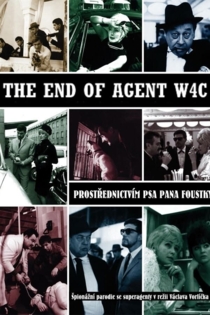
The End of Agent W4C
Václav Vorlíček
Jiří Sovák, Jan Kačer
The invincible agent Cyril Juan Borguette alias W4C has been assigned a mission to go to a hotel in Prague, get hold of a saltcellar with a plan for the military exploitation of Venus hidden in it, and hand it over to the beautiful agent Alice. He will have to compete for the saltcellar with other agents working for the world's various greater and smaller powers. The head of the Prague counter-intelligence unit gets news of agent W4C's mission. Deficient in personnel, he nominates accountant Foustka as agent 13B. Mr Foustka takes his dog Pajda with him and the two head for the airport. Pajda helps him track down agent W4C in a classy hotel that becomes the battleground for the interests and plans of the secret agents from different countries, each trying to get hold of the precious saltcellar.
The End of Agent W4C
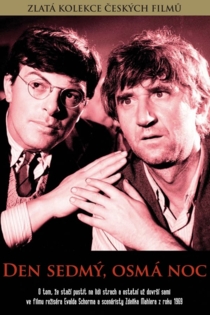
Den sedmý – osmá noc
Evald Schorm
Jan Libíček, Josef Bek
An allegory set in an archetypal Czech village, it tells of what happens when a sequence of mysterious events take place, including the disappearance of the stationmaster. While everything has a rational explanation, collective paranoia takes hold and everyone’s worst instincts are released. Interrogations, the abolition of rights and the search for scapegoats ultimately lead to murder
The Seventh Day, the Eighth Night
Zrcadlení
Evald Schorm, Jan Špáta
Jan Kačer
A leading director of the Czech film renaissance provides a philosophical meditation on life and death, set amidst complex hospital apparatus and the sadness, hope, or resignation of the patients. Existentialist rather than optimist, the approach is one of humanistic atheism, accepting death as part of life. Interviews with doctors and nurses explore their outlook; all speak of death as a fact, without either sentimentality or religiosity. The studied objectivity of the film only imperfectly hides an intense emotionality.
Reflection
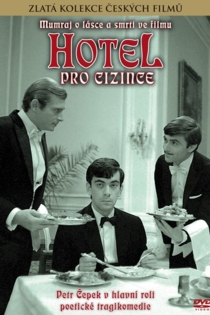
Hotel pro cizince
Antonín Máša
Petr Čepek, Táňa Fischerová
A gifted poet checks into a Gothic hotel in hopes of meeting the woman with whom he has long been enamored. He is surrounded by a variety of offbeat characters like the hefty homosexual cook, shadowy clerks, snooty waiters, and valets prone to violence. He finally meets the woman of his dreams only to lose her and ultimately meet with tragedy.
Hotel for Strangers
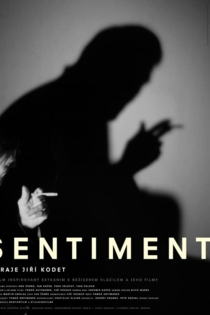
Sentiment
Tomáš Hejtmánek
Jiří Kodet, Emma Černá
Sentiment is Tomáš Hejtmánek's intimate documentary portrait of the great Czech director František Vláčil. The film was inspired by encounters with the filmmaker and told through taped interviews, reconstructions of meetings with Vláčil, visits to actual film locations (of Marketa Lazarova, The Valley of the Bees and Adelheid) and Vláčil-inspired film sequences. The result is one of the most unique and personal portraits of any artist – a collage of voices, sounds and images that evoke and celebrate Vláčil’s life and work.
Sentiment