Katya Paskaleva
1945 - 2002Katya Paskaleva (Bulgarian: Катя Паскалева) was a Bulgarian film and stage actress, born in 1945, deceased in 2002.
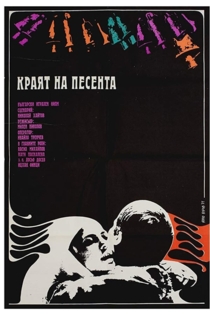
She is best known for her performance as Maria in the Bulgarian film classic The Goat Horn (1972), for which she gained a broad critical acclaim. Paskaleva is also known for her roles in the films The End of the Song (1971), Villa Zone (1975), Matriarchy (1977), Elegy (1982), Eve on the Third Floor (1987) as well as her numerous notable appearances on the stages of the Sofia Municipal Theatre and the Satirical Theatre “Aleko Konstantinov”.
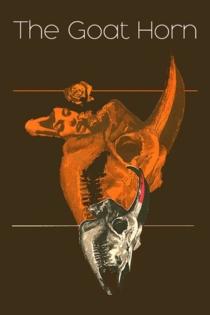
The Goat Horn
Metodi Andonov
Katya Paskaleva, Anton Gorchev
XVII century, Bulgaria is under Ottoman rule. Four men break into the house of the shepherd Karaivan, raping and killing his wife in full view of their child, Maria. To protect his daughter and to enact revenge, he raises Maria as a son, teaching her to fight and kill. But as Maria grows up, she longs for a different life.
The Goat Horn
Голямата победа
Vasil Mirchev
Kosta Tsonev, Iossif Surchadzhiev
The grand auto-tour of Bulgaria begins. Excellent drivers take part in it. The Bonev brothers are in the Bulgarian team. They have decided to win this race no matter what. With great efforts, they manage to get ahead from the rest. An unexpected problem arises - some rocks nave fallen on the road. The confident drivers manage to avoid the crash closely. Their road to victory is open. However, a feeling of responsibility arises. There will be accidents for sure. The brothers stay at he crash site to warn the other.
The Great Victory
Понеделник сутрин
Hristo Piskov, Irina Aktasheva
Pepa Nikolova, Asen Kisimov
Frivolous girl falls in love with a young construction worker. He trusts her and decides to include her in his team of workers. In the beginning, she is happy, but soon starts to feel the tensions between the people in the team. Hypocrisy and demagogy fill her with indignation and she does not keep silent about the shortcomings and mistakes of her colleagues. Gradually, her superiors become uneasy about her and the girl has to go. Her boyfriend offers her marriage, but she decides to take her own path and lead a worthy life. The movie was shot in 1966 but was censored by the communist government and released in theatres on 31st October 1988.
Monday Morning
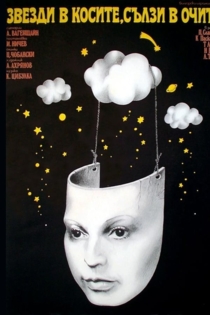
Stars in Her Hair, Tears in Her Eyes
Ivan Nitchev
Petar Slabakov, Katya Paskaleva
This is a film about a traveling theatrical group in the beginning of 20th century. The itinerant troupe arrives in the little town, comprising several families, an eccentric student, an anarchist, all united by their love for theatre. The theatricals of 'Othello' are pending. All of a sudden, the performer of Desdemona falls ill. The local woman teacher plays in her stead. She makes a success and joins the troupe. The young woman travels with them along the dusty country roads and never gives up. Step by step she becomes a very good actress and assumes the leading of the group through its complex life. United by their common fate, the actors go through the joys and disappointments of their pioneering educative mission together.
Stars in Her Hair, Tears in Her Eyes

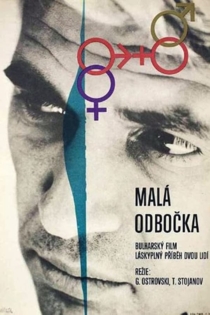
Отклонение
Todor Stoyanov, Grisha Ostrovski
Nevena Kokanova, Ivan Andonov
On the road one day two people meet again after seventeen years. They'd had a brief, burning affair seventeen years earlier, in their idealistic youth. That had been just after the war, the time of great enthusiasms and faith in the future. Wishing to dedicate themselves to the new society they had chosen to renounced personal happiness, considering their love as an impermissible sidetrack from the requirements of the time.
Detour
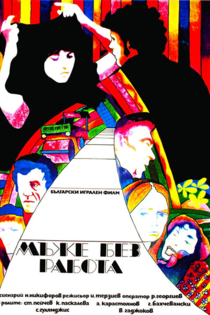
Villa Zone
Eduard Sachariev
Katya Paskaleva, Itzhak Finzi
A common Bulgarian family spends a warm afternoon in the fall in a country house. The preparations for a dinner party are in full swing. The formal reason is that the son enlists in the Army and the real reason is to arrange a match between him and the daughter of the boss. All the schemes are frustrated as it turns out that the boy has already married another girl. Both the hosts and the guests lose control, unleashing a consecution of tragic or comic situations.
Villa Zone

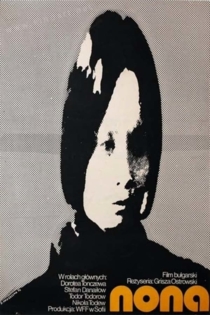
Нона
Grisha Ostrovski
Dorotea Toncheva, Stefan Danailov
The beginning of the 20th century. The young Nona comes back to her father's farm from Switzerland. She meets colonel Galchev. The officer expresses his love for her. The teacher Yosif who is in love with Nona organizes a revolt of the villagers with no property. Armed villagers rob the farm. Galchev and his soldiers arrive. During the shooting, the colonel is killed. Nona accuses Yosif of Galchev's death. The carriage of Nona's fiancé, who travels from Switzerland to the village, passes by the coffin with Galchev's body. A second after the fiancé enters her house Nona kills herself.
Nona
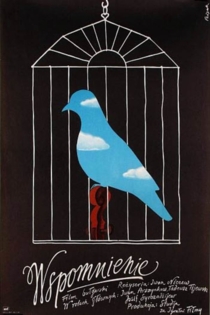
Спомен
Ivan Nitchev
Ivan Arshinkov, Tadeusz Fijewski
The days of antifascist fight are over. In an orphanage for gifted children lives Milcho. The music helps him to escape from the real world to the world of memories. He remembers the days that the police officer arrested his mother for hiding a fugitive. A bright mark has left people that Milcho met, looking for his mother: the good old musician, the gypsy Shukri - raw natural talent, the beautiful Mila, and the Poet. They help Milcho to live through his pain. A piano concert of Brahms is playing by the young artist.
Memory
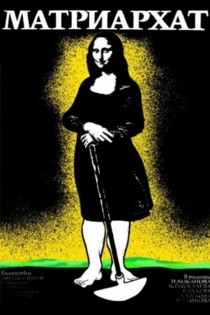
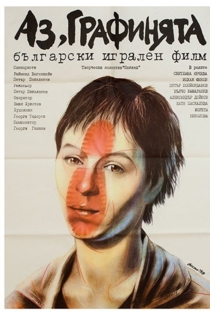
Az grafinyata
Petar Popzlatev
Svetla Yancheva, Alexander Doynov
A Bulgarian "Drugstore Cowboy." A teenage girl's rebellion through drugs becomes a metaphor for the struggle between individuality and totalitarianism. Amidst the political upheaval of 1968, Sybilla (the "Countess") is sent to a girls' re-education camp when she is caught using drugs. After a failed affair and an abortion, Sybilla's drug use lands her in a mental clinic where she resists efforts to remold her personality. Based on a true story.
Az grafinyata
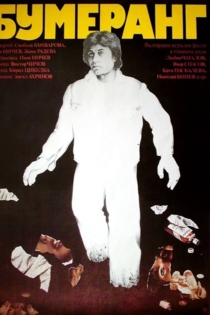
Бумеранг
Ivan Nitchev
Lyuben Chatalov, Yavor Spasov
The last student days before the redistribution. The linguist must go to a remote village to work as a teacher. The outlook is not good at all for the ambitious man who published his own story and is searching for the realization of a career in literature. Mihail is looking for the possibility that will let him in Sofia. He is from countryside; his diploma is not of the highest merit; his career as an author is still not established. He meets by chance a famous writer. Soon the attitude of Mihail towards the writer becomes colder,, since he understands that he was used as an object of description. Mihail sees the situation as a deal - he offers "material" for the writer's novel for a note, needed for him to stay in Sofia. The writer's uncompromising nature breaks the deal and Mihail is traveling to the village or maybe to himself.
Boomerang